


Listen to the article
The recent Artemis II mission has been enveloped in a cloud of conspiracy theories and misinformation, spreading rapidly across social media platforms as astronauts completed their historic lunar fly-by.
False claims about the mission have proliferated on X, TikTok, and Facebook, with hashtags like “fake space” and “fake NASA” gaining significant traction. One widely circulated image, viewed over a million times on X, falsely suggested the Artemis II crew was filming in a movie studio with a green screen. Digital forensics experts identified this as an AI-manipulated image.
Another conspiracy theory focused on a video showing text appearing through the mission’s official mascot, which conspiracy theorists claimed was evidence of staging. Fact-checkers from AFP determined this was merely the result of a failed text overlay by a news station that had syndicated NASA’s official feed.
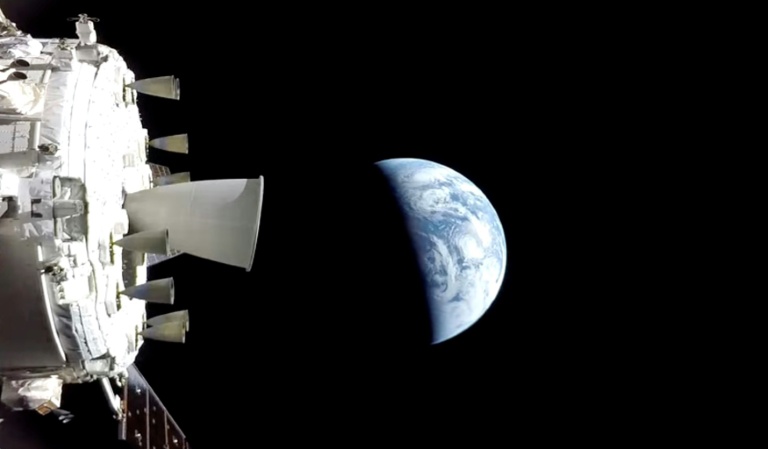
The misinformation campaign unfolded as the four Artemis II astronauts prepared for their high-stakes re-entry and splashdown on Friday. Despite the unfounded allegations, the crew successfully captured stunning visuals of the Earth’s natural satellite from aboard the Orion spacecraft, images that captivated audiences worldwide.
“There are some people whose reflexive reaction to any kind of major event is to claim it’s fake and staged, no matter what it is,” disinformation researcher Mike Rothschild told AFP. He noted that scientific achievements like lunar missions provide “very easy content for conspiracy influencers,” many of whom “pass themselves off as experts in science and physics” to appear credible to their followers.
The proliferation of these theories reflects the current internet landscape, which researchers describe as a “Wild West” largely devoid of effective guardrails against misinformation. Several tech platforms have reduced their trust and safety teams and scaled back content moderation efforts, creating environments where false narratives can thrive.
Adding to the confusion are claims that the entire Artemis II mission was fabricated using artificial intelligence tools. This assertion highlights how widely available AI technology has provided misinformation peddlers with new opportunities to cast doubt on authentic content—a tactic researchers have termed the “liar’s dividend.”
The recent wave of falsehoods has also reinvigorated one of history’s most persistent conspiracy theories: that NASA faked the 1969 Apollo 11 moon landing by filming it in a Hollywood studio. This narrative has become deeply embedded in popular culture, even featuring as a plotline in films like the romantic comedy “Fly Me to the Moon,” starring Scarlett Johansson.
“The moon landing is an example of a conspiracy that will not die,” said Timothy Caulfield, a misinformation expert from the University of Alberta. “These conspiracies are attractive for a host of reasons, including that they are linked to the allure of having ‘secret knowledge’ or being aware of things others don’t know.”
The persistence of these theories may be partly attributed to the significant gap between the Apollo era and the current Artemis program. Today’s internet-savvy generation has no firsthand memory of the earlier lunar missions, which concluded in 1972.
“In many ways, it is a testament to how hard it is for humans to travel to the moon—after all, we did it from 1968 to 1972, and it has taken until 2026 to do it again. It makes many people wonder if it ever happened,” space exploration expert Francis French explained to AFP.
French remains optimistic that the remarkable imagery from the current mission will help dispel doubts: “These photos alone should remove doubt and show once again the amazing things humans are capable of.”
As digital platforms continue to evolve and AI technology becomes more sophisticated, distinguishing fact from fiction will likely remain a significant challenge for the public, particularly regarding scientific achievements that push the boundaries of human exploration.
Fact Checker
Verify the accuracy of this article using The Disinformation Commission analysis and real-time sources.

7 Comments
It’s fascinating to see how quickly false claims can spread online, even about something as well-documented as a NASA space mission. I hope the public will continue to turn to reputable sources for accurate information about Artemis II.
The Artemis II mission is a major milestone in space exploration, and I’m eager to learn more about the crew’s experiences and the scientific data they gathered. It’s a shame that conspiracy theories are distracting from this remarkable achievement.
I agree. The Artemis II mission deserves our full attention and celebration, not the spread of misinformation. Let’s focus on the real accomplishments and discoveries that will come from this historic flight.
While I appreciate the public’s curiosity about the Artemis II mission, I encourage everyone to rely on trusted sources like NASA and reputable media outlets for accurate information. Conspiracy theories only serve to undermine the important work being done.
While I understand the appeal of conspiracy theories, it’s important to rely on credible sources and verified information when it comes to major space missions like Artemis II. I’m looking forward to seeing the real footage and data from this historic flight.
Absolutely. Spreading misinformation, even in the form of harmless conspiracies, can undermine public trust in important scientific endeavors. Let’s focus on the real accomplishments of the Artemis II crew.
The Artemis II mission is an incredible achievement, and I’m excited to see the stunning visuals the crew captured of the Moon. It’s disappointing to see the spread of conspiracy theories, but I’m glad fact-checkers are working to debunk the misinformation.