


Listen to the article
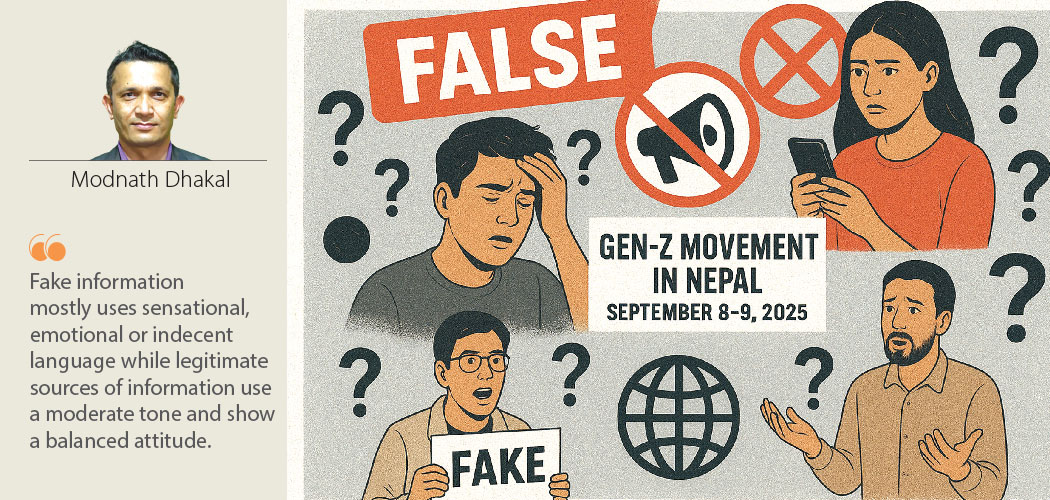
In the wake of recent Gen Z protests in Nepal, social media has become a breeding ground for misinformation, challenging public perception and fueling unrest across the nation. The initial demonstrations on September 8 triggered a wave of false reports that quickly spread through various platforms.
One of the first rumors claimed that 35 skeletons had been discovered at Bhatbhateni Superstore in Kathmandu’s Chucchepati area. Though only six bodies were actually recovered, the misinformation continued to spread. The following day, another unfounded story circulated that 32 missing protesters had been found dead inside the Parliament building in New Baneshwor, despite police confirmation that these claims were baseless.
Perhaps the most viral piece of misinformation was a video featuring an air hostess claiming that Prime Minister KP Sharma Oli was fleeing Nepal via Dubai on September 10. The woman described Oli being transported in a wheelchair under security escort in Dubai and urged Nepalis there to converge on the airport. This video was shared hundreds of thousands of times across multiple platforms.
The allegations coincided with widespread speculation that Oli was attempting to escape the country amid an uprising that had already claimed 19 lives on its first day. Himalaya Airlines, a Chinese-Nepali joint venture implicated in the rumors, was forced to issue two consecutive statements denying any involvement, calling the reports “completely false and misleading.”
Other viral content included videos allegedly showing political figures like Nepali Congress general secretary Gagan Thapa and then-Deputy Prime Minister Bishnu Prasad Paudel being attacked by mobs. These videos, along with others featuring various political leaders, were widely circulated despite being unverified.
“Nepal’s recent protests provided fertile ground for spreading misinformation and disinformation,” noted media experts tracking the phenomenon. With more than three-quarters of Nepal’s population now owning smartphones and having internet access, social media’s influence has reached unprecedented levels.
Even established media figures have contributed to the problem. Dil Bhushan Pathak, former editor of Kantipur Television who now runs the YouTube channel Tough Talk, made unsubstantiated claims about Jaybir Deuba, son of Nepali Congress president Sher Bahadur Deuba, allegedly purchasing the Hilton hotel chain. Though based largely on assumptions, Pathak’s reputation lent credibility to the claims, which spread rapidly.
The National Statistics Office reports that approximately 76 percent of Nepali households own smartphones, exceeding the rates in neighboring India and Bangladesh. About 15 million Nepalis—half the country’s population—actively use platforms like Facebook and YouTube. The recent monetization of content on these platforms has created financial incentives for spreading sensational, if false, information.
“There are people who unknowingly fall victim to fake information, while others enjoy it knowingly. And influencers are running after the cents, willing to say anything that will bring them more dollars,” said journalist and fact-checker Deepak Adhikari.
Research by Ujjwal Acharya and Chetana Kunwar found that political and social issues constitute nearly 75 percent of misinformation topics in Nepal. Their analysis of 414 fact-checked items revealed that 76.17 percent of misinformation originated from media or social media sources, while politicians accounted for 17.69 percent. By platform, 56.5 percent spread through social media, 19 percent via mainstream media, and 17 percent through online portals.
Fact-checkers struggled to keep pace during the protests. Even renowned eye surgeon Dr. Sanduk Ruit was forced to hold a press conference to deny rumors he was joining a cabinet led by Sushila Karki. “By the time fact-checkers complete their verification, the damage is often already done,” said Umesh Shrestha, a prominent fact-checker and blogger.
Media experts recommend that news organizations maintain dedicated verification teams and that consumers exercise greater caution. “Do not send or share any information until you understand the whole context. Wait and verify. Even doubt the camerawork, because an alternative angle can change the entire meaning,” Adhikari advised.
As AI tools become more sophisticated, distinguishing genuine content from deepfakes grows increasingly difficult. Experts suggest verifying landmarks, geography, and natural features in videos or photos, checking source credibility, and comparing information with official statements before sharing content online.
With the rise of media monetization and declining trust in traditional journalism, Nepal faces a critical challenge in combating the spread of misinformation that threatens to undermine social stability and democratic discourse.
Fact Checker
Verify the accuracy of this article using The Disinformation Commission analysis and real-time sources.
