


Listen to the article
Study Reveals Differences in Fake News Debunking Patterns on Chinese Social Media
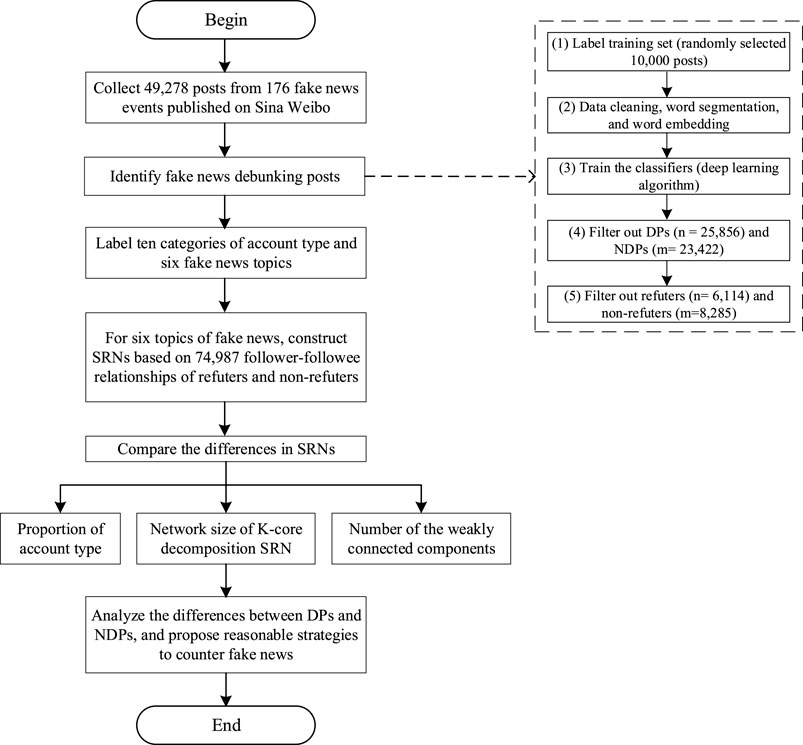
A comprehensive analysis of nearly 50,000 posts related to fake news on Sina Weibo, China’s Twitter-like platform, has revealed significant differences in how various types of misinformation spread and are debunked on Chinese social media.
The four-year study, examining posts from July 2015 to September 2019, found that while debunking efforts have increased over time, their effectiveness varies dramatically depending on the topic of the fake news.
Researchers classified fake news into six categories—society, health, business, science and technology, disaster, and politics and finance—and analyzed how debunked posts (DPs) and non-debunked posts (NDPs) spread through social networks.
“Our findings show that society-related fake news is the most prevalent category on Chinese social media, followed by health-related misinformation,” said the research team. “This differs notably from Western platforms like Twitter, where political misinformation dominates.”
The study found that business-related fake news was most effectively debunked, while science and politics-related misinformation proved the most resistant to correction efforts. For five out of six categories, non-debunked misinformation spread faster than corrections.
Using artificial intelligence and social network analysis, researchers examined how information flows through follower-followee relationships on Sina Weibo. They discovered that celebrity accounts play a crucial role in information dissemination, with media accounts typically driving the largest proportion of debunking posts.
“Celebrity and media accounts act as opinion leaders in the Chinese social media ecosystem,” the researchers noted. “The relative proportion of these accounts participating in debunking efforts significantly impacts how quickly corrections spread.”
The study also revealed that network structure influences information flow. Messages spread more rapidly in networks with more following relationships and a higher number of weakly connected components—essentially, when information can travel through diverse social circles via weak ties rather than being contained within tight-knit groups.
For business-related fake news, which showed the best debunking effectiveness, researchers found a higher proportion of celebrity accounts involved in spreading corrections. In contrast, science and politics-related misinformation—the categories most resistant to debunking—showed the lowest proportion of celebrity accounts involved in spreading corrections.
The researchers suggest that effective debunking strategies should leverage these findings by engaging opinion leaders, particularly celebrities, and creating multi-directional approaches that utilize diverse social networks to spread accurate information.
“To form an effective hedge against misinformation, we need multi-departmental, multi-faceted, and multi-directional joint refutations to spread debunking messages in different circles,” the researchers recommended. “Governments, mainstream media outlets, and opinion leaders should pool their efforts to establish rapid debunking mechanisms.”
The research team also emphasized the importance of improving media literacy and critical thinking skills among social media users to reduce vulnerability to misinformation.
As fake news continues to proliferate on social platforms, this study provides valuable insights for developing more effective counter-strategies, particularly for categories like science and politics where debunking efforts currently show the least success.
The findings could help guide policy makers, social media platforms, and fact-checkers in creating more targeted approaches to combat misinformation in the unique context of Chinese social media, while offering lessons that may apply to global social media environments as well.
Fact Checker
Verify the accuracy of this article using The Disinformation Commission analysis and real-time sources.

10 Comments
The finding that business-related fake news is most effectively debunked, while science and politics-related misinformation is the most resistant, highlights the challenges we face in addressing certain types of disinformation. Developing tailored approaches seems crucial.
Yes, the study underscores the need for nuanced, context-specific solutions rather than a one-size-fits-all approach to fake news debunking. Analyzing social dynamics is key to designing more impactful interventions.
The study’s finding that debunking efforts have increased over time on Chinese social media is encouraging, but the varying effectiveness across different fake news categories is concerning. Clearly, there’s still much work to be done to address this challenge.
It’s concerning to see the prevalence of society and health-related misinformation on Chinese social media, especially given the potential real-world impacts. I hope this research can inform more effective fact-checking and public education efforts in those domains.
This research provides valuable insights into the complex dynamics of fake news debunking. Identifying the unique social network factors that enable more effective debunking for certain topics could lead to important breakthroughs in the fight against misinformation.
Agreed. Understanding the underlying social dynamics at play is crucial. Applying these insights to develop tailored, context-specific solutions is likely the key to making real progress in this area.
Fascinating study on the dynamics of fake news debunking on Chinese social media. The differences in how misinformation spreads and gets debunked across various topics is quite intriguing. I wonder what insights this could offer for improving fact-checking efforts globally.
Agree, the topic-specific patterns are very interesting. Understanding the social network factors that enable more effective debunking could lead to more targeted strategies for combating misinformation.
The differences between Chinese and Western social media platforms when it comes to the dominant types of fake news are quite striking. This highlights the importance of understanding local contexts and tailoring solutions accordingly.
Absolutely. A global, one-size-fits-all approach is unlikely to be effective. Rigorous, region-specific analysis is needed to develop appropriate strategies for combating the spread of misinformation.