


Listen to the article
Nigeria’s former Information Minister warns that fake news threatens national unity, as the country launches a groundbreaking media literacy initiative in partnership with UNESCO.
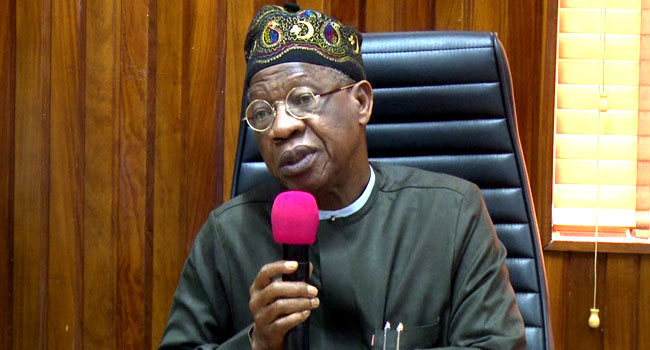
Former Minister of Information and Culture, Lai Mohammed, has identified fake news as a significant threat to Nigeria’s national unity and democratic stability, emphasizing that efforts to regulate social media should be viewed as responsible governance rather than censorship.
Speaking at Thursday’s launch of the International Media and Information Literacy Institute (IMILI) at the National Open University of Nigeria in Abuja, Mohammed stressed the importance of implementing balanced regulatory measures to combat misinformation while preserving freedom of expression.
“Responsible regulation is necessary to curb the spread of false information, protect national security, and promote ethical media practices,” Mohammed stated, highlighting the delicate balance required in Nigeria’s increasingly digital information landscape.
The former minister expressed gratitude to UNESCO for its support in establishing the institute, noting that the project would serve as a crucial resource for developing media literacy skills among Nigerians, enabling them to navigate digital information spaces more critically and responsibly.
IMILI represents a significant milestone in global media literacy efforts, as it is the first institution of its kind established under UNESCO’s Category 2 framework. The institute aims to function as a comprehensive center for research, capacity building, and policy development in media and information literacy, addressing growing concerns about digital misinformation in Nigeria and across Africa.
The launch follows President Bola Tinubu’s ceremonial inauguration of the institute at the State House on Wednesday, underscoring the national importance attached to the initiative. The establishment of IMILI comes at a critical time when Nigeria, like many nations, grapples with the proliferation of false information on social media platforms and its potential to exacerbate social tensions.
Nigeria’s media landscape has evolved rapidly in recent years, with social media platforms becoming primary sources of news and information for many citizens. This digital transformation has brought both opportunities for increased civic engagement and challenges related to information verification and responsible consumption.
The event attracted numerous dignitaries and stakeholders, including Dili Ezughah, Executive Secretary of the Nigerian Press Council, who represented the current Minister of Information and National Orientation; UNESCO representatives; Professor Uduma Uduma, Vice Chancellor of the National Open University; and Ike Neliaku, President of the Nigerian Institute of Public Relations.
Media literacy experts have long advocated for institutional approaches to combating misinformation, particularly in developing democracies where digital literacy rates may lag behind rapid technology adoption. The establishment of IMILI positions Nigeria as a regional leader in addressing these challenges through education and capacity building rather than solely through regulatory measures.
The initiative aligns with UNESCO’s broader global strategy to promote media and information literacy as essential competencies for citizens in the digital age. By fostering critical thinking skills and responsible media consumption habits, the institute aims to strengthen democratic participation and reduce vulnerability to manipulation through false information.
As Nigeria prepares for future electoral cycles and continues to address complex social and political challenges, the role of reliable information and media literacy will be increasingly vital to maintaining democratic stability and national cohesion.
The launch of IMILI represents a forward-looking approach to information governance, potentially establishing a model that could be replicated in other regions facing similar challenges with digital misinformation and its societal impacts.
Fact Checker
Verify the accuracy of this article using The Disinformation Commission analysis and real-time sources.

9 Comments
This is an important issue that many countries are grappling with. Kudos to Nigeria for partnering with UNESCO to launch an institute focused on media and information literacy. Proactive measures to promote critical thinking around online content are crucial.
I wonder what the curriculum and training programs will entail at this new institute. Equipping the public with the tools to navigate the digital information landscape is a worthy goal.
Fake news can indeed be corrosive to public discourse and democratic institutions. Nigeria’s focus on media literacy as a solution is a positive step. Regulatory measures must be carefully balanced to uphold freedom of expression.
Combating the spread of fake news is a complex challenge, but Nigeria’s approach of balancing regulation with preserving free expression seems prudent. Media literacy is a vital skill in the digital age.
It will be interesting to see how effective this new institute is in practice at inoculating the public against disinformation campaigns. Rigorous evaluation will be key to refining the program over time.
Fake news can certainly be a major threat to national unity and democracy. Glad to see Nigeria taking steps to combat misinformation through media literacy initiatives. Responsible regulation is key to striking the right balance.
Curious to learn more about the specifics of Nigeria’s new media literacy program and how it aims to empower citizens to identify and resist the spread of false information.
Glad to see Nigeria taking proactive steps to address the threat of fake news to its democracy and national unity. A comprehensive media literacy initiative in partnership with UNESCO is a smart move.
I hope this new institute can serve as a model for other countries grappling with similar challenges around online misinformation and its societal impacts.