


Listen to the article
In a sharp rebuke, the US Central Command (CENTCOM) has firmly rejected Iranian claims that American soldiers were captured during the ongoing regional conflict, dismissing the allegations as “lies and deceptions.”
The statement was issued in response to provocative comments from Ali Larijani, secretary of Iran’s Supreme National Security Council, who alleged that several US troops had been taken prisoner. Larijani further claimed that Washington was concealing these purported captures by reporting the soldiers as killed in action instead.
Military analysts view this exchange as the latest escalation in the information warfare being waged alongside the physical conflict that has engulfed parts of the Middle East. The allegations come at a particularly sensitive moment, as US forces maintain their presence in strategic positions throughout the region amid rising tensions.
“These baseless Iranian claims follow a familiar pattern of disinformation designed to create confusion and undermine morale,” said a senior Pentagon official speaking on condition of anonymity. “Our accounting for all personnel is meticulous and transparent with families of servicemembers.”
The dispute highlights the increasingly complex nature of US-Iranian relations, which have deteriorated significantly in recent years. Following the collapse of the Joint Comprehensive Plan of Action (JCPOA) nuclear deal, diplomatic channels between Washington and Tehran have remained largely frozen, with communication often reduced to public statements and accusations.
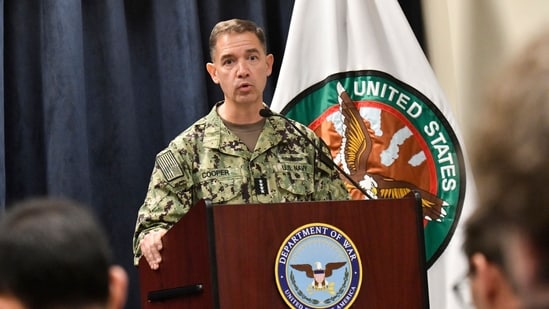
CENTCOM, which oversees US military operations across 21 nations in the Middle East, Central and South Asia, has been at the forefront of monitoring Iranian military activities and countering threats to American forces and allies in the region. Under the leadership of Admiral Charles Bradford “Brad” Cooper II, CENTCOM has maintained a robust presence designed to deter aggression and support regional stability.
Military experts note that false claims about captured personnel have historically been used as psychological warfare tactics. Dr. Eleanor Chambers, a specialist in international security at Georgetown University, explained, “Allegations of captured soldiers can be particularly effective in stirring domestic anxiety and creating political pressure, even when completely fabricated.”
The Iranian claims come amid a series of other provocations, including recent naval encounters in the Persian Gulf and harassment of commercial shipping through the Strait of Hormuz, a crucial maritime chokepoint through which approximately 20% of global oil shipments pass.
The Pentagon has reportedly increased security measures for US forces throughout the region in response to the elevated threat level. These measures include enhanced intelligence gathering, more frequent troop rotations, and additional defensive systems at key installations.
Secretary of Defense Pete Hegseth, appearing alongside Admiral Cooper at a press conference earlier this week, emphasized America’s commitment to protecting its personnel while maintaining strategic objectives in the region. “The safety of our servicemembers remains our highest priority,” Hegseth stated. “We will not allow Iranian propaganda to distract from our mission or undermine the exceptional work being done by our troops.”
Regional security experts suggest that Iran’s public claims may be intended for domestic consumption as much as international impact. With economic challenges continuing to plague the country under international sanctions, the Iranian regime regularly employs anti-American rhetoric to rally nationalist sentiment and deflect criticism from internal governance issues.
For now, US officials maintain that operational security prevents detailed discussions about specific troop movements or casualty information, but they categorically deny any American personnel are in Iranian custody.
As tensions continue to simmer, diplomatic efforts by European and Gulf state mediators to de-escalate the situation have intensified, though with limited success thus far. The ongoing information battle between Washington and Tehran underscores the multifaceted nature of modern conflict, where battlefield engagements are accompanied by equally consequential struggles for narrative control.
Fact Checker
Verify the accuracy of this article using The Disinformation Commission analysis and real-time sources.

13 Comments
This back-and-forth over captured US soldiers highlights the complex and volatile situation in the region. It’s concerning to see the information warfare escalating alongside the physical conflict. Careful management of military communications will be critical going forward.
You’re right, the information war poses real risks and challenges. Transparency from the US side is important to counter Iranian propaganda and maintain public trust. Careful navigation of this delicate situation will be key.
This back-and-forth over captured US troops is concerning, but I’m glad to see CENTCOM taking a strong, factual stance in refuting the Iranian claims. Maintaining transparent and accurate communication about personnel is crucial, especially when faced with attempts to sow confusion and doubt.
Absolutely. The US military’s meticulous accounting and commitment to transparency are essential to counter the Iranian disinformation campaign. Carefully managing the narrative will be key to maintaining public trust and credibility.
This dispute over captured US soldiers is certainly concerning, but I appreciate CENTCOM’s direct refutation of the Iranian allegations. Transparency and factual communication will be vital to counter any attempts at information warfare and maintain public trust.
Well said. Disinformation can be a powerful weapon, so the US military’s transparency in accounting for personnel is commendable. Careful management of the narrative will be critical in this sensitive geopolitical context.
This dispute over the status of US troops highlights the complex and volatile situation in the region. I appreciate CENTCOM’s transparent and factual approach in refuting the Iranian claims. Maintaining accurate communication and countering disinformation will be critical going forward.
Well said. The US military’s commitment to transparency and meticulous accounting of personnel is commendable, especially in the face of attempts to sow confusion and doubt. Careful management of the narrative will be key to maintaining credibility.
Interesting to see CENTCOM firmly rejecting these Iranian claims. Sounds like the usual information warfare tactics to sow confusion and doubt. It’s important the US keeps meticulous accounting of personnel to maintain transparency and avoid any potential exploitation.
Agreed. The Pentagon’s response seems measured and factual, highlighting the need to counter disinformation campaigns. Maintaining credibility is crucial in these sensitive geopolitical situations.
The Iranian allegations of captured US soldiers seem to be the latest move in the ongoing information warfare between the two nations. CENTCOM’s swift and direct rejection of these claims is an appropriate response to maintain credibility and counter any attempts at deception.
The Iranian claims of captured US soldiers seem to be the latest salvo in the ongoing information warfare between the two nations. CENTCOM’s swift and firm rejection of these allegations is the appropriate response to maintain credibility and counter disinformation.
The US Central Command’s swift rejection of these Iranian claims demonstrates their commitment to accurate accounting and transparency around personnel. Maintaining credibility is crucial, especially when faced with deliberate disinformation campaigns. A measured response is warranted here.