


Listen to the article
Journalists Spotlight Advanced Digital Investigation Tactics in Cross-Border Collaboration
In a significant gathering highlighting the evolution of investigative journalism in the digital age, media professionals from across Europe convened for the 14th edition of the Spotlight Fact-Check & OSINT Review. The session, moderated by Maria Flannery, showcased groundbreaking investigative methods that are reshaping how journalists verify information and collaborate across borders.
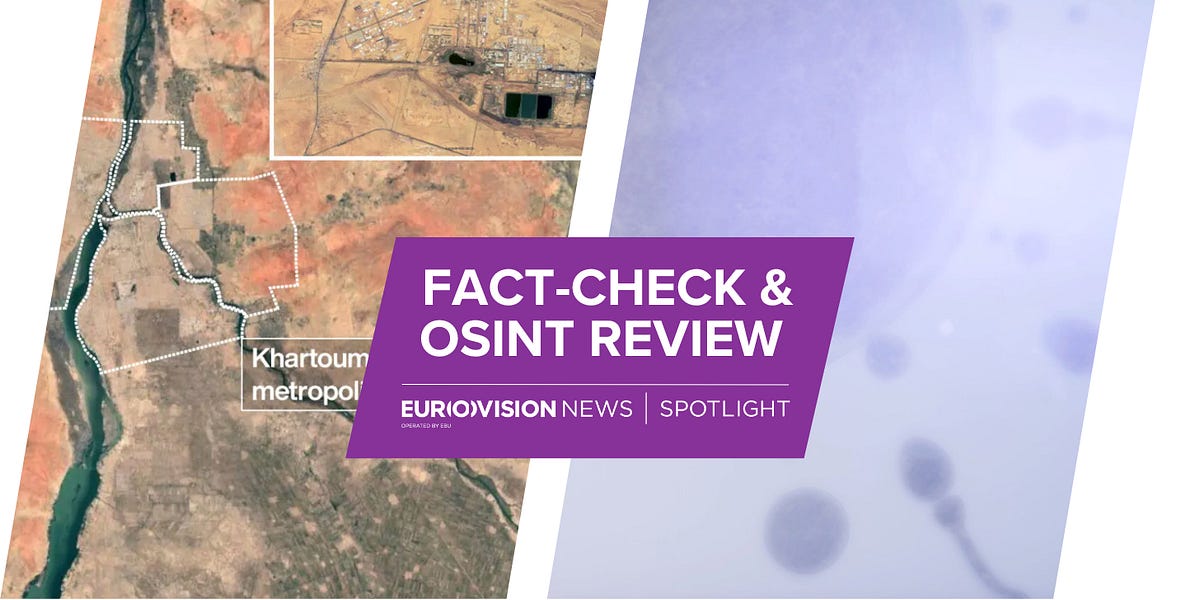
The event featured a forensic investigation masterclass by Quentin Peschard and Derek Thomson from France 24 Observers, who detailed their meticulous investigation into alleged chemical weapons use in Sudan. Their work exemplified the power of modern open-source intelligence techniques, as they explained how identifying a fraction-of-a-second serial number visible on footage of an aerial drop near Sudan’s largest oil refinery led to conclusive evidence about foreign suppliers.
This investigation has gained significant traction beyond journalism circles, with the U.S. State Department now citing their findings in presentations to the Organization for the Prohibition of Chemical Weapons (OPCW). The case demonstrates how journalistic investigation can influence international diplomatic discussions and potentially hold actors accountable for violations of international law.
“The level of detail required in these investigations is extraordinary,” explained Thomson. “What might appear as an insignificant frame in a video can often be the key to unraveling a much larger story with international implications.”
The review also highlighted the growing importance of collaborative journalism across European borders. Belén López Garrido from the EBU Investigative Journalism Network presented the methodology behind their recent “Donor 7069” investigation, which revealed how a single sperm donor with a high-risk genetic mutation fathered 197 children across multiple countries.
This investigation represented a remarkable feat of coordination, bringing together 30 journalists from 14 countries to piece together fragments of information that no single newsroom could have assembled alone. The project underscored both the public health implications and the regulatory gaps in fertility treatments across European countries.
“Cross-border issues require cross-border solutions,” Garrido noted. “When we coordinate dozens of journalists, each bringing their local expertise and access, we can tackle stories that would otherwise remain fragmented and incomplete.”
Garrido also referenced other successful collaborative investigations by the EBU Network, including “Playing with Fire” and “The Missing Children of Ukraine,” as examples of how synchronized reporting across Europe can address complex international issues that transcend national boundaries.
The session provided attendees with practical insights into the forensic tools and verification techniques needed to combat increasingly sophisticated forms of disinformation. As digital manipulation tactics continue to evolve, journalists are developing more advanced methodologies to verify content and establish factual baselines in their reporting.
These collaborative approaches are becoming increasingly necessary in a media environment where disinformation campaigns often cross borders and target multiple countries simultaneously. By pooling resources and expertise, European media organizations are creating a more resilient response to information manipulation attempts.
Industry experts observe that this trend toward collaborative investigation represents a significant shift in how journalism operates in the digital age. While competition between news organizations remains, there is growing recognition that certain stories can only be effectively covered through cooperative approaches.
The EBU Network’s model demonstrates how traditional media organizations can adapt to digital challenges by creating flexible structures that allow journalists to contribute their specialized knowledge while maintaining editorial independence.
The Spotlight Fact-Check & OSINT Review continues to serve as a forum for sharing these evolving best practices in verification and investigation. Media professionals interested in participating as speakers in future sessions are encouraged to contact the organizers through the EBU.
As digital manipulation techniques become more sophisticated, these collaborative verification approaches will likely become an essential component of responsible journalism’s defense against misinformation in the European media landscape.
Fact Checker
Verify the accuracy of this article using The Disinformation Commission analysis and real-time sources.

9 Comments
It’s fascinating to see how modern open-source intelligence methods are reshaping investigative journalism. Tracing that serial number on the aerial footage is an ingenious way to build a case. Glad to see this investigation gaining traction beyond just the media.
Fascinating to see how modern digital forensic techniques are revolutionizing investigative journalism. Identifying that serial number as a key clue is some really impressive detective work. Glad to see this investigation gaining traction beyond just the media.
Collaborative cross-border investigations like this are so important for tackling global issues. I’m glad to see the US State Department recognizing the value of this journalists’ work on Sudan. Rigorous fact-checking is critical these days.
Identifying that serial number as a key clue is really smart detective work. These kinds of digital forensic techniques are becoming increasingly vital for verifying information and getting to the truth.
This investigation into alleged chemical weapons use in Sudan is an impressive display of the power of digital forensics and collaboration in modern journalism. Tracking down that serial number is some really smart detective work. Glad to see it resonating with the OPCW.
What a great example of how open-source intelligence and cross-border cooperation can uncover crucial evidence and hold actors accountable. Tracing that serial number on the aerial footage is brilliant sleuthing. Kudos to the journalists for this impactful investigation.
Absolutely, the US State Department recognizing the value of this work is a big deal. Rigorous fact-checking and verifying information is so important, especially on complex global issues like this.
This investigation into alleged chemical weapons use in Sudan is a powerful example of how digital forensics and open-source intelligence can uncover crucial evidence. Tracking down that serial number on the aerial footage is some impressive detective work.
It’s great to see journalists leveraging these advanced investigative methods to shed light on important issues. Their findings could have real impact if the OPCW takes them seriously.