


Listen to the article
In a viral social media sensation that rapidly spread across multiple platforms, claims about Roman battle helmets discovered on a North Carolina golf course have been conclusively debunked as an April Fools’ Day prank.
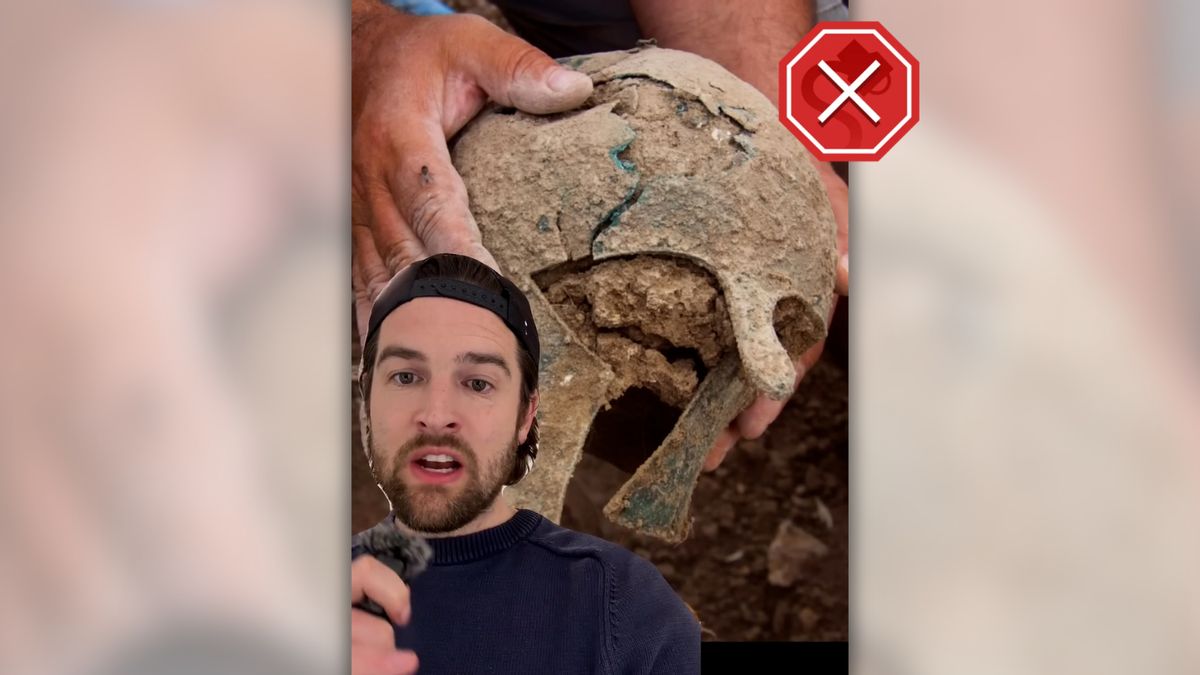
The fabricated story, which began circulating in early April 2026, featured videos narrated by a man claiming that archaeological officials had made a groundbreaking discovery that would “rewrite all we know about America.” According to the narrator, researchers unearthed Roman battle helmets, spears, and swords alongside Native American arrowheads, suggesting an ancient battle between Romans and indigenous peoples on North American soil centuries before European colonization was thought to have begun.
The narrator added dramatic details about the discovery, claiming a fictional expert named “Dr. Reemy Deemy” had declared “this changes everything.” He also mentioned that the golf course owner was upset about plans to excavate the entire property for further archaeological examination.
Fact-checkers quickly identified the source of these claims as popular social media personality Scott Whitehead, who posted the videos across Facebook, Instagram, TikTok, and YouTube on April 1 as an intentional April Fools’ prank. Despite clear contextual clues pointing to its satirical nature—including references to a supposed expert who “works at PetSmart in the fish section”—many social media users appeared to believe the story was genuine.
Reverse image searches of the helmets shown in the videos traced them to legitimate archaeological collections in Europe. One helmet featured prominently in the video was actually from the German Archaeological Institute’s website, described as “an almost completely preserved Corinthian helmet” discovered in 2016. Other images showed artifacts from museums in Greece, not North Carolina.
Multiple red flags should have alerted viewers to the hoax. No reputable news organizations reported on what would have been a revolutionary archaeological discovery challenging established historical timelines. Comprehensive searches across major search engines including Google, Bing, Yahoo, and DuckDuckGo failed to produce any legitimate news coverage of such a significant find.
Archaeological experts note that any evidence of Roman presence in pre-Columbian North America would represent one of the most significant historical discoveries of the century, warranting immediate attention from major academic institutions and news outlets worldwide.
Ironically, while this Roman discovery was fictional, North Carolina did experience a genuine archaeological breakthrough earlier in 2026, with researchers uncovering approximately 2,000 Native American artifacts, including remnants of longhouses and evidence of an indigenous settlement. These legitimate findings continue to enhance understanding of pre-colonial history in the region.
The rapid spread of Whitehead’s prank demonstrates how easily misinformation can proliferate across social media platforms, particularly when presented with compelling visuals and authoritative-sounding narration. Despite obvious satirical elements, comment sections across multiple platforms revealed many users who accepted the claims at face value, highlighting ongoing challenges with media literacy in the digital age.
When contacted by fact-checkers, representatives for Whitehead had not yet provided comment on the creation of the prank or his reaction to those who believed the fictional claims.
Fact Checker
Verify the accuracy of this article using The Disinformation Commission analysis and real-time sources.

14 Comments
Wow, Roman battle gear discovered at a golf course in North Carolina? If true, that would be an incredible and history-changing find. However, the lack of credible evidence from respected archaeological authorities suggests this is likely just an April Fools’ hoax that got out of hand on social media. I’ll wait for confirmation from experts before giving this story much credence.
While the notion of pre-Columbian Roman exploration of the Americas is thought-provoking, the viral story about Roman helmets found at a North Carolina golf course appears to be nothing more than an elaborate hoax. Lacking any substantiation from reputable archaeological sources, this claim seems to be a fabricated April Fools’ prank that spread rapidly on social media.
The idea of ancient Romans reaching North America long before European explorers is an intriguing historical possibility. However, the specific claims about Roman helmets found at a golf course in North Carolina appear to be nothing more than an April Fools’ prank. Lacks any credible academic or archaeological corroboration.
While an intriguing idea, the alleged discovery of Roman helmets and weapons in North Carolina seems highly implausible and almost certainly a hoax. Extraordinary claims require extraordinary proof, and this story falls far short of that standard. Probably just an elaborate April Fools’ joke that got out of hand.
Wow, Roman battle gear discovered at a golf course in North Carolina? If true, that would be an earth-shattering archaeological find. But given the lack of substantiation from reputable sources, this story seems more likely to be an elaborate hoax or joke that got widely shared on social media. I’ll wait for confirmation from experts before believing it.
Fascinating if true, but this sounds like a pretty obvious April Fools’ prank. Roman artifacts in North Carolina? Seems highly unlikely and lacking credible evidence. I’ll wait for real archaeologists to weigh in before believing this wild claim.
While the notion of pre-Columbian Roman exploration of the Americas is fascinating, the viral story about Roman helmets discovered at a North Carolina golf course seems highly dubious. Lacking any corroboration from credible archaeological authorities, this claim is almost certainly nothing more than an elaborate April Fools’ hoax that gained traction on social media. I’ll wait for real evidence before believing it.
Fascinating if true, but the claims about Roman helmets found at a North Carolina golf course appear to be nothing more than an April Fools’ prank that went viral online. Extraordinary historical claims require rigorous, verifiable evidence from the scientific community, which this story clearly lacks. Probably best to be skeptical of this one.
Very skeptical of the claims about Roman artifacts found at a North Carolina golf course. Extraordinary historical claims require strong, verifiable evidence, which this story clearly lacks. Sounds like an April Fools’ prank that got out of hand on social media.
I agree, the lack of corroboration from reputable archaeological sources is a huge red flag. Unless peer-reviewed studies confirm this, I won’t be giving much credence to the viral videos and social media hype.
The story about Roman helmets found at a North Carolina golf course is clearly a hoax. Ancient Roman settlements in the Americas before European colonization is an extraordinary claim that would require extraordinary evidence. This just seems like a creative attempt to spread misinformation.
The idea of ancient Romans reaching North America long before European colonization is certainly an intriguing historical possibility. However, the specific claims about Roman helmets discovered at a golf course in North Carolina seem highly dubious and lacking in credible evidence. Likely just an April Fools’ joke that got out of hand on social media.
This alleged Roman helmet discovery sounds like a complete fabrication. There is no way archaeologists would uncover such a monumental finding and not have it thoroughly vetted and reported through proper academic channels. This is likely just a social media stunt, not an actual archaeological discovery.
The idea of ancient Romans reaching North America before European colonization is certainly an intriguing historical possibility worth exploring. But the specific claims about Roman helmets found at a golf course in North Carolina sound too fantastical to be credible. Lacking substantiation from reputable archaeological sources, this appears to simply be an elaborate April Fools’ prank that spread rapidly online.