


Listen to the article
Image Falsely Claimed to Show Khamenei’s Remains Revealed as AI-Generated
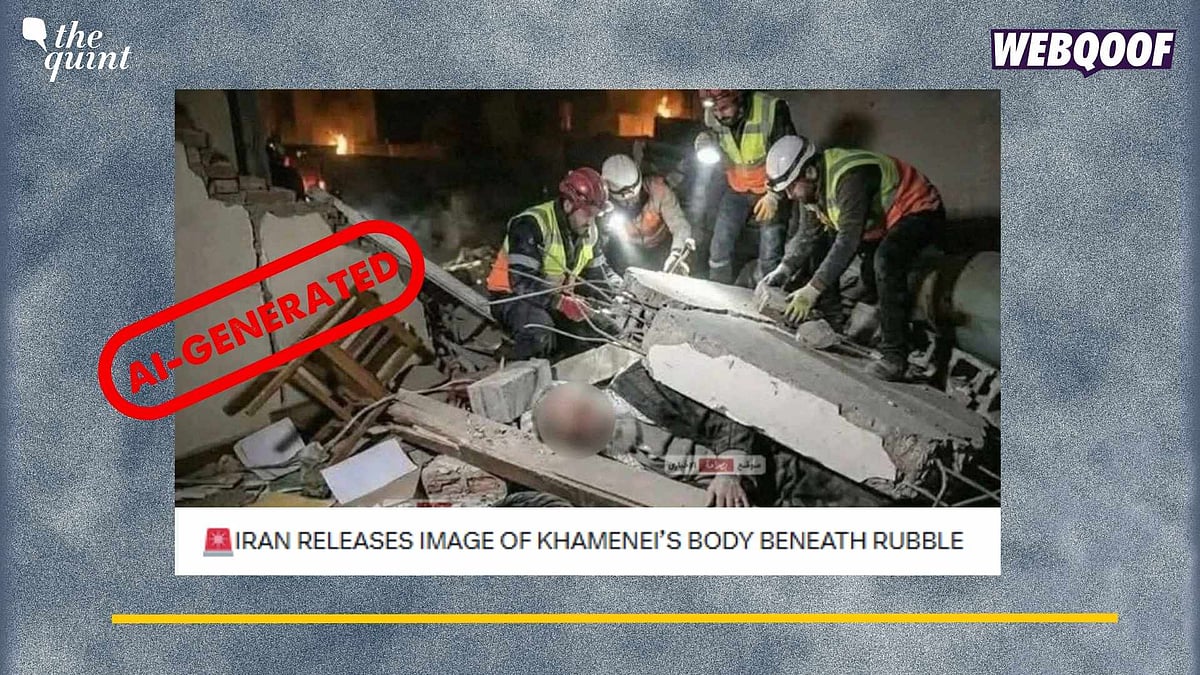
A viral image purporting to show the deceased remains of Iran’s Supreme Leader Ayatollah Ali Khamenei has been determined to be artificially generated, according to an investigation by Team WebQoof.
The unverified image, which has been circulating widely on social media platforms in recent days, shows what appears to be a staged scene with a carefully placed chair and turban. The suspicious positioning of these elements initially raised red flags among digital forensics experts.
To verify the authenticity of the image, investigators first conducted a Google reverse image search to determine whether the visual had been released through any official channels or reputable news sources. The search yielded no matches from credible Iranian government sources, state media, or international news organizations that would typically have access to such sensitive imagery.
Following this initial check, Team WebQoof performed additional keyword searches across Iranian media outlets, looking for any instances where this specific visual might have appeared in official reporting. Despite a thorough examination of Persian-language news sources, no evidence emerged to substantiate the image’s legitimacy.
The fabricated nature of the image is particularly significant given the ongoing speculation about Khamenei’s health status. The 85-year-old Supreme Leader has been the subject of numerous death rumors in recent years, with international intelligence agencies and media outlets frequently monitoring his public appearances for signs of deteriorating health.
Digital misinformation experts note that the emergence of such AI-generated content represents a growing challenge in verifying news during politically sensitive moments. The technology behind these artificially created images has advanced significantly, making detection increasingly difficult for ordinary users.
“What makes this case concerning is the deliberate staging elements visible in the image,” said a digital forensics specialist who reviewed the visual. “The unnatural positioning of items around the supposed body suggests it was composed for maximum emotional impact rather than documenting reality.”
Iran watchers point out that this is not the first time that false claims about Khamenei’s death have circulated. Similar rumors have appeared periodically over the years, often coinciding with periods when the Supreme Leader has been less visible in public or during times of heightened regional tensions.
The spread of such fabricated imagery comes amid increasing concerns about the role of artificial intelligence in creating and disseminating misinformation. Social media platforms have struggled to develop effective policies to identify and label AI-generated content, particularly when it involves world leaders or geopolitically sensitive subjects.
Media literacy experts recommend that users exercise particular caution when encountering emotionally charged or politically significant images online, especially those that have not been verified by multiple reputable news sources. Telltale signs of AI-generated imagery often include unnatural lighting, inconsistent shadows, or unusual positioning of objects.
The Iranian government has not officially commented on this specific fabricated image. However, Tehran has previously condemned the spread of false information about its leadership and has worked to counter narratives it views as hostile to the Islamic Republic.
As artificial intelligence tools become more sophisticated and widely available, the challenge of distinguishing between authentic and fabricated visual content continues to grow for journalists, fact-checkers, and ordinary citizens alike.
After comprehensive analysis and verification attempts, Team WebQoof has conclusively determined that the viral image claiming to show Khamenei’s remains is artificially generated and does not depict reality.
Fact Checker
Verify the accuracy of this article using The Disinformation Commission analysis and real-time sources.

13 Comments
This is a timely reminder of the need to approach all online content, especially visuals, with a critical eye. The ability to create highly realistic yet fabricated images using AI is a concerning development that requires diligent fact-checking. Well done to the investigators for uncovering the truth.
It’s concerning to see how easily misinformation can spread through fabricated visuals. This case underscores the importance of critical thinking and fact-checking when it comes to any online content, no matter how convincing it may appear. Kudos to the investigators for their work.
Very concerning if this image was indeed fabricated. We need to be extremely cautious about the sources and veracity of any visual content, especially around sensitive political events. Digital forensics will be crucial to uncover the truth here.
Absolutely. Fact-checking and source verification is so important to combat the spread of disinformation online. I’m glad the investigators were able to determine this was an AI-generated image.
It’s alarming to see how sophisticated AI-generated imagery can be these days. This case highlights the growing threat of misinformation and the importance of robust fact-checking processes to verify the authenticity of visual content. Kudos to the team for their thorough investigation.
Absolutely. As AI and image manipulation tools become more advanced, the ability to create convincing yet false visuals is a major challenge. Maintaining vigilance and fact-checking will be crucial to combat the spread of misinformation online.
This is a good reminder that we should always approach unverified visual content with a critical eye. Fabricated images can be highly misleading and damaging, especially around significant political events. Kudos to the team for their diligent investigation.
Agreed. Leveraging digital forensics to detect AI-generated imagery is a crucial tool in the fight against online misinformation. We must remain vigilant and fact-check claims, no matter how convincing the visuals may appear.
This highlights the growing challenge of verifying the authenticity of visual content in the digital age. As AI and image manipulation tools become more sophisticated, we must be increasingly cautious about what we see online. Kudos to the fact-checkers for their diligence.
Absolutely. The proliferation of AI-generated content is a major threat to the integrity of information online. Rigorous verification processes will be essential to combat the spread of manipulated imagery and misinformation.
It’s troubling to see how realistic AI-generated images can be these days. While the technology has many beneficial applications, it can also be misused to spread false narratives. I’m glad the investigators were able to uncover the truth in this case.
As digital media becomes more advanced, the ability to create convincing yet false imagery is a growing concern. I’m glad the team was able to uncover the true nature of this image through their thorough investigation. Maintaining vigilance against misinformation is crucial.
Agreed. The proliferation of AI-powered image generation tools poses significant challenges for media literacy and fact-checking. Rigorous verification processes will be essential to combat the spread of manipulated visuals online.