


Listen to the article
Violence Resurfaces at Afghanistan-Pakistan Border: Misinformation Spreads Amid Escalating Tensions
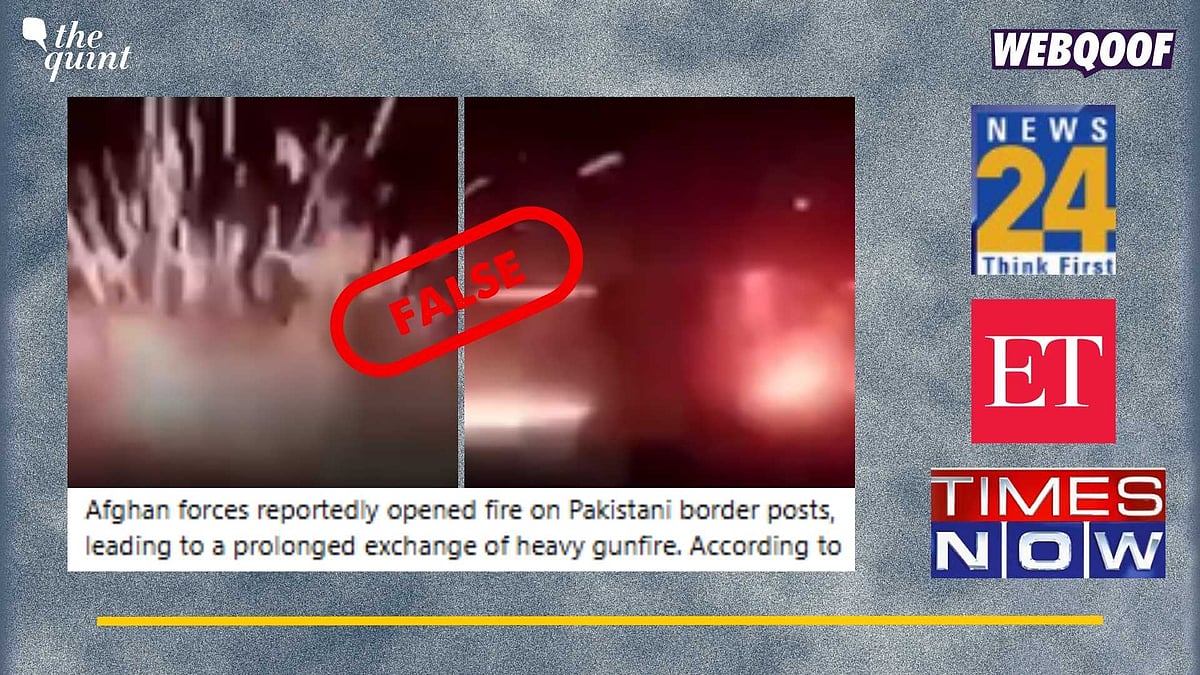
A video purportedly showing recent border clashes between Afghanistan and Pakistan forces has been circulating widely on social media platforms and several mainstream news outlets. However, fact-checking reveals the footage is from 2021 and unrelated to the current conflict between the two neighboring countries.
The misleading video, which depicts heavy gunfire exchanges, gained traction as tensions between Afghanistan and Pakistan reached dangerous new heights. Several prominent Indian news organizations, including Times Now, Economic Times, and News24, shared the footage on their social media channels without proper verification, inadvertently amplifying the misinformation.
Investigation into the video’s origin shows it actually portrays fighting in Afghanistan’s Panjshir Valley during the Taliban’s takeover of the country in 2021. The footage has been repurposed to fit the narrative of current hostilities, misleading viewers about the nature and extent of the ongoing border conflict.
The actual situation along the Afghanistan-Pakistan border has indeed deteriorated significantly in recent weeks. Pakistan launched airstrikes targeting what it claims were Tehreek-i-Taliban Pakistan (TTP) militant camps inside Afghanistan. The TTP, often referred to as the Pakistani Taliban, has been responsible for numerous deadly attacks inside Pakistan in recent years.
Following Pakistan’s military action, the Afghan Taliban—now in control of Afghanistan’s government—reportedly retaliated with cross-border attacks. Pakistani officials have characterized the situation as approaching “open war,” highlighting the serious escalation in hostilities between the two nuclear-armed neighbors.
The border region between Afghanistan and Pakistan, particularly along the disputed Durand Line, has long been a flashpoint for violence. The porous border stretches approximately 2,600 kilometers (1,600 miles) through rugged, mountainous terrain that is difficult to monitor and control.
Regional security experts note that this latest flare-up represents a significant breakdown in the already strained relationship between Pakistan and the Taliban government in Afghanistan. Pakistan initially supported the Taliban’s return to power in 2021, but relations have since soured over the TTP issue.
“Pakistan expected the Taliban to rein in TTP militants operating from Afghan soil, but that hasn’t materialized to Islamabad’s satisfaction,” says Dr. Avinash Paliwal, a South Asia security expert at SOAS University of London. “This has led to Pakistan taking more direct action, which the Taliban government views as a violation of their sovereignty.”
The economic implications of this conflict are substantial for both countries. Afghanistan, already facing a humanitarian crisis following decades of war and recent natural disasters, cannot afford further destabilization. Pakistan’s economy is similarly fragile, with the country grappling with high inflation, dwindling foreign reserves, and political instability.
International organizations have expressed concern about the escalation. The United Nations has called for restraint from both sides, emphasizing the potential humanitarian impact on civilian populations in the border regions.
As tensions continue to simmer, the spread of misinformation through unverified videos threatens to inflame public opinion and potentially complicate diplomatic efforts to defuse the situation. Media ethics experts emphasize the responsibility of news organizations to verify content before sharing, particularly during sensitive geopolitical conflicts.
“In the age of social media, misinformation can spread faster than the truth,” notes Dr. Sarah Khan, a media studies professor at Karachi University. “When established news outlets share unverified content, it lends legitimacy to false narratives that can have real-world consequences.”
The incident underscores the challenges of information verification in conflict zones and highlights how old footage can be repurposed to fit contemporary narratives, potentially exacerbating already volatile situations.
Fact Checker
Verify the accuracy of this article using The Disinformation Commission analysis and real-time sources.

8 Comments
The escalating tensions between Afghanistan and Pakistan are concerning, but disseminating misinformation only serves to worsen the situation. Careful, fact-based reporting is crucial to inform the public accurately and avoid further inflaming the conflict.
Misinformation can have far-reaching impacts, particularly in matters of national security and international relations. I hope this incident prompts a broader discussion on the importance of rigorous fact-checking and source verification in the media industry.
This is a concerning case of misinformation spreading through Indian media outlets. It’s important that news reports provide accurate, verified information, especially on sensitive cross-border issues like this. Fact-checking is crucial to prevent the amplification of misleading narratives.
This incident highlights the need for greater scrutiny of online content and social media sharing by mainstream media outlets. Fact-checking should be a standard practice to prevent the unintentional spread of disinformation, which can have serious consequences.
While border disputes between nations are complex and sensitive, responsible journalism must prevail. I hope the media outlets involved learn from this experience and implement stronger verification procedures to ensure accurate and ethical reporting going forward.
The use of outdated footage is a clear lapse in journalistic standards. Maintaining credibility and public trust should be the top priority for news organizations, especially when covering issues that could escalate regional tensions. Fact-checking is a must.
Using outdated or unrelated footage in news coverage of current events is highly irresponsible. It can inflame tensions and undermine public trust. I hope the media outlets involved take steps to improve their verification processes and issue corrections.
Agreed. Responsible journalism requires diligence in confirming the validity of sources and content, especially on matters that could impact geopolitical relations. Transparency and accountability from the media are essential in such cases.