


Listen to the article
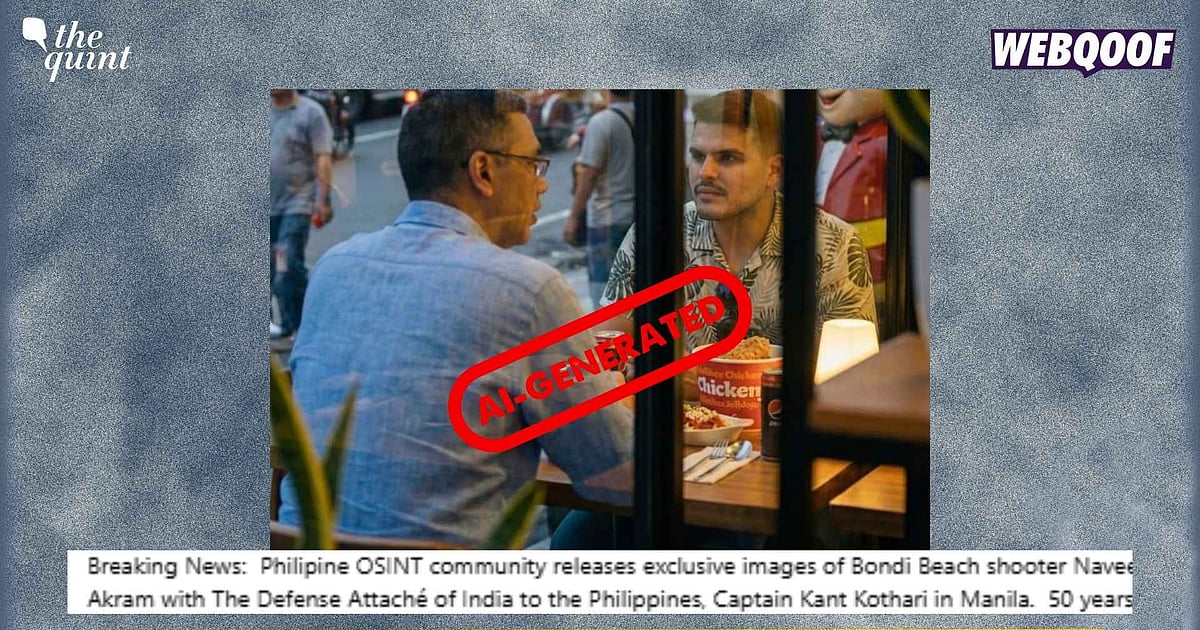
A purported image circulating on social media allegedly showing Australia’s Bondi Beach attacker Naved Akram meeting with an Indian military official has been confirmed to be fabricated, according to digital forensic analysis.
The widely shared image depicts Akram, who was responsible for the April 2024 knife attack at Sydney’s Bondi Junction Westfield shopping center that left six people dead and multiple others wounded, supposedly sitting in a cafe with Captain Chandra Kant Kothari, the Defense Attaché of India to the Philippines.
Social media posts accompanying the image have claimed it was released by the “Philippine OSINT community” and suggested a connection between the attacker and the Indian military official. The posts have gained significant traction across multiple platforms, being shared thousands of times in recent days.
However, digital forensic experts have conclusively determined the image was created using artificial intelligence technology. The fabrication exhibits several telltale signs of AI generation, including inconsistent lighting, unnatural blending of facial features, and distortions typical of current generative AI systems.
The circulation of this falsified image comes at a particularly sensitive time, as authorities in Australia continue their investigation into the Bondi Beach attack. Akram, a 40-year-old Queensland resident, was fatally shot by police during the incident after he had already stabbed multiple victims in the shopping center.
The fabricated image appears designed to create false connections between the attacker and India, potentially stoking diplomatic tensions and spreading misinformation about the tragedy. Security analysts note this is consistent with patterns of disinformation that often emerge following high-profile violent incidents.
Both Australian and Indian authorities have denounced the circulation of the fake image. A spokesperson from the Australian Federal Police stated, “Spreading fabricated content relating to active investigations is not only harmful to the investigation process but causes additional distress to the victims and their families.”
The Indian High Commission in Australia similarly issued a statement condemning the “malicious attempt to link Indian officials to this tragic event” and urged social media users to verify information from official sources before sharing.
The incident highlights the growing challenge of AI-generated disinformation following major news events. As generative AI technology becomes more accessible, falsified images, videos, and audio can be created and disseminated rapidly, often outpacing fact-checking efforts.
Digital literacy experts have pointed to several signs that could help social media users identify this particular image as fake, including unnatural shadows, inconsistent proportions, and blurry areas where the AI struggled to generate realistic details.
Social media platforms have implemented various measures to combat the spread of AI-generated disinformation, though critics argue these efforts remain insufficient given the volume and sophistication of fabricated content.
The Bondi Beach attack, which occurred on April 13, 2024, remains one of Australia’s deadliest mass casualty incidents in recent years. Authorities have focused on understanding Akram’s motives, with preliminary investigations suggesting mental health issues may have played a role in the attack.
As the investigation continues, officials have urged the public to rely on information from verified sources and to report suspected disinformation to platform moderators.
This incident serves as a stark reminder of how tragedies can be exploited to spread false narratives, and the increasing importance of critical media literacy in an era where distinguishing between authentic and artificially generated content grows more challenging by the day.
Fact Checker
Verify the accuracy of this article using The Disinformation Commission analysis and real-time sources.

8 Comments
The ability of AI to create such convincing yet fabricated images is concerning. We must stay vigilant and rely on expert analysis to separate fact from fiction.
The circulation of false images related to tragic events like this attack is deeply concerning. We must stay informed but also critical of what we see online.
It’s alarming how quickly misinformation can spread these days. Kudos to the digital forensics team for thoroughly debunking this AI-generated image.
Interesting that false images can spread so quickly online, even when they’re clearly fabricated. We should be vigilant about verifying information, especially when it relates to such serious events.
Digital forensics play a crucial role in identifying manipulated media. It’s good to see the experts were able to conclusively determine this image was AI-generated.
Absolutely. The telltale signs of AI generation, like inconsistent lighting and unnatural blending, make it clear this was not a real photo.
While social media makes information more accessible, it also enables the rapid proliferation of false content. Verifying sources is key to maintaining integrity.
Fabricated images can have serious implications, especially when they suggest connections that don’t exist. Fact-checking is essential to combat the spread of disinformation.