


Listen to the article
MP’s Land Size Claim About Walewale Constituency Proven Incorrect
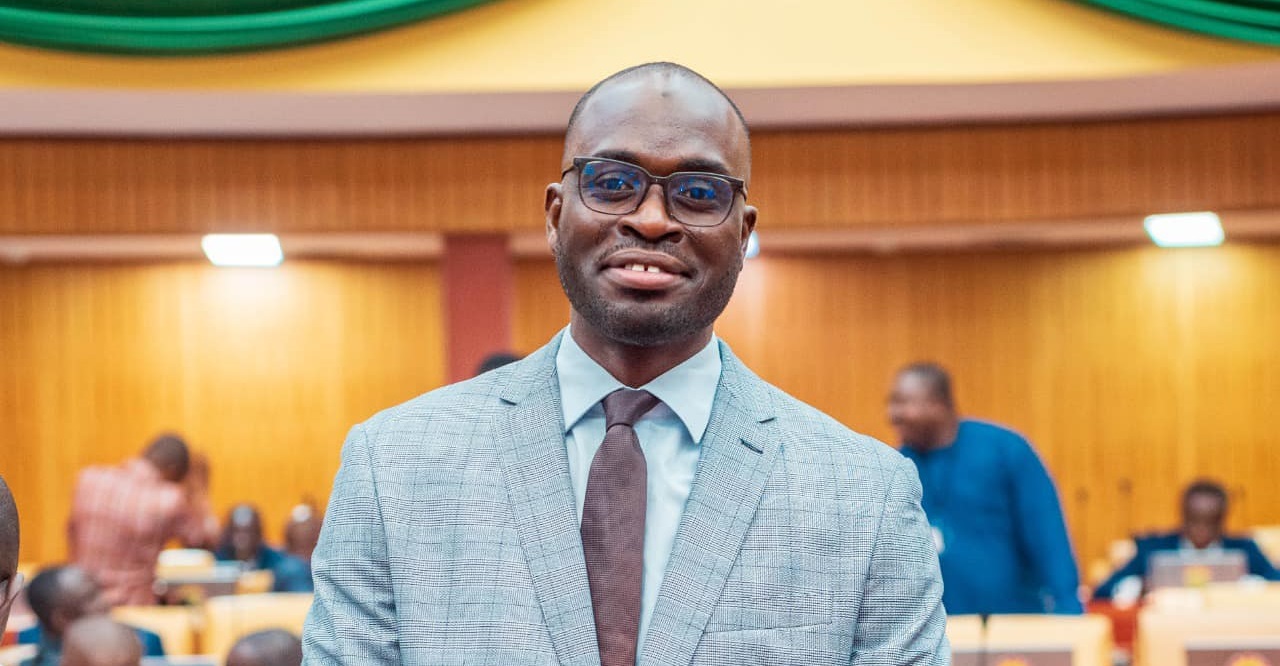
A claim by Walewale Constituency Member of Parliament Abdul-Kabiru Tiah Mahama that his constituency is larger than the entire Greater Accra Region has been determined to be false following an independent investigation.
During a March 7, 2026 appearance on Joy FM’s Newsfile program, MP Mahama made the assertion while discussing parliamentary transportation needs. “The land size of my constituency is more than the whole of Greater Accra Region,” he stated, using this claim to justify why MPs require substantial vehicles rather than bicycles or small cars to effectively engage with constituents.
Official records from the Greater Accra Regional Coordinating Council and the West Mamprusi Municipal Assembly, however, paint a different picture. Greater Accra Region, while Ghana’s smallest region, spans 3,245 square kilometers—approximately 1.4% of Ghana’s total land area. In contrast, the West Mamprusi Municipal Assembly, which encompasses the Walewale constituency, covers 2,610.44 square kilometers.
The discrepancy raises questions about the accuracy of information being presented by elected officials when advocating for resources. In Ghana’s administrative structure, regions represent large governance units while constituencies are smaller electoral divisions specifically designed for parliamentary representation. The nation currently has 16 regions divided into 261 districts, with 275 constituencies for electoral purposes.
When contacted about the inconsistency, MP Mahama defended his statement by claiming alternative measurements. “Constituency is same as the district (in size). It does not fall in between more than one district or vice versa,” he told fact-checkers via Facebook Messenger. The MP further referenced geographic coordinates (longitudes 0°35’W and 1°45’W and latitude 9°55’N and 10°35’N) which he claimed resulted in an estimated area of “around 5,010 sq km” or “4,892 km²” for West Mamprusi.
Notably, while the West Mamprusi Municipal Assembly website does reference these same coordinates, it contradicts the MP’s claim by explicitly stating the land area as 2,610.44 square kilometers—not the larger figures he suggested.
Adding further complexity to the situation, calculations of the area within these coordinates using artificial intelligence tools produced even more divergent figures—approximately 9,400 to 9,463 square kilometers. Despite being presented with this conflicting information, MP Mahama maintained his position, stating: “I have provided you with my source… It is your choice to decide on what to use. Clearly, I made the statement knowing these figures as the MP before you could even fact check.”
The inconsistency highlights ongoing tensions regarding resource allocation for parliamentarians. During the Newsfile discussion, Mahama had argued that MPs often “try to live beyond what they can do, including going to borrowing to go take care of the people,” resulting in public perceptions that they are wealthy. He suggested that MPs face unique pressures to address constituent problems that “the President doesn’t get to see… no other arm of government gets to see.”
The land size discrepancy underscores broader challenges in Ghana’s political discourse, where factual accuracy can sometimes be subordinated to rhetorical effectiveness when officials advocate for increased resources or authority.
Based on official records from the relevant administrative bodies, the claim that Walewale constituency exceeds Greater Accra Region in land size remains demonstrably false, with the region being approximately 635 square kilometers larger than the constituency.
Fact Checker
Verify the accuracy of this article using The Disinformation Commission analysis and real-time sources.

5 Comments
This highlights the need for MPs to be more careful about making unsupported claims, even if the intention is to advocate for their constituents. Fact-checking helps ensure the public receives reliable information from their representatives.
True, using inaccurate data undermines the credibility of the argument, no matter how well-intentioned. Constituents deserve facts, not exaggerations, from their elected leaders.
It’s good to see the Disinformation Commission stepping in to provide this fact-check. Verifying the size claims is important, as it affects resource allocation and policy decisions for the region.
Interesting fact-check on the Walewale MP’s claim. It’s important for elected officials to provide accurate information to the public, especially on matters of constituency size and resource needs. The data shows the MP’s statement was incorrect.
Glad to see an independent investigation was conducted to verify the claim. Transparency and accountability are crucial for good governance.