


Listen to the article
In a significant escalation of regional tensions, Iran’s Islamic Revolutionary Guard Corps (IRGC) announced on Sunday that it now considers American and Israeli-linked universities in the Middle East to be “legitimate targets.” According to multiple reports, this declaration comes in response to what Iranian officials describe as the deliberate destruction of Iranian academic institutions by forces aligned with Washington and Tel Aviv.
The statement marks a concerning expansion of potential targets beyond traditional military and government facilities, potentially placing educational institutions in the crosshairs of future conflicts. This development comes amid heightened tensions following recent exchanges of fire between Iran and Israel.
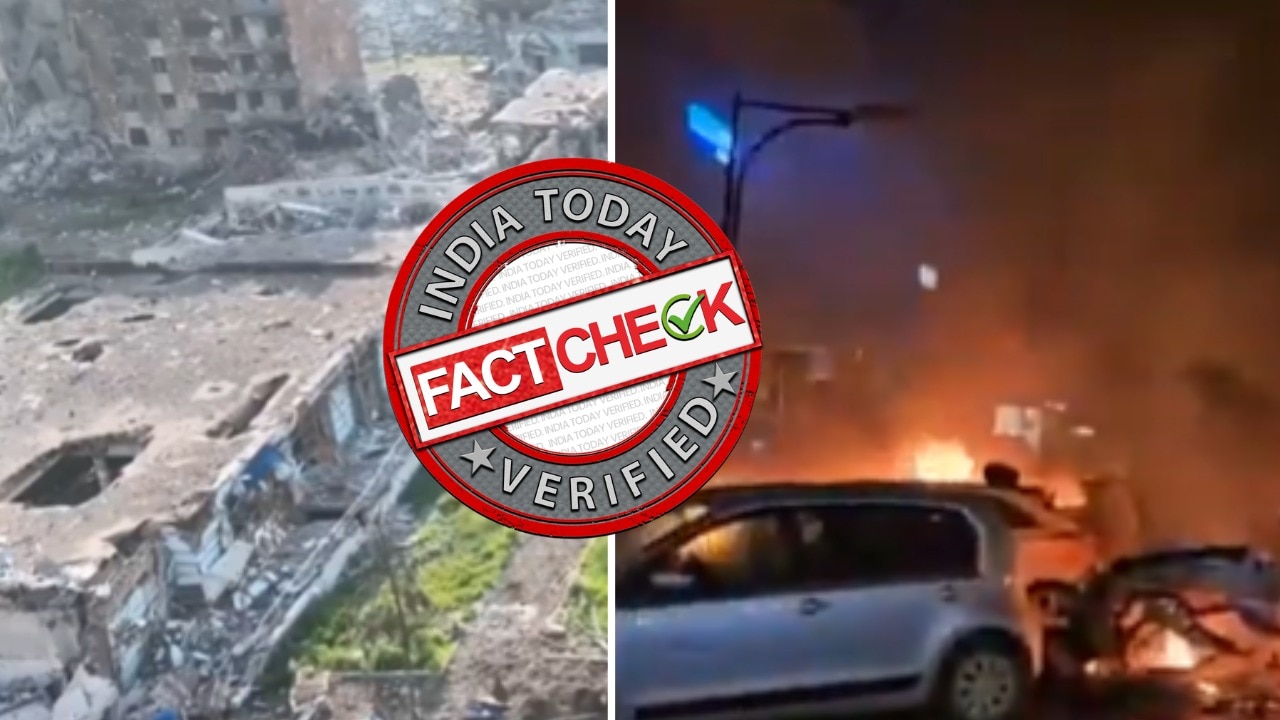
Meanwhile, social media platforms have become battlegrounds for information warfare, with numerous accounts circulating videos purportedly showing extensive damage in Tel Aviv resulting from Iranian missile strikes. However, investigation reveals many of these videos are deliberately mislabeled footage from entirely different conflicts and time periods.
One widely shared aerial video depicting destroyed buildings and widespread debris was circulated with captions claiming it showed “massive and extensive destruction over Tel Aviv.” The dramatic footage shows block after block of devastated urban landscape, suggesting catastrophic damage.
However, reverse image searches reveal this footage actually originated from Ukraine, specifically showing the city of Bakhmut after Russian attacks. The video first appeared online in July 2023, nearly a year before the current Middle East escalation, when Ukrainian journalist Illia Ponomarenko shared it on social media platforms to document the destruction of Bakhmut.
In another case of misinformation, nighttime footage showing a burning vehicle surrounded by firefighters has been shared thousands of times with the caption: “This is not Gaza, this is Tel Aviv. Iran is delivering eviction notices daily.” The dramatic imagery shows intense flames consuming a car on a roadway as emergency responders work to contain the blaze.
Investigation reveals this video actually depicts an incident in Kiryat Shmona, a northern Israeli city near the Lebanese border. The footage was published by Israeli news outlet Arutz Sheva on November 2, 2023. According to contemporaneous reporting by The Times of Israel, the incident resulted from a rocket attack for which Hamas claimed responsibility, stating they had fired 12 rockets from Lebanon at the northern Israeli city. At least one rocket reportedly struck a shopping area, causing significant damage to vehicles and stores.
These examples highlight the challenge of verifying information during times of conflict, when emotional reactions and the desire to demonstrate impact can lead to the deliberate mislabeling of footage. Social media algorithms tend to amplify sensational content, allowing such misinformation to reach millions before fact-checking can occur.
The spread of such misleading content comes at a particularly sensitive moment in Middle East relations, as Iran and Israel navigate a precarious situation following direct military exchanges. False impressions of damage on either side could potentially influence public opinion and political decision-making.
Media analysts note this pattern of recycling footage from previous conflicts has become increasingly common in the digital age, requiring viewers to approach dramatic imagery with skepticism until verified by reliable sources. Fact-checking organizations continue to identify and debunk misleading content, but often struggle to reach the same audience that initially viewed the false information.
As tensions remain high across the region, the battle for information integrity continues alongside military posturing, with both elements playing crucial roles in shaping international responses to the evolving crisis.
Fact Checker
Verify the accuracy of this article using The Disinformation Commission analysis and real-time sources.

8 Comments
This highlights the importance of fact-checking and media literacy, especially when it comes to sensitive geopolitical issues. Spreading unverified footage can contribute to the spread of misinformation and inflame tensions further.
Absolutely, fact-checking is crucial to avoid amplifying false narratives during complex conflicts. Responsible reporting and sharing of information is essential.
The escalation of potential targets to include universities is concerning. The role of social media in amplifying misinformation is also troubling. Maintaining a critical eye on sources and verifying claims is crucial during these tense times.
Interesting that Iran is expanding potential targets to universities. Escalating rhetoric and disinformation around regional conflicts is concerning. It’s important to verify sources and fact-check claims before sharing videos or information online.
The deliberate mislabeling of footage to spread disinformation is a worrying tactic. Fact-checking and media literacy are so important to cut through the noise and get accurate information, especially around complex regional conflicts.
Targeting educational institutions takes this conflict to a new level. The rampant spread of unverified videos on social media is fueling tensions and obscuring the truth. Responsible information sharing is crucial during these volatile times.
The targeting of educational institutions is a troubling development. Weaponizing information and social media adds another layer of complexity to these regional tensions. Vigilance and scrutiny of sources are needed to counter the spread of disinformation.
This situation highlights the ongoing information warfare alongside the military and political dynamics. It’s a good reminder to be cautious about unverified videos or claims, especially when they involve sensitive geopolitical events.