


Listen to the article
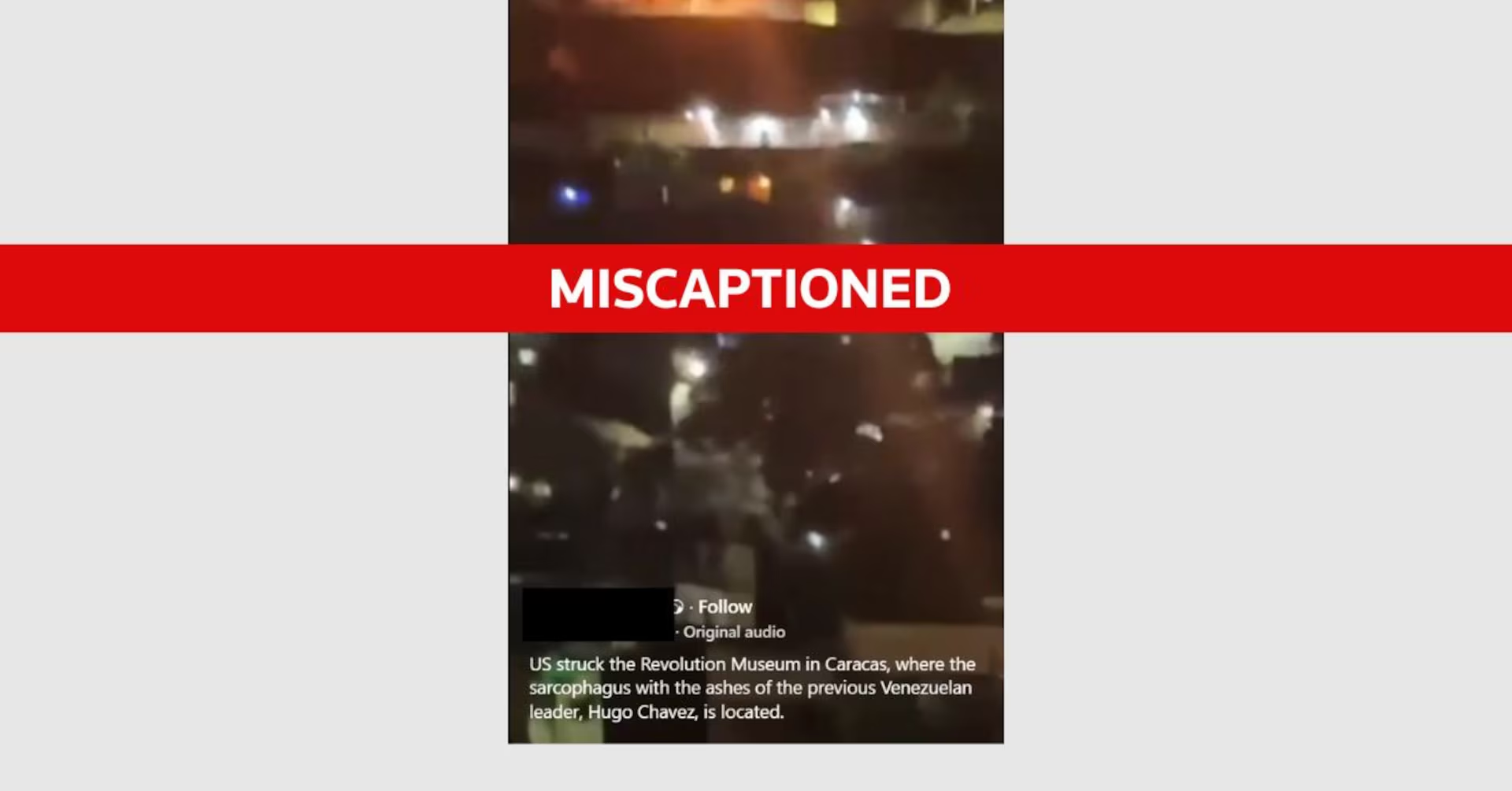
A video circulating on social media purportedly showing U.S. forces striking the mausoleum of former Venezuelan President Hugo Chavez has been debunked as false by Reuters fact-checkers.
The footage, which began circulating on January 3, shows bright orange flames and thick smoke billowing from a hillside location in Caracas. Several posts claimed it depicted “U.S. forces attacking the Revolution Museum in Caracas, where the sarcophagus with the ashes of the previous Venezuelan leader, Hugo Chavez, is located.”
However, a detailed analysis of geographical features visible in the video revealed that the fire was actually at the Cagigal Naval Observatory complex, which houses the General Command of the Bolivarian Militia—a civilian volunteer reserve force. This location is approximately 500 meters (1,640 feet) away from Cuartel de la Montana, the military museum where Chavez’s remains are actually kept.
The investigation confirmed the location through multiple sources of evidence. Satellite imagery shows that features of the scenery in the video match the south side of the Naval Observatory. The distinctive lighting pattern of a building visible on the left side of the hilltop corresponds to the window arrangement of the complex’s rotunda, as seen in Google imagery. An archival photograph further corroborated these findings by showing the same square-shaped opening visible on the right side of the building in the video.
Reuters also addressed separate Facebook posts sharing an image of the Observatory’s south side that falsely claimed to show Cuartel de la Montana. A Reuters photograph taken on January 6 shows the eastern side of Cuartel de la Montana without any visible damage. Additionally, the Hugo Chavez Eternal Commander Foundation, which manages the museum housing Chavez’s remains, posted an Instagram video on January 5 that appears to show the same side intact.
Further evidence came from Venezuela’s vice president’s office, which published photos on Facebook on January 5 showing then-Vice President Delcy Rodríguez (now interim president) visiting Chavez’s mausoleum, confirming it was undamaged.
The misinformation spread amid heightened tensions surrounding Venezuela’s political situation. Hugo Chavez, who died in 2013, was succeeded by current President Nicolas Maduro. Chavez remains an iconic figure in Venezuelan politics, with his legacy still wielding significant influence over the country’s political landscape.
This incident highlights the ongoing challenge of misinformation during politically sensitive periods, with social media users quickly spreading false narratives without verification. The fabricated claim of a U.S. attack on a national symbol like Chavez’s tomb would likely stoke strong emotions among Venezuelans, particularly supporters of the current government who view Chavez as a revolutionary hero.
Reuters’ fact-checking team concluded the video was “miscaptioned” and does not show any damage to Chavez’s final resting place.
Fact Checker
Verify the accuracy of this article using The Disinformation Commission analysis and real-time sources.

14 Comments
It’s unfortunate that false narratives can gain so much traction online, but I’m glad to see a thorough debunking backed by solid evidence. This is a good example of responsible reporting.
Agreed. Rigorous fact-checking is essential to combat the rising tide of misinformation, especially around politically charged topics.
While the initial video may have seemed dramatic, I’m glad the true location was identified. It’s a good reminder to always be skeptical of unverified claims, especially related to politically charged topics.
Absolutely. Fact-checking is the best way to cut through the clutter and get to the truth of the matter.
The detailed analysis of the video’s geographical features is impressive. It’s great to see this level of investigative work to counter the spread of misinformation.
Definitely. Fact-checking that relies on concrete evidence rather than hearsay is the best way to maintain public trust.
While the initial video may have seemed sensational, I appreciate the diligence in verifying the location and correcting the record. This kind of nuanced reporting is so important these days.
Absolutely. Maintaining journalistic integrity by sticking to the facts is crucial, even when the story may be less dramatic than initially portrayed.
It’s concerning how quickly misinformation can spread on social media, especially around politically sensitive events. This kind of rigorous verification process is crucial to counter false narratives.
Agreed. We need more reliable, evidence-based reporting to cut through the noise and give people the accurate information they need.
Interesting fact check on the video of the fire in Caracas. It’s good to see the location verified through satellite imagery and other evidence rather than relying on unsubstantiated claims.
Fact-checking is so important these days to combat the spread of misinformation. Kudos to the Reuters team for the thorough investigation.
This fact check highlights the importance of verifying information from multiple credible sources before jumping to conclusions. It’s a good model for how to responsibly report on potentially inflammatory events.
Agreed. Responsible journalism that prioritizes accuracy and context is so crucial, especially when it comes to geopolitical issues.