


Listen to the article
Experts Challenge Trump’s Claims on Iran’s Nuclear and Missile Capabilities
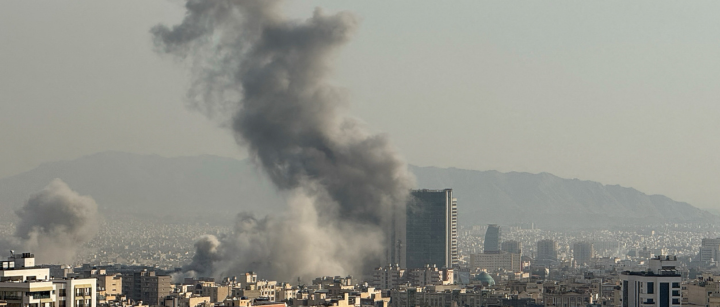
Arms control specialists are disputing President Donald Trump’s recent assertions regarding Iran’s nuclear weapons program and missile capabilities, which he used to justify U.S. airstrikes launched on February 28.
During his explanation for the military action, Trump claimed Iran “soon” could develop missiles capable of reaching American soil and had “attempted to rebuild” nuclear facilities damaged in previous U.S. strikes. However, multiple experts assert these claims lack substantiating evidence.
“Our objective is to defend the American people by eliminating imminent threats from the Iranian regime,” Trump stated in his initial remarks. He emphasized his administration’s longstanding position that “this terrorist regime can never have a nuclear weapon.”
The controversy centers on two key claims: the timeline for Iran’s potential development of long-range missiles and the status of its nuclear program following U.S. bombings in June 2025.
Regarding Iran’s missile capabilities, the president said in his State of the Union address that Iran was “working to build missiles that will soon reach the United States of America.” However, experts point to a considerable technological gap between Iran’s current capabilities and what would be needed to develop an intercontinental ballistic missile (ICBM).
Emma Sandifer, program coordinator at the nonpartisan Center for Arms Control and Non-Proliferation, noted, “There is little evidence that Iran could build missiles that reach the United States in the near future. Recent estimates determined that not only does Iran have no intercontinental ballistic missile capability, but the country appears to have maintained its self-imposed missile range limit of 2,000 kilometers.”
A Defense Intelligence Agency report from May 2025 projected that Iran could potentially develop “a militarily-viable ICBM by 2035” – a decade from now – if it chose to pursue such capabilities. This timeline stands in stark contrast to the president’s suggestion of an imminent threat.
Senator Tim Kaine challenged the administration’s characterization, stating, “The intelligence suggests that Iran might have missiles that could reach the United States within a decade. There was nothing imminent about this.”
The status of Iran’s nuclear program presents another point of contention. While Trump claimed Iran “attempted to rebuild their nuclear program” after U.S. strikes in June 2025, arms control experts indicate a lack of evidence supporting this assertion.
“There is no evidence from the IAEA, from independent analysis of commercial satellite imagery, nor any evidence presented to Congress from the U.S. intelligence Community that Iran was rebuilding the damaged nuclear facilities and preparing to restart enrichment operations,” said Daryl G. Kimball, executive director of the Arms Control Association.
Satellite images from January showed repair activity at the Natanz and Isfahan facilities that were bombed last year, but experts believe this may represent damage assessment rather than reconstruction efforts. Robert Einhorn, a senior fellow at the Brookings Institution and former State Department official, told the Wall Street Journal there’s “a general conclusion today that there’s a de facto suspension of enrichment.”
Prior to the June 2025 strikes, the International Atomic Energy Agency (IAEA) reported no evidence of an “ongoing, undeclared structured nuclear programme” in Iran. However, the agency remained concerned about Iran’s accumulation of uranium enriched to 60%, which it called “a matter of serious concern” with “potential proliferation implications.”
Experts clarify that while Iran had previously reduced its “breakout time” – the time needed to produce enough weapons-grade uranium for one bomb – to about a week, this represents only one step in a lengthy process.
“After this point, once you have the weapons-grade uranium, Iran would then need to manufacture the rest of the weapon. This process would likely take much longer, perhaps months to a year,” Sandifer explained.
Iranian Foreign Minister Abbas Araghchi denied the country is developing ICBMs, telling India Today TV, “We have limited range to below 2000 kilometers intentionally. We don’t want it to be a global threat.”
The disputed claims raise questions about the justification for the recent military operation, with Kimball concluding that “while Iran’s nuclear program remains a medium- to long-term proliferation risk, there was and is no imminent Iranian nuclear threat.”
Fact Checker
Verify the accuracy of this article using The Disinformation Commission analysis and real-time sources.

7 Comments
Interesting to see the experts disputing Trump’s claims about Iran’s nuclear and missile programs. It will be important for policymakers to carefully weigh the evidence from arms control specialists as they consider next steps.
The timeline for Iran’s potential long-range missile development and the status of its nuclear program seem to be key areas of controversy. It will be important for policymakers to carefully weigh the evidence from arms control specialists.
This fact check highlights the importance of distinguishing between rhetoric and reality when it comes to Iran’s nuclear and missile capabilities. Understanding the nuances of the situation will be key to formulating an appropriate policy response.
While Iran’s nuclear and missile ambitions are certainly concerning, it’s critical that any U.S. actions are grounded in credible intelligence and assessments. Rushing to military strikes without strong justification could have serious unintended consequences.
This fact check highlights the importance of distinguishing between rhetoric and reality when it comes to complex geopolitical issues like Iran’s nuclear and missile capabilities. A measured, evidence-based approach is essential.
I’m curious to learn more about the specific evidence that arms control experts are using to dispute Trump’s claims. Understanding the nuances of the situation will be key to formulating an appropriate policy response.
Interesting fact check on Trump’s assertions about Iran’s nuclear and missile capabilities. It’s important to rely on expert analysis rather than unsubstantiated claims, especially when it comes to such sensitive national security issues.