


Listen to the article
False Claims Circulate of Macron Sharing Doctored Epstein-Melania Trump Photo
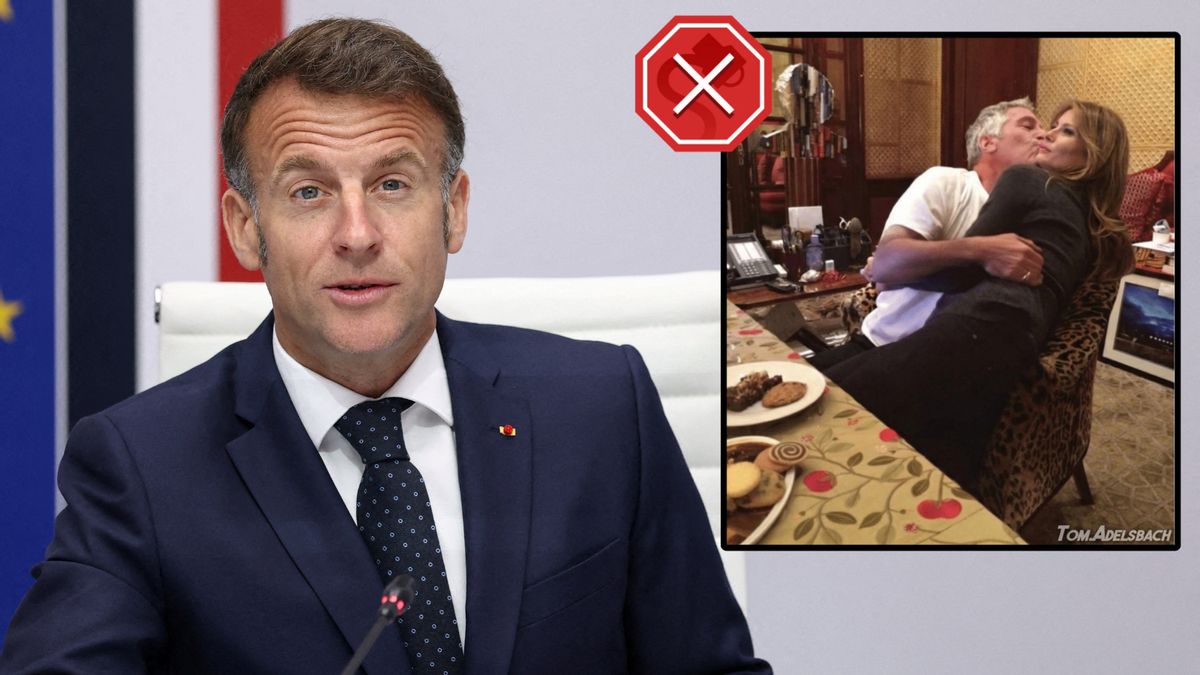
A false claim that French President Emmanuel Macron shared a manipulated image of Jeffrey Epstein kissing U.S. First Lady Melania Trump has been spreading across social media platforms. Fact-checkers have determined the claim to be entirely fabricated, with no evidence that Macron ever posted such content on any of his official channels.
The doctored image began circulating shortly after Melania Trump issued a public statement on April 9, 2026, denying any relationship with the late sex offender Jeffrey Epstein. The First Lady specifically addressed the proliferation of false imagery, stating: “Numerous fake images and statements about Epstein and me have been circulating on social media for years now. Be cautious about what you believe. These images and stories are completely false.”
Following her statement, a video containing a still image purportedly showing Epstein kissing the First Lady spread rapidly on X (formerly Twitter) and Facebook. The posts claimed that President Macron had shared the image as a form of retaliation against Donald Trump, who had days earlier made disparaging comments about Macron’s marriage.
A thorough investigation of Macron’s verified social media accounts revealed no such post. French fact-checkers also debunked the claim when the image first began circulating in early April. No reputable news organizations reported on the alleged incident, which would have triggered significant international coverage had it actually occurred.
The manipulated image has been traced to its original creator, a self-described “obsessive memeist” who operates under the name Tom Adelsbach. He posted the image on Facebook on February 5, clearly labeling it as “digitally altered” and “parody.” Adelsbach later took credit for creating the meme on his X account @PaulleyTicks after seeing it circulate with the false claim about Macron.
Digital forensic analysis revealed that Adelsbach manipulated an authentic Department of Justice file photo of Epstein. The original image, found on page 51 of file EFTA01648070.pdf released by the DOJ, shows Epstein puckering his lips while grabbing someone whose face is redacted. Adelsbach appears to have replaced the redacted face with an image of Melania Trump.
The false claim gained traction after Spanish-language social media posts cited “journalist Nabil Omran” as the source. Omran did share the manipulated image on Facebook on April 3 with a caption suggesting Macron had posted it to avenge his dignity after Trump’s comments. Trump had mockingly said that Macron was “still recovering from the right to the jaw” and claimed that Macron’s wife “treats him extremely badly.”
This incident occurred in the context of ongoing tensions between the two leaders. Earlier footage had shown Brigitte Macron apparently shoving the French president in the face. When asked about Trump’s remarks, Macron had responded by saying they were “neither elegant nor up to standard” and that they did not “merit a response.”
This is not the first time that false claims have linked the First Lady to Epstein. Snopes and other fact-checking organizations have previously examined various rumors attempting to tie Melania Trump to the convicted sex offender.
The rapid spread of this fabricated claim highlights the continuing challenges of misinformation on social media platforms, particularly during periods of heightened political tension. It also demonstrates how easily manipulated media can cross language barriers and international boundaries, requiring coordinated fact-checking efforts across multiple countries.
Fact Checker
Verify the accuracy of this article using The Disinformation Commission analysis and real-time sources.

14 Comments
This is a good example of how quickly false narratives can take hold, especially when they play into existing political tensions. I’m glad the facts were able to set the record straight.
Agreed. In an era of heightened polarization, it’s more important than ever to rely on credible sources and resist the temptation to spread unverified claims, no matter how salacious they may seem.
It’s troubling to see how quickly false narratives can take hold, even in the face of clear evidence to the contrary. This underscores the importance of rigorous fact-checking and accountability.
Absolutely. With the speed and reach of social media, it’s crucial that we all make an effort to verify claims before passing them along. Fact-checking should be a reflex, not an afterthought.
Interesting fact check. It’s good to see the truth come out and debunk these false claims. Spreading misinformation, especially about public figures, is highly irresponsible.
I agree, fact-checking is crucial these days to combat the spread of disinformation online. We should always be cautious about what we believe, especially when it comes to sensational claims.
While the story about Macron sharing a doctured Epstein-Melania photo is clearly untrue, it raises broader questions about the proliferation of fake news. We need to be vigilant consumers of information online.
Absolutely. The ease with which misinformation can be created and disseminated is alarming. Fact-checking and media literacy are crucial skills in the digital age.
Glad the First Lady spoke out to address these fabricated images. It’s important that people are aware of the difference between real news and fake content circulating on social media.
Yes, it’s concerning how quickly doctored images and false narratives can spread these days. Fact-checking and verifying sources is essential to combat the rise of misinformation.
While the specific claim about Macron and the Epstein-Melania photo is false, it highlights a larger issue of misinformation and the need for greater media literacy. We must be vigilant consumers of online content.
Well said. The proliferation of false narratives, whether political or sensational, is a serious threat to the integrity of public discourse. Fact-checking and critical thinking are essential skills for the digital age.
The fabrication and spread of this doctored image is a concerning trend. It’s a stark reminder of the need for media literacy and critical thinking when consuming online content.
Definitely. We all have a responsibility to be discerning about the information we engage with and share, in order to prevent the further proliferation of misinformation.