


Listen to the article
False Alarm: North Carolina “Roman Helmets” Hoax Spreads Across Social Media
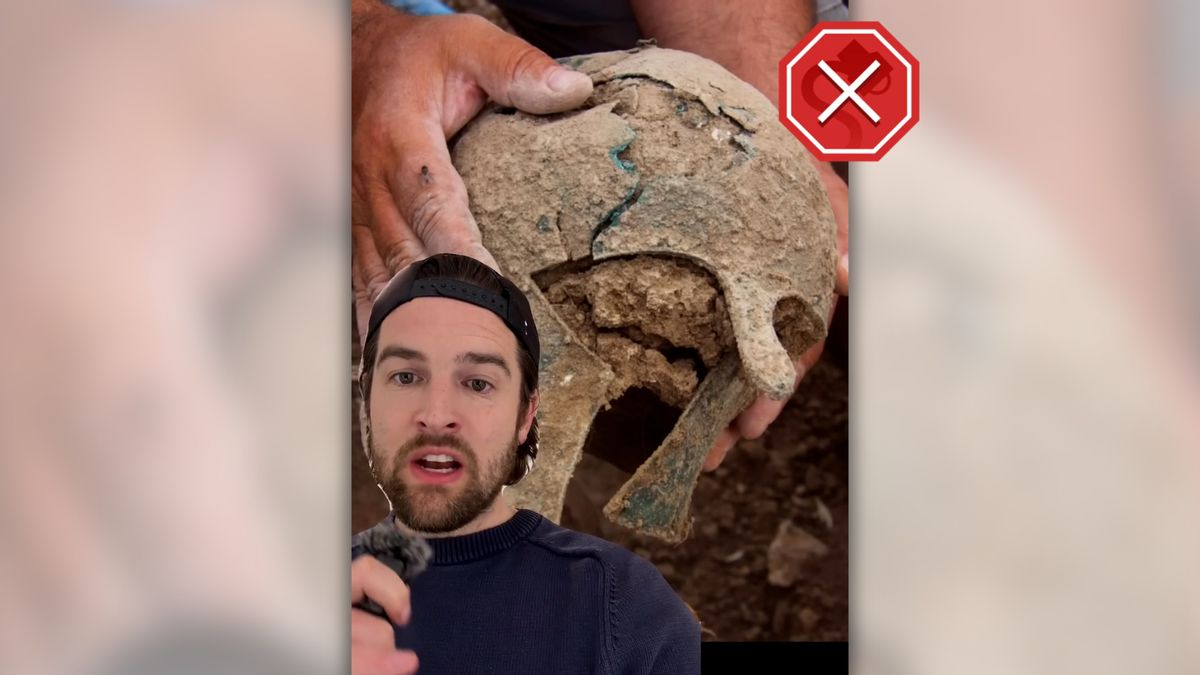
What began as an April Fools’ prank quickly morphed into a viral misconception as social media users across multiple platforms began sharing videos claiming that Roman battle helmets had been discovered at a North Carolina golf course. The fabricated story suggested that archaeologists had made a groundbreaking discovery that would “rewrite American history.”
According to the widely-shared videos, researchers supposedly uncovered several Roman helmets along with spears and swords at a coastal North Carolina golf course. The narrator claimed that Native American arrowheads found in the same location indicated a battle had occurred between Romans and indigenous people, resulting in the “decimation” of the Roman forces.
The videos featured a self-proclaimed expert identified as “Dr. Reemy Deemy” who allegedly stated that the discovery “changes everything” about American history. The narrator also claimed the golf course owner was upset because archaeologists planned to excavate the entire property.
Despite gaining traction online, the entire story was fabricated by popular social media personality Scott Whitehead as an April Fools’ Day joke. Whitehead posted the original videos on April 1, 2026, across multiple platforms including Facebook, Instagram, TikTok, and YouTube.
Several red flags should have alerted viewers to the hoax. For one, no reputable news organizations reported on what would have been an extraordinary archaeological discovery. Additionally, the Facebook version of Whitehead’s prank included an absurd quote from someone he described as “my cousin who works at PetSmart in the fish section,” whom he supposedly consulted about the historical implications.
Further investigation revealed that the images of helmets shown in the videos were misappropriated from legitimate archaeological sources. A reverse image search traced one helmet to the German Archaeological Institute’s website, where it was properly identified as a Corinthian helmet discovered in 2016. Other helmet images appeared to have been taken from a museum in Greece.
Despite these obvious indicators, many social media users appeared to believe the claim, commenting on Whitehead’s videos as if they were documenting a legitimate discovery. When contacted by Snopes for comment on the hoax and public reaction, Whitehead’s representatives had not responded at the time of publication.
Ironically, while the Roman helmet story was completely fabricated, North Carolina did experience a genuine archaeological discovery earlier in 2026. Archaeologists uncovered approximately 2,000 artifacts, remnants of longhouses, and evidence of a Native American village during construction of a new development. This authentic find, unlike Whitehead’s hoax, was widely reported by legitimate news outlets.
The rapid spread of the Roman helmet hoax highlights ongoing challenges with information literacy in the digital age. Even with obvious clues pointing to its satirical nature—including the April 1 posting date and outlandish details—many viewers accepted the claim at face value without seeking verification from credible sources.
This incident serves as a reminder for social media users to approach unusual or extraordinary claims with healthy skepticism, particularly when they lack coverage from established news organizations or scientific publications. The ease with which digital content can be manipulated or presented out of context continues to pose challenges for distinguishing fact from fiction online.
As the lines between entertainment, satire, and misinformation continue to blur on social platforms, this case demonstrates how quickly fabricated content can spread, even when the creator’s intent was merely to craft a harmless April Fools’ joke.
Fact Checker
Verify the accuracy of this article using The Disinformation Commission analysis and real-time sources.

10 Comments
This supposed Roman helmet discovery sounds like an elaborate April Fool’s prank that got out of hand. I’m glad the media is working to debunk these baseless claims and set the record straight.
Yes, it’s important to quickly counter false narratives like this before they gain too much traction. Fact-checking is crucial to maintaining public trust.
While the idea of ancient Romans reaching the Americas is intriguing, the evidence here appears to be fabricated. I appreciate the diligent investigation to uncover the truth behind this viral hoax.
Interesting how a harmless prank can morph into a widely-believed misinformation campaign. Fact-checking is crucial to combat the spread of false narratives, especially those with an air of plausibility.
This story serves as a good reminder to be skeptical of sensational claims, especially those lacking solid evidence. Kudos to the media for swiftly debunking this golf course hoax.
Absolutely. It’s vital that journalists and the public work together to counter the proliferation of misinformation online. Maintaining a fact-based discourse is key.
Well, that’s certainly an eye-catching claim – Roman helmets on a North Carolina golf course! Appreciate the journalists taking the time to thoroughly investigate and expose this hoax.
Hmm, this seems like a classic case of social media amplifying a fictitious story. I’m glad the authorities were able to quickly identify and debunk the bogus claims about Roman artifacts.
What a strange and imaginative hoax! I’m curious how the perpetrator thought they could get away with such an outlandish claim. Kudos to the fact-checkers for setting the record straight.
Fascinating story, though it seems the claims of Roman artifacts at this North Carolina golf course are unfounded. Hoaxes and misinformation can spread rapidly online, so it’s good to see this fact-checked.