


Listen to the article
Iran’s Supreme Leader and Obama Image Falsely Portrayed as Historic Meeting
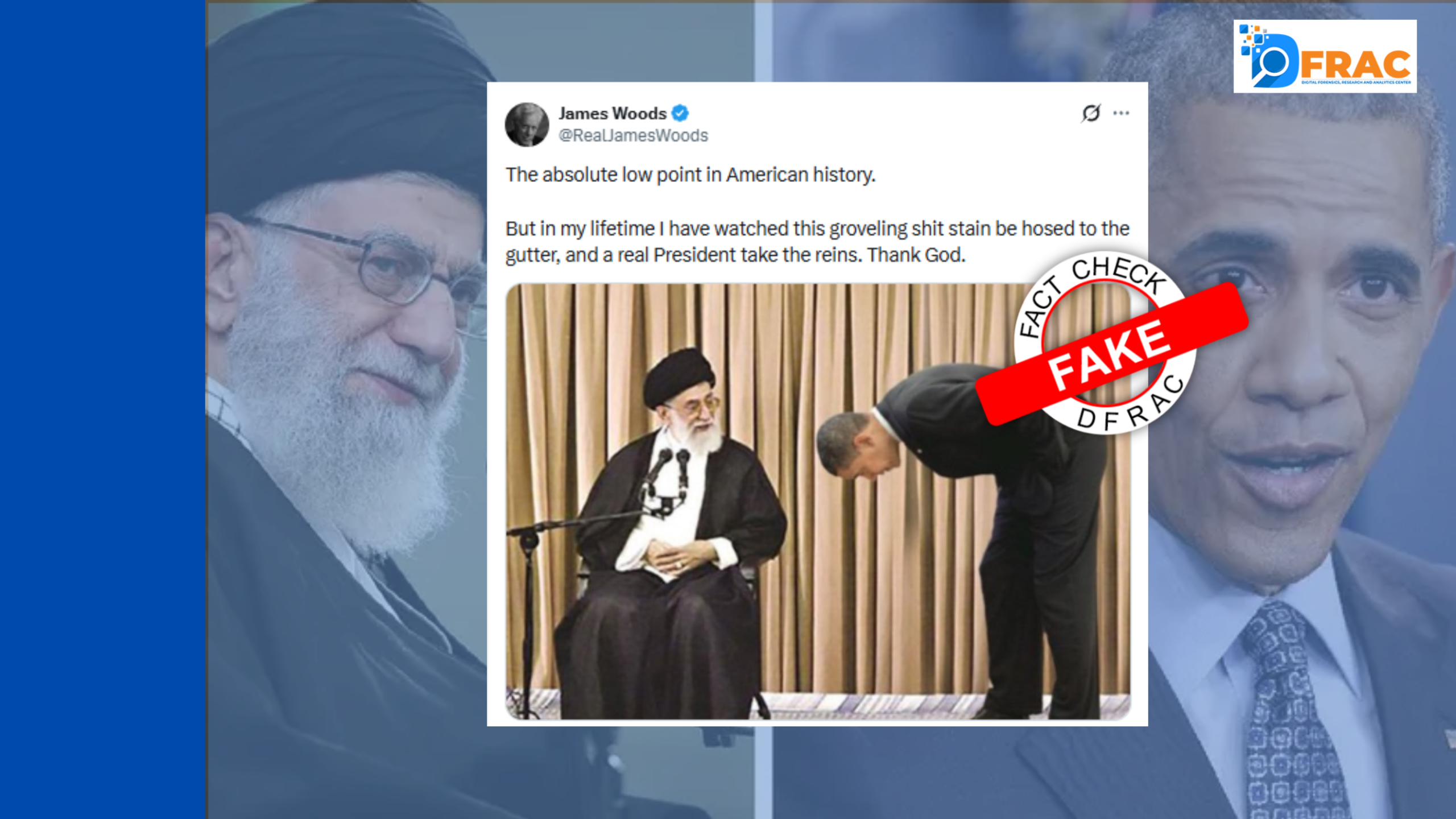
A manipulated image circulating on social media platforms has sparked controversy by falsely depicting former U.S. President Barack Obama bowing before Iran’s Supreme Leader Ayatollah Ali Khamenei. The fabricated photo, which has gained significant traction online, has been shared with captions describing it as “the absolute low point in American history.”
Digital forensics experts have conclusively determined that the viral image is a sophisticated photographic manipulation combining two entirely separate images from different time periods and contexts.
Upon detailed investigation using reverse image search technology, researchers traced the original photograph of Ayatollah Khamenei to August 3, 2005, during the inauguration ceremony of former Iranian President Mahmoud Ahmadinejad in Tehran. The authentic Getty Images photograph, captured by AFP photographer Atta Kenare, shows Khamenei looking toward Ahmadinejad while seated alongside former Iranian presidents Mohammad Khatami and Ali Akbar Hashami Rafsanjani.
The second element of the fabricated image—the photograph of Barack Obama bowing—originates from a well-documented White House event on May 8, 2009. The original image captures a touching moment in the Oval Office where President Obama bent down to allow a 5-year-old boy named Jacob Philadelphia, the son of a White House staff member, to touch his hair. The young boy had reportedly wanted to see if the president’s hair felt similar to his own.
The circulation of such manipulated imagery comes amid ongoing tensions between the United States and Iran, which have fluctuated significantly since the 1979 Islamic Revolution. Diplomatic relations between the two nations have been marked by periods of intense hostility and occasional attempts at rapprochement.
During Obama’s presidency, the United States participated in multinational negotiations that led to the 2015 Joint Comprehensive Plan of Action (JCPOA), commonly known as the Iran nuclear deal. This agreement, which placed limits on Iran’s nuclear program in exchange for sanctions relief, represented a significant diplomatic breakthrough at the time. However, the deal was later abandoned by the Trump administration in 2018, leading to renewed tensions.
The spread of this manipulated image reflects the increasingly common phenomenon of political misinformation circulating in digital spaces. According to a 2023 study by the Reuters Institute for the Study of Journalism, politically charged manipulated images are particularly effective at generating emotional responses and reinforcing existing beliefs among viewers, even when they contain obvious visual inconsistencies that should raise suspicion.
Digital manipulation of photographs involving political figures has become increasingly sophisticated and problematic in recent years. Media literacy experts warn that such doctored images can significantly impact public perception and potentially influence political discourse, particularly when they reinforce existing narratives about international relations or domestic politics.
Social media platforms have implemented various measures to combat visual misinformation, including partnering with fact-checking organizations and developing AI tools to detect manipulated media. However, these efforts face ongoing challenges as manipulation techniques continue to evolve.
The fabricated image of Obama and Khamenei serves as a reminder of the importance of critical media consumption and verification of sources, particularly regarding content that appears to document significant or controversial historical moments.
Fact Checker
Verify the accuracy of this article using The Disinformation Commission analysis and real-time sources.

20 Comments
This case highlights the importance of media literacy and critical thinking when it comes to online content. We should all be more vigilant about verifying information before sharing it.
Absolutely. As digital citizens, we have a responsibility to combat the spread of misinformation and disinformation.
Digital forensics is a crucial tool for debunking fake images and holding bad actors accountable. I’m glad the experts were able to trace the origins of this manipulated photo.
Agreed. Transparency and accountability are essential for maintaining trust in our information ecosystem.
This is a concerning example of how digital manipulation can be used to distort the truth and sow division. It’s crucial that we all work to combat the spread of misinformation.
Agreed. Fact-checking and media literacy should be core skills for navigating the modern information landscape.
This case is a sobering reminder of the power of digital manipulation and the need for robust fact-checking. We must all be more vigilant about the information we consume and share.
Well said. Critical thinking and media literacy are essential skills in the digital age.
Misinformation campaigns can be damaging, but it’s encouraging to see fact-checkers working diligently to uncover the truth. We must remain vigilant against the spread of falsehoods.
Well said. Fact-checking and media literacy are crucial skills for navigating the digital age.
I appreciate the thorough investigation and explanation provided by the fact-checkers. It’s important that we have trusted sources to turn to when confronted with questionable content.
Definitely. Maintaining the integrity of our information ecosystem is vital for a healthy democracy.
I’m glad the fact-checkers were able to expose this manipulated image. It’s a good reminder that we can’t always take viral content at face value, even if it seems convincing.
Well said. We need to be diligent and question the sources and motives behind the information we consume online.
It’s concerning to see how easily images can be manipulated to spread misinformation. This case highlights the importance of verifying sources and being skeptical of viral claims online.
Absolutely. We should always fact-check before sharing or believing content, especially when it seems designed to provoke a strong reaction.
This is a good example of how even seemingly credible images can be fabricated. It’s a sobering reminder to always scrutinize the sources and context of visual content.
Definitely. We should be especially cautious about politically charged images that seem designed to provoke strong emotional responses.
It’s disappointing to see such a blatant attempt to mislead the public. But I’m glad the fact-checkers were able to uncover the truth behind this manipulated image.
Me too. Maintaining trust in our institutions and leaders is crucial, and fact-checking plays a vital role in that.