


Listen to the article
North Sea Oil and Gas Debate: Separating Fact from Fiction Amid Energy Crisis
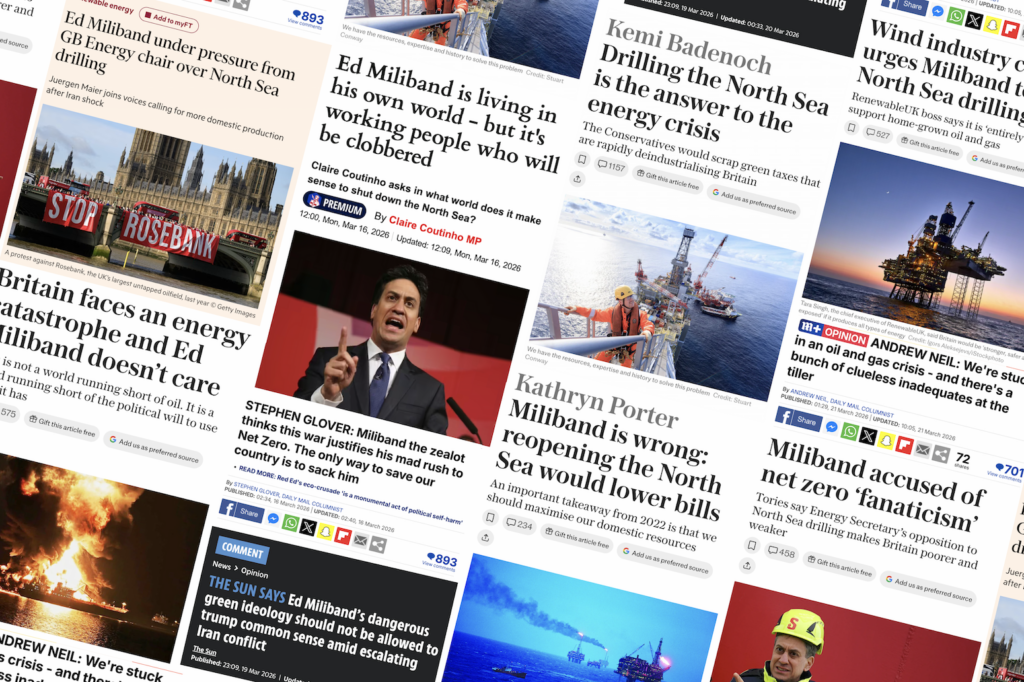
The ongoing conflict in Iran has sparked another global fossil-fuel energy crisis, sending prices soaring and reigniting debates about energy security. In the UK, numerous politicians, media outlets, and public figures have seized on the crisis to advocate for increased oil and gas drilling in the North Sea.
These calls have gained traction in mainstream media and have been amplified through social media, including by accounts that typically spread anti-immigrant and anti-Muslim content. However, many arguments in favor of expanded North Sea production rely on misleading or false claims about its potential impact on energy bills, security, emissions, and tax revenue.
The reality is that the North Sea is what industry experts call a “mature basin” – one where production has steadily declined for decades because most of the oil and gas it once contained has already been extracted. While it might be possible to slow this decline rate, reversing it is not feasible.
Energy security experts broadly agree that transitioning to clean energy sources would be significantly more effective at boosting UK energy security and reducing import dependence than expanding North Sea drilling.
Despite claims that North Sea gas would lower energy bills, numerous experts have explained this is not the case. UK energy prices are determined by international markets, not domestic production levels. The relatively small quantities of additional oil and gas that could be extracted from the North Sea would have negligible impact on global prices.
“Even if all proven UK reserves and resources of gas from new fields were extracted, this would only meet about 1% of European demand each year up to 2050,” according to the Climate Change Committee (CCC).
Even Conservative politicians like shadow energy secretary Claire Coutinho have admitted that new licenses “wouldn’t necessarily bring energy bills down.” The UK exports around 80% of the oil it produces, while gas production has fallen 74% since 2000.
Claims about environmental benefits of North Sea gas compared to imports are frequently exaggerated. While it’s true that imported liquified natural gas (LNG) requires energy-intensive processing and shipping, this represents only a small portion of emissions. When accounting for combustion emissions, which make up the vast majority, North Sea gas produces only about 15% less carbon than imported LNG.
The assertion that the UK has “chosen dependency” on foreign energy ignores the fundamental reality of North Sea depletion. UK production has fallen dramatically not because of policy decisions but because the basin is running out. Government projections show that by 2050, oil production will fall to 94% below current levels, and gas production will drop by 99%, even with additional drilling.
Contrary to claims from fossil fuel advocates, expanding clean energy would have a much greater impact on reducing gas imports than additional North Sea drilling. Analysis shows that renewable electricity generation already prevents the UK from needing to nearly double its LNG imports.
The notion that North Sea expansion would create thousands of new jobs is also misleading. Direct employment in the sector has fallen by a third since 2014 despite multiple licensing rounds. Meanwhile, the renewable energy sector now employs more people in the UK than oil and gas – 145,000 compared to 115,000.
Regarding tax revenue, claims of a “rush of revenue into the Treasury” from new drilling are highly misleading. The Office of Budget Responsibility forecasts that UK oil and gas revenues will plummet from £6 billion in 2024-25 to just £0.1 billion by 2030-31, reflecting the basin’s decline and the tax relief companies receive for decommissioning costs.
The UK government maintains that existing North Sea production continues to play “an important and valuable role,” while focusing on accelerating the transition to clean energy to enhance the country’s energy security. This balanced approach acknowledges both the limited future of North Sea fossil fuels and the necessity of developing alternatives that can genuinely deliver energy independence.
As the global energy landscape evolves, the facts remain clear: expanding domestic clean energy sources offers far greater potential for enhancing UK energy security and economic resilience than pursuing additional fossil fuel extraction from a depleting basin.
Fact Checker
Verify the accuracy of this article using The Disinformation Commission analysis and real-time sources.

12 Comments
The North Sea oil and gas debate is certainly a complex and contentious issue. While increased drilling could provide some short-term energy security, the long-term outlook for the mature basin seems less promising. Transitioning to renewable sources seems like a more viable long-term strategy.
You raise a good point. The energy crisis has reignited calls for expanded North Sea production, but the reality is that most of the easily accessible reserves have already been extracted. Focusing on renewable alternatives may be a more effective solution.
The article raises some important points about the limitations of North Sea oil and gas resources. While increased drilling may provide short-term relief, it seems clear that a transition to renewable energy is the more sustainable long-term solution for the UK’s energy needs.
I agree, the focus should be on developing renewable energy sources rather than relying on declining fossil fuel reserves. The article provides a balanced and well-researched perspective on this complex issue.
The article provides a nuanced and well-researched perspective on the complex realities of North Sea oil and gas production. While the energy crisis has reignited calls for increased drilling, the facts presented here suggest that a transition to renewable energy may be a more effective long-term strategy for the UK.
I appreciate the balanced and fact-based approach of this article. It’s crucial that policy decisions around energy security are informed by a clear understanding of the limitations and potential of different sources, rather than being driven by political narratives or short-term thinking.
It’s interesting to see the claims being made about the potential of North Sea oil and gas to address the current energy crisis. However, the article highlights some important myths and misconceptions that need to be debunked. Fact-checking is crucial in these types of debates.
I agree, fact-checking is essential here. The article provides a helpful overview of the real limitations of North Sea production and the need to focus on renewable energy solutions instead of relying on declining fossil fuel resources.
It’s concerning to see how misinformation and false claims are being used to push for expanded North Sea oil and gas production. The article does an excellent job of fact-checking these myths and highlighting the more realistic outlook for the region’s energy resources.
Absolutely, the spread of misinformation on this topic is worrying. The article’s approach of clearly separating fact from fiction is an important contribution to this debate, which needs to be grounded in objective analysis rather than political rhetoric.
The energy crisis has certainly sparked renewed interest in North Sea oil and gas, but the article makes a compelling case that many of the arguments in favor of expanded drilling are misleading or false. It’s important to separate fact from fiction in this debate.
You’re right, it’s crucial to look beyond the rhetoric and focus on the facts. The article’s debunking of common myths around North Sea production is a valuable contribution to this ongoing discussion.