


Listen to the article
In 2018, a YouTube video showed Barack Obama warning the public about internet deception and describing a “fucked up dystopia.” The message was alarming—and entirely fabricated. This BuzzFeed-created deepfake served as an early warning about digital manipulation technology, demonstrating how easily false content could be passed off as authentic.
Eight years later, that hypothetical dystopia has materialized in ways few anticipated. While early concerns about deepfakes focused on election interference and revenge porn, recent developments suggest an even more troubling reality: the deployment of manipulation technologies by government institutions themselves.
A disturbing example of this trend emerged recently in the case involving civil rights attorney Nekima Levy Armstrong. Following her arrest at a nonviolent protest in Minneapolis, the White House allegedly altered a photograph of Armstrong that was subsequently posted on its official page. The doctored image depicted her “sobbing hysterically” while being handcuffed—a reaction that never actually occurred.
When questioned about the manipulation of an American citizen’s image, the White House responded defensively: “YET AGAIN, to the people who feel the need to reflexively defend perpetrators of heinous crimes in our country, I share with you this message: Enforcement of the law will continue. The memes will continue. Thank you for your attention to this matter.”
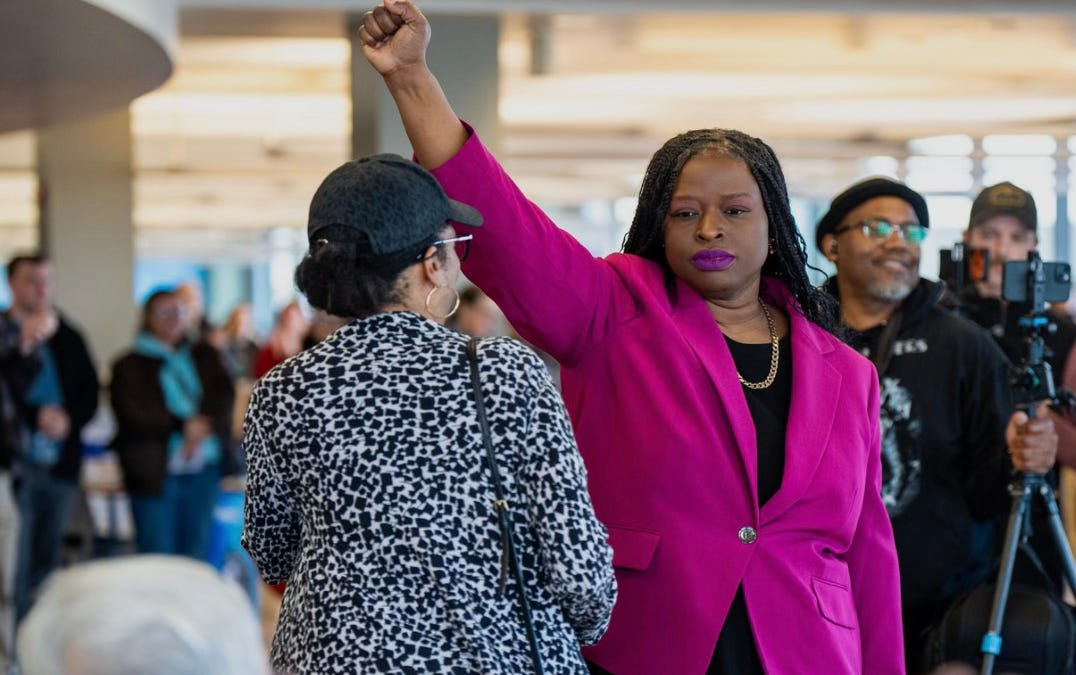
Video footage captured by Armstrong’s supporters tells a different story. As ICE agents approached to arrest her, Armstrong stood defiantly with her fist raised—a far cry from the emotionally distraught figure portrayed in the altered photograph. During the arrest, Armstrong is heard requesting that agents “please treat me with dignity and respect.”
An agent recording the incident assured Armstrong, “It’s not going to be on Twitter. It’s not going to be on anything like that,” while another added, “We don’t want to create a false narrative.” Yet the subsequent release of a manipulated image suggests exactly that intention.
This incident marks a significant escalation in the administration’s use of digitally altered images. While previous manipulations featured Trump on a throne or Democratic leaders kneeling before him, the Armstrong case represents the first known instance of the administration targeting an individual citizen engaged in protest activity.
Media experts have labeled this era the “infocalypse,” a term coined by photographer Aviv Oyadva in 2016. Oyadva presciently asked: “What happens if anyone can make it appear as if anything has happened when it did not?” The question becomes even more concerning when such manipulation originates from government sources.
Author Nina Schick, in her book “Deepfakes: The Coming Infocalypse,” traces modern political disinformation to Vladimir Putin’s tactics during the 2014-2015 Ukraine conflict. The Russian approach wasn’t merely to promote falsehoods but to erode public confidence in determining what is true—creating an environment where reality itself becomes contested territory.
This strategy proved remarkably effective. In Germany, for example, Russian media outlet RT fabricated a story about a 13-year-old girl named Lisa who was allegedly gang-raped by refugees. Despite the girl being entirely fictional, the story sparked mass protests. When officials attempted to correct the record, they were accused of covering up migrant crimes.
“The information space quickly degraded,” Schick writes. “It was filled with mis- and disinformation. The disinformation was so potent… [that it] created a febrile environment in which the public was bitterly divided.”
The manipulation of Armstrong’s photograph evokes darker historical precedents, particularly the propaganda techniques employed during Stalin’s regime. Stalin systematically erased political opponents from photographs—an analog precursor to today’s deepfakes. He also staged show trials where enemies of the state were forced to falsely confess before their execution.
These tactics influenced George Orwell’s dystopian novel “1984,” which warned: “The Party told you to reject the evidence of your eyes. It was their final, most essential command.”
What distinguishes the current moment, however, is the democratization of media creation and distribution. Unlike Stalin, who maintained tight control over official photography, today’s authorities face a public armed with smartphone cameras and social media platforms.
Ordinary citizens in Ukraine, Gaza, and Minneapolis continue to document reality through independent recordings. As long as authentic documentation persists and circulates, the manipulation of truth faces meaningful resistance. The smartphone camera has become a powerful tool against authoritarianism precisely because it captures and preserves what actually happened.
The alleged manipulation of Armstrong’s photograph represents a dangerous precedent—a government institution apparently willing to falsify evidence against its own citizens. If such tactics become normalized, the implications extend far beyond misleading memes to potentially compromising the integrity of evidence in legal proceedings.
As we navigate this new landscape of contested reality, the preservation and distribution of authentic documentation remains our strongest defense against the infocalypse.
Fact Checker
Verify the accuracy of this article using The Disinformation Commission analysis and real-time sources.

9 Comments
The doctoring of Ms. Armstrong’s image is a clear abuse of power and a violation of her civil rights. The White House’s response is unacceptable and raises serious questions about their commitment to honesty and the rule of law.
Agreed. This case highlights the urgent need for robust safeguards and transparency measures to prevent government institutions from using manipulation technologies against citizens.
While early concerns about deepfakes focused on election interference and revenge porn, this case demonstrates an even more alarming trend – the deployment of these technologies by the government itself. This is deeply concerning and requires immediate action.
The use of deepfake technology by the White House to misrepresent the actions of a citizen is a disturbing development that erodes public trust. We must demand accountability and ensure that such abuses of power are never repeated.
The emergence of this “fucked up dystopia” of digital deception is a sobering reminder of the potential threats to truth and democracy. We must remain vigilant and demand transparency from our leaders.
This case is a wake-up call about the dangers of digital manipulation technology, especially when wielded by those in power. We must act swiftly to protect our democratic institutions and the rights of all citizens.
Doctoring images of citizens to misrepresent their actions is a serious violation of trust. The White House’s defensive response is troubling and raises further questions about their commitment to honesty and accountability.
Agreed. This case highlights the urgent need for stronger regulations and oversight around the use of manipulation technologies, especially by government entities.
This is a disturbing development. The use of deepfake technology by government institutions to manipulate public perception is extremely concerning. We need robust safeguards and transparency to prevent such abuses of power.