


Listen to the article
US Imposes Visa Sanctions on European Officials Over Alleged Censorship
The US State Department escalated tensions with European allies Tuesday by imposing visa sanctions on five European individuals, including a former top EU official, accusing them of orchestrating censorship campaigns against American platforms and viewpoints.
Secretary of State Marco Rubio announced the sanctions, claiming the individuals led “organized efforts to coerce American platforms to censor, demonetize, and suppress American viewpoints they oppose.” The move marks a significant intensification in the Trump administration’s ongoing conflict with European digital regulations.
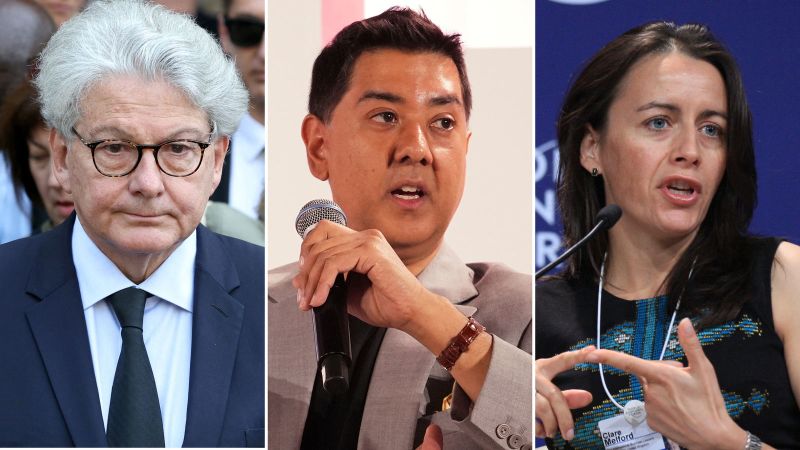
Among those sanctioned is Thierry Breton, a former European commissioner who played a key role in developing the Digital Services Act (DSA), a sweeping EU regulation requiring tech platforms to reduce illegal and harmful content. Breton has had multiple public confrontations with X owner Elon Musk over compliance with European regulations.
Responding to the sanctions on social media, Breton questioned: “Is McCarthy’s witch hunt back?” referencing the Cold War-era anti-communist investigations. “To our American friends: ‘Censorship isn’t where you think it is,'” he added.
The European Commission strongly condemned the travel restrictions, requesting clarifications from US authorities and warning it would “respond swiftly and decisively to defend our regulatory autonomy against unjustified measures” if necessary.
French President Emmanuel Macron characterized the sanctions as “intimidation and coercion aimed at undermining European digital sovereignty,” highlighting the diplomatic breach the move has created with traditionally close allies.
The State Department also targeted Imran Ahmed, CEO of the Center for Countering Digital Hate, an organization focused on combating online hate and disinformation. US Undersecretary of State Sarah Rogers claimed Ahmed was sanctioned partly for his organization’s “Disinformation Dozen” report, which identified 12 individuals responsible for spreading anti-vaccine content, including current HHS Secretary Robert F. Kennedy, Jr.
Clare Melford, CEO of the Global Disinformation Index, was also sanctioned. Her organization, which describes itself as working to make the internet safer, responded forcefully, calling the sanctions an “authoritarian attack on free speech and an egregious act of government censorship.”
“The Trump Administration is, once again, using the full weight of the federal government to intimidate, censor, and silence voices they disagree with,” a GDI spokesperson said. “Their actions today are immoral, unlawful, and un-American.”
Two leaders of the German organization HateAid, Josephine Ballon and Anna-Lena von Hodenberg, were also included in the sanctions. The group combats online hate, violence, and disinformation. In a defiant joint statement, they characterized the sanctions as “an act of repression by a government that is increasingly disregarding the rule of law and trying to silence its critics by any means necessary.”
“We will not be intimidated by a government that uses accusations of censorship to silence those who stand up for human rights and freedom of expression,” they added, vowing to continue their work “now more than ever.”
The sanctions represent the latest in a series of Trump administration actions targeting European digital policy. In February, Vice President JD Vance criticized what he called European censorship during a speech at the Munich Security Conference, claiming that leaders had “threatened and bullied social media companies to censor so-called misinformation.”
According to Rubio’s statement, the sanctions will generally bar the five individuals from entering the United States. Additionally, the Department of Homeland Security can “initiate removal proceedings against certain individuals… which renders such individuals deportable.”
The State Department warned it stands “ready and willing to expand today’s list if other foreign actors do not reverse course,” suggesting further escalation in this transatlantic dispute over digital regulation and free speech could be forthcoming.
Fact Checker
Verify the accuracy of this article using The Disinformation Commission analysis and real-time sources.

8 Comments
The US-EU tensions over digital policy and content moderation are concerning. While the free flow of information is vital, so is maintaining online safety and preventing the spread of harmful disinformation. I hope both sides can find a balanced approach that upholds democratic principles on both sides.
This sanctions move by the US is a bold step, but I’m not sure it will be an effective way to address the complex issues around censorship and content moderation. The EU has its own views on these matters, and simply imposing unilateral sanctions may only deepen the divide. A more collaborative approach could yield better results.
I agree, a collaborative approach would likely be more productive than unilateral sanctions in this case. The US and EU should try to find common ground and work together to uphold free speech while also addressing legitimate concerns around online harms.
Interesting to see the US take such a strong stance against alleged censorship by European officials. While freedom of speech is crucial, it’s a complex issue that involves balancing different rights and interests. I wonder if there are constructive ways the US and EU could work together to address these concerns.
You raise a good point. Striking the right balance between free speech and content moderation is an ongoing challenge with no easy answers. Hopefully the two sides can find a diplomatic solution that respects democratic principles on both sides of the Atlantic.
While I understand the US concerns about censorship, sanctioning European officials seems like an escalation that could further strain transatlantic relations. These issues around content moderation and digital regulations are nuanced, and a more diplomatic solution may be preferable to confrontational actions.
This sanctions move by the US seems rather aggressive, especially against a former EU official involved in digital regulations. I’m curious to learn more about the specific allegations of censorship and whether they are fully justified. Tensions between the US and EU on tech policy are understandable but should be handled carefully.
I agree, the sanctions do seem like a strong response. It will be important to get a clear picture of the facts and evidence behind the US claims. Constructive dialogue between the parties would be preferable to escalating tensions further.