


Listen to the article
European and Ukrainian Leaders Convene to Combat Russian Disinformation at Brussels Forum
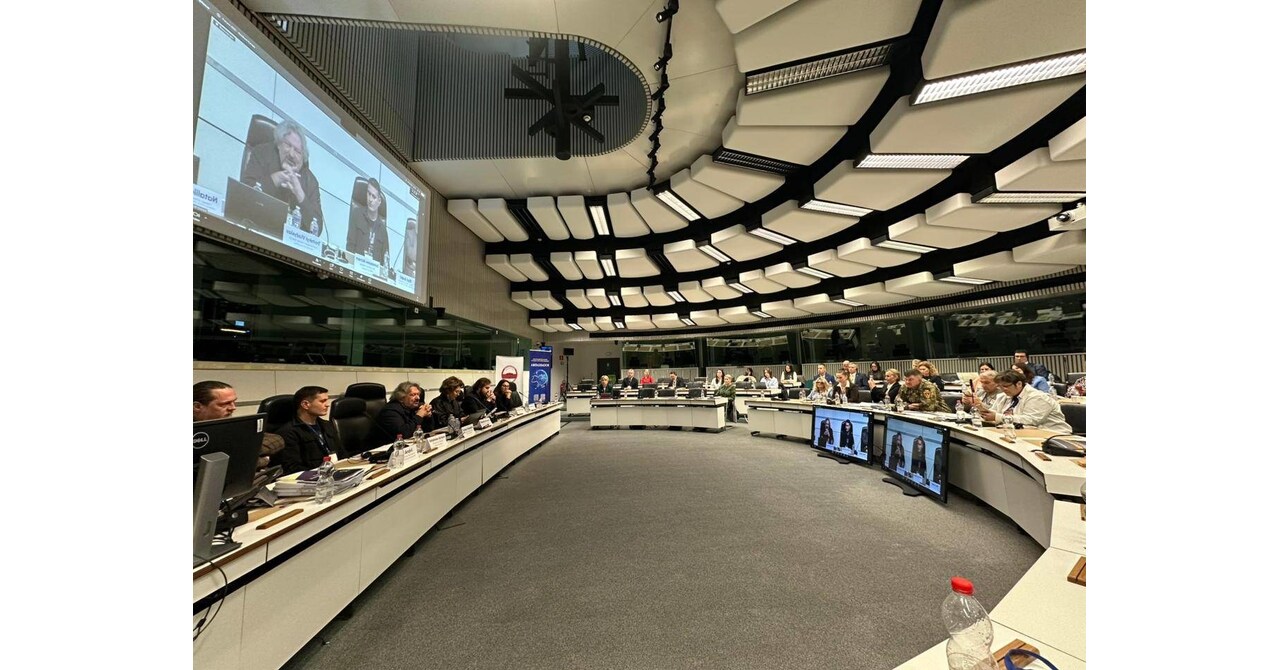
European and Ukrainian policymakers, security experts, researchers, and civil society leaders gathered in Brussels this week for “Resilient Europe,” a high-level forum addressing the growing threat of Russian propaganda and disinformation. The event, co-organized by The Institute for Democracy and Development “PolitA” and hosted at the European Parliament, brought together key stakeholders to share strategies for strengthening Europe’s cognitive and information resilience.
The forum focused on how Ukraine’s decade-long experience confronting Russian hybrid warfare could inform European policy frameworks. Participants emphasized that propaganda represents not merely misinformation, but a strategic instrument designed to undermine Western democracies by inflaming divisions, radicalizing opposition, and penetrating institutions.
“Disinformation thrives where influence is opaque,” noted Kateryna Odarchenko, Head of the Institute for Democracy and Development “PolitA” and partner of SIC Group USA LLC. “Europe must address not only propaganda but also hidden lobbying networks that distort democratic decision-making under the guise of civil society or cultural exchange.”
The event brought together numerous Ukrainian research institutions, including the Institute of National Resilience and Security, Taras Shevchenko National University of Kyiv, and the Ukrainian Institute of National Memory. European representatives from the EU institutions and national governments also participated, creating a cross-sectoral dialogue between those on the frontlines of information warfare and European policymakers.
Discussions centered on three key themes: strategic narrative-building, the weaponization of culture and cultural heritage, and the specific instruments of Russian propaganda operating within EU borders. The format reflected the reality that modern hybrid threats operate simultaneously across political, cultural, economic, and social domains.
Several participants highlighted regional variations in Russian influence operations. Ivanna Khodos, Head of the Refugee International Women Empowerment Foundation, described how disinformation works in Bulgaria, where pro-Russian narratives have become deeply embedded in mainstream discourse despite the country’s EU and NATO membership.
“In Bulgaria, Russian disinformation is not marginal—it is systemic,” Khodos said. She explained how figures regarding Ukrainian refugees are deliberately manipulated to manufacture social tension, demonstrating how disinformation operates not through outright lies but through facts presented without proper context.
The forum also addressed how disinformation enables human rights abuses. Iryna Kopanytsia, women’s rights advocate and the forum’s moderator, emphasized that Russia’s abduction of Ukrainian children is facilitated by large-scale disinformation campaigns designed to “obscure these crimes and manipulate international perception.”
Several speakers noted concerning trends in the academic and cultural spheres. Iryna Mirochnik, board member of the Ukrainian Union of Industrialists and Entrepreneurs, warned that Russian imperial narratives continue to circulate within Western universities, with Ukrainian cultural figures often misattributed to “Russian culture” even after Russia’s full-scale invasion.
Anna Vyshniakova, Head of the LingvaLexa initiative, presented research documenting propaganda embedded in children’s computer games and music, demonstrating how cultural products are weaponized to normalize violence and hostility toward democratic societies.
Violetta Dvornikova, Head of the European Association of Ukrainian Women, highlighted how Russian propaganda systematically distorts the image of Ukrainian women in Europe, portraying them as social burdens rather than war victims, which fuels discrimination and undermines social cohesion.
The forum produced several tangible outcomes, including increased awareness among European stakeholders about how Russian propaganda adapts to EU environments, stronger recognition of culture as a frontline instrument of democratic defense, and new expert partnerships for continued collaboration and policy advocacy.
As Europe faces heightened geopolitical uncertainty, the “Resilient Europe” forum underscored that democratic resilience requires proactive, strategic approaches built in partnership with those who have direct experience facing hybrid warfare.
“Ukraine’s experience demonstrates that resilience is not an abstract concept—it is a set of skills, institutions, and decisions that can be shared,” noted Kopanytsia. “Europe’s security depends on how quickly these lessons are institutionalized.”
The Institute for Democracy and Development “PolitA,” a key organizer, continues its work as an international analytical organization specializing in democratic governance, elections, and countering disinformation across Europe, the United States, and emerging democracies.
Fact Checker
Verify the accuracy of this article using The Disinformation Commission analysis and real-time sources.

16 Comments
Promoting cognitive and information resilience is critical as disinformation becomes an ever-more potent weapon. This forum seems like a positive step forward.
Agreed. Safeguarding democratic institutions from malign influence is essential. I’m glad to see this issue getting high-level attention.
The threat of Russian propaganda and disinformation is very real. I’m glad to see European and Ukrainian leaders coming together to confront this challenge head-on.
Absolutely. Ukraine’s experience will be invaluable. Sharing lessons learned and best practices can help strengthen Europe’s defenses.
This is an important issue for European democracy. Strengthening resilience against disinformation from adversaries like Russia is crucial. Ukraine’s experience combating hybrid threats could offer valuable lessons.
Agreed. Transparency and countering hidden influence networks are key to defending against strategic propaganda campaigns.
Combating disinformation requires a multi-faceted approach. I’m glad to see European and Ukrainian leaders coming together to share strategies and strengthen collective resilience.
Absolutely. Leveraging Ukraine’s frontline experience is a smart move. Collaborative efforts to defend democracy are vital in these challenging times.
Protecting democratic institutions from malign influence is critical. This high-level forum seems like an important step in the right direction.
Yes, the emphasis on transparency and countering hidden lobbying networks is particularly welcome. Shining a light on these issues is crucial.
Addressing hidden lobbying networks that distort democratic discourse is a crucial but often overlooked aspect of the disinformation challenge. Good to see it being highlighted.
Yes, the transparency piece is so important. Shining a light on opaque influence operations is key to building societal resilience.
Interesting to see European and Ukrainian leaders coming together to address this challenge. Sharing best practices on combating disinformation is a smart approach.
Absolutely. Ukraine has been on the frontlines of this issue for years – their insights could really benefit the broader European response.
Interesting that the forum is focusing on how Ukraine’s experience can inform European policy frameworks. Cross-pollination of knowledge on this issue seems very valuable.
Agreed. Ukraine has been a laboratory for Russian disinformation tactics. Learning from their successes and failures is a smart move.