


Listen to the article
Russia’s destabilization efforts in Moldova and Ukraine through Transnistria have intensified, according to security experts, raising concerns about regional stability in Eastern Europe.
Ukrainian security analyst Kulyk highlighted that Russia continues to exploit the Transnistrian region as a pressure point against both Moldova and Ukraine. While the Russian military presence in the breakaway territory poses limited direct threat to Ukrainian armed forces, the region has become a hub for more insidious operations.
“It uses Transnistria to put pressure on the Republic of Moldova and on us as well,” Kulyk explained in a recent briefing. “The Russian military potential located in Transnistria is not so dangerous for the Ukrainian Armed Forces.”
The expert pointed to a troubling pattern dating back to 2014, when sabotage groups from Transnistria began conducting incursions into Ukrainian territory. These activities continued through Russia’s full-scale invasion in 2022, evolving into sophisticated disinformation campaigns and recruitment operations.
“The most toxic Telegram channels spreading disinformation in Ukraine are administered from Transnistria. Recruitment of Ukrainians to carry out terrorist attacks also takes place from there — these are proven facts,” Kulyk stated.
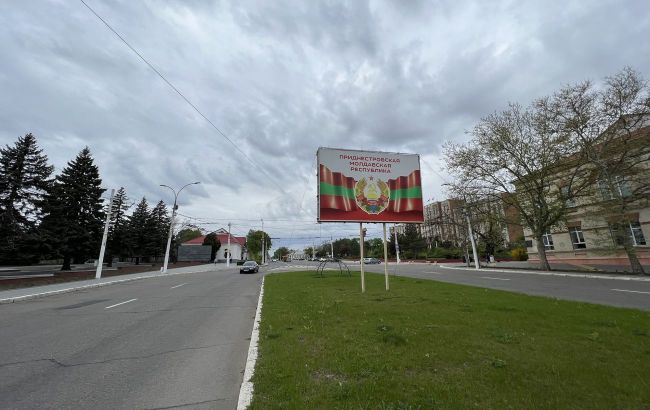
Transnistria, a narrow strip of land between the Dniester River and the Ukrainian border, declared independence from Moldova in 1990 but remains unrecognized by the international community. Russian forces have maintained a presence there since the collapse of the Soviet Union, creating a frozen conflict that Moscow has leveraged in its regional strategy.
For Ukraine, which shares a 405-kilometer border with Transnistria, the security implications are substantial. Kulyk emphasized that this constitutes “one of the key national security challenges for Ukraine,” necessitating a coordinated response.
“Ukraine, together with Moldova and its European partners, is interested in ensuring that the situation is at least controlled, if not fully resolved,” he added.
The revelations about Transnistria’s role in information warfare come amid heated debate in Ukraine about regulating messaging platforms, particularly Telegram. Following a recent terrorist attack in Lviv that claimed the life of a police officer, Deputy Head of the Office of the President Iryna Vereshchuk proposed blocking Telegram in Ukraine, citing its use for recruitment of operatives.
Kyrylo Budanov, Head of the Office of the President, revealed that he had previously suggested imposing restrictions on Telegram earlier in 2024, though not advocating for a complete ban. Interior Minister Ihor Klymenko has similarly expressed support for implementing certain limitations on the messenger service.
Despite these official positions, public sentiment appears to favor a more measured approach. A recent sociological survey indicated that over 75% of Ukrainians oppose an outright ban on Telegram, though many support enhanced oversight by law enforcement agencies.
The situation underscores the complex intersection of traditional security threats and digital vulnerabilities in modern conflict. As Russia continues its full-scale war against Ukraine, now in its third year, these hybrid tactics represent an evolving challenge that extends beyond conventional military operations.
For Moldova, which has pursued closer ties with the European Union in recent years, Russian interference through Transnistria poses a significant obstacle to its sovereignty and European integration aspirations. The country’s recently elected pro-European leadership has increasingly called for international support in addressing the Transnistrian issue.
Regional security experts suggest that addressing these challenges will require a multifaceted approach, combining diplomatic efforts, intelligence cooperation, and strategic communications to counter Russian influence operations emanating from Transnistrian territory.
Fact Checker
Verify the accuracy of this article using The Disinformation Commission analysis and real-time sources.

11 Comments
The article highlights the evolving nature of Russia’s destabilization efforts, shifting from overt military actions to more covert information warfare. Transnistria’s central role in these Telegram-based disinformation campaigns is concerning and underscores the need for robust counter-measures to protect regional stability.
Agreed. Defending against hybrid threats like these will require a multi-faceted approach, combining cybersecurity, strategic communications, and strengthening societal resilience. Staying vigilant and adapting to these shifting tactics will be crucial.
I wonder what steps Moldova and Ukraine are taking to counter these Telegram-based disinformation campaigns originating from Transnistria. Disrupting the information flows and recruitment efforts from this region seems essential to limit Russia’s destabilizing influence.
Good point. Strengthening cybersecurity, digital literacy, and resilience against foreign interference will likely be key priorities for Moldova and Ukraine in responding to these threats.
This article serves as a reminder of the complex geopolitical dynamics at play in the region, with Russia exploiting the Transnistrian territory to project power and sow discord. Addressing the disinformation threat from this base will be a critical challenge for Ukraine and Moldova going forward.
The tracing of these Telegram-based disinformation campaigns to Transnistria underscores the importance of monitoring and disrupting Russia’s hybrid warfare tactics in the region. Maintaining regional stability and protecting against information manipulation will require sustained vigilance and coordinated action.
The article highlights how Russia continues to exploit the Transnistrian region to sow discord and instability in Eastern Europe. It’s troubling to see the evolution of these efforts, from sabotage groups to sophisticated disinformation campaigns. Maintaining regional stability will be critical going forward.
This is a troubling development, as Transnistria’s role as a hub for Russian disinformation campaigns targeting Ukraine adds another layer of complexity to the regional security challenges. Monitoring and mitigating these hybrid threats will require close coordination between Moldova, Ukraine, and their allies.
Interesting to see the origins of these disinformation campaigns traced back to Transnistria. This region seems to be a hub for Russia’s destabilization efforts in the region, using it as a pressure point against Moldova and Ukraine.
While the Russian military presence in Transnistria may not pose a direct threat to Ukraine’s armed forces, the region has become a base for more insidious operations like disinformation campaigns and recruitment. This is a concerning trend that warrants close monitoring.
It’s disconcerting to see how Russia is leveraging the Transnistrian region to wage information warfare against Ukraine and Moldova. The evolution of these tactics, from physical incursions to sophisticated disinformation campaigns, highlights the need for a comprehensive response to counter the Kremlin’s destabilizing influence in Eastern Europe.