


Listen to the article
Disinformation Campaign Falsely Claims Taiwan Faces Imminent Gas Shortage
Taiwan is battling a wave of online disinformation claiming the island will soon face complete depletion of its gas supplies due to Middle East conflict disruptions, according to officials who warn the false narratives could spark public panic and undermine trust in the government.
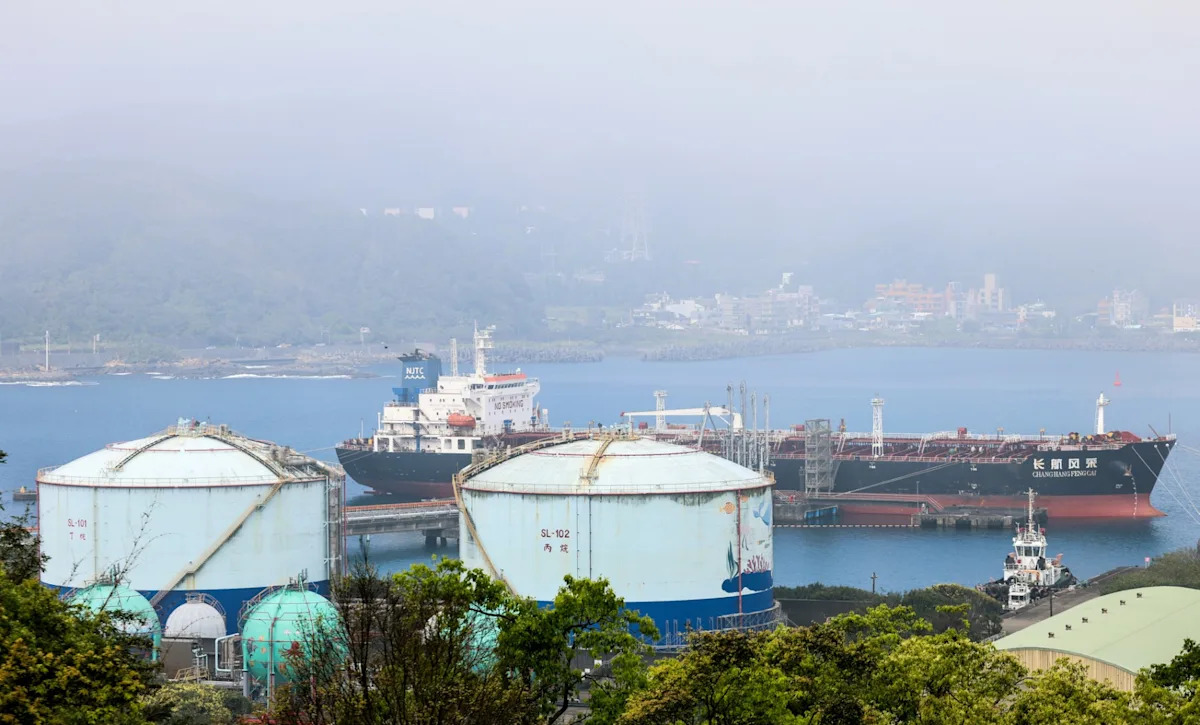
The fabricated social media posts, which have garnered thousands of views on Chinese-language platforms, repeatedly claim Taiwan will exhaust its liquefied natural gas (LNG) reserves within 11 days and experience electricity blackouts because Iran is restricting tankers passing through the Strait of Hormuz.
AFP fact-checkers identified approximately two dozen posts from China-based accounts on Douyin (China’s version of TikTok) promoting this narrative, many recycling identical video scripts. Some posts criticize Taiwan’s decision to shut down nuclear reactors last year, while others suggest Beijing’s “peaceful reunification” offer would provide energy security.
Taiwanese authorities have firmly rejected these rumors. “They claimed that we would run out of gas — that is simply impossible,” Minister of Economic Affairs Kung Ming-hsin stated in a Facebook video. “LNG supplies from Qatar account for roughly one-third of our total supply. Therefore, roughly 60 to 70 percent is basically not a problem.”
Security officials told reporters they are monitoring fuel-related disinformation spread not only by Chinese media but also by Taiwanese “collaborators.” They have identified AI-generated content on YouTube and TikTok pushing a consistent narrative that Taiwan could face a “very dire situation” if encircled.
“It works by creating scenarios to make people in Taiwan… feel concerned about the government, or keep imagining that if a blockade were to happen one day, we would lose confidence in energy,” security officials explained.
Taiwan joins a growing list of targets for disinformation about looming energy crises supposedly triggered by US-Israeli strikes against Iran. Earlier this month, Iran’s Tasnim news agency published an altered graphic falsely claiming Australia had just 18 days of petrol supplies left—half the actual figure, according to fact-checkers.
Such claims are particularly sensitive in Taiwan, where China’s expanding military activity and the potential risk of a blockade have heightened concerns about energy security. LNG accounted for 47.8 percent of Taiwan’s power generation last year, according to the Energy Administration.
Yeh Tsung-kuang, a professor in the Department of Engineering and System Science at National Tsing Hua University, clarified that while Taiwan’s maximum LNG inventory capacity is only 11 days, this doesn’t mean the island would immediately face fuel shortages or power outages if supplies were disrupted.
“One-third of our LNG comes from Qatar. We also have other sources such as Russia, Australia and the United States,” Yeh told AFP. “These netizens are interpreting the situation as if LNG from the Middle East cannot get through, Taiwan will be left without a natural gas supply. They are attempting to create this false impression.”
The Ministry of Economic Affairs has outlined contingency plans for the 22 LNG vessels scheduled to pass through the now-blocked Strait of Hormuz in March and April. Officials say supply would remain stable through “emergency procurement or expedited delivery.” If the blockade continues, Taiwan has three backup strategies: utilizing non-Middle Eastern gas sources, coordinating mutual assistance with regional buyers like Japan and South Korea, and purchasing “existing fuel.”
The disinformation campaign appears connected to larger geopolitical objectives. Last week, Beijing’s Taiwan Affairs Office suggested that “peaceful reunification could provide better protection” for Taiwan’s energy security with a “strong motherland” as backing.
Taiwan’s Deputy Economy Minister Ho Chin-tsang firmly rejected this proposition, calling it “impossible” and part of “cognitive warfare” against the island.
Joseph Webster, a senior fellow at the Atlantic Council’s Global Energy Center, suggested Beijing’s offer could be “a political drive” to undermine Taiwan’s faith in its own energy security. “This disinformation is either explicitly or implicitly a part of that larger campaign,” Webster noted.
Experts acknowledge Taiwan faces genuine energy security challenges. Liang Chi-yuan, a professor at National Central University’s Center for Taiwan Economic Development, pointed out that Taiwan maintains relatively low LNG capacity compared to other Asian countries, making the disinformation potentially more believable to some audiences.
Both experts agree that if the Middle East conflict persists, Taiwan could face stronger competition and higher prices for global LNG supplies—a real vulnerability in the island’s energy infrastructure.
Fact Checker
Verify the accuracy of this article using The Disinformation Commission analysis and real-time sources.

12 Comments
Glad to see the Taiwanese authorities are quickly addressing these false narratives. Maintaining public trust in reliable energy supply is crucial, especially during times of global uncertainty.
Absolutely. Proactive communication from the government is key to countering disinformation and preventing unnecessary panic or instability.
This is a concerning example of how disinformation can be used to target a country’s critical infrastructure and energy supply. Vigilance and fact-checking will be essential to counter such tactics.
Absolutely. The stakes are high when it comes to energy security, so it’s crucial that the public has access to accurate, reliable information from trusted sources.
Taiwan’s energy security is certainly a critical issue, but these claims about imminent gas shortages seem highly dubious. I’m curious to learn more about the actual status of Taiwan’s LNG reserves and supply chains.
Agreed, it would be helpful to get more factual, verified information on the true state of Taiwan’s gas supplies and the potential impacts from global energy market disruptions.
This disinformation campaign seems to be playing on anxieties around Taiwan’s energy transition and its reliance on imported fuels. I wonder if there are geopolitical factors at play here as well.
That’s a good point. The claims about Beijing’s “peaceful reunification” offer providing energy security could suggest this is part of a broader influence operation targeting Taiwan.
Interesting to see this disinformation campaign targeting Taiwan’s energy supplies. I wonder what the motivations are behind these false claims? Glad to hear the Taiwanese government is firmly rejecting the rumors.
Yes, it’s important to stay vigilant against such misleading narratives, especially when they could potentially cause public panic. Good that the authorities are addressing this promptly.
Interesting that the disinformation campaign is also criticizing Taiwan’s nuclear power phase-out. I wonder if there are links between this narrative and broader debates around the country’s energy transition.
Good point. The nuclear issue seems to be a key part of the false narrative, likely meant to sow further doubts about Taiwan’s energy security.