


Listen to the article
Syrian and Turkish officials are rapidly advancing bilateral relations following regime change in Damascus, with both nations now working to establish formal coordination mechanisms that will transform diplomatic goodwill into concrete action, Syria’s Information Minister announced Friday.
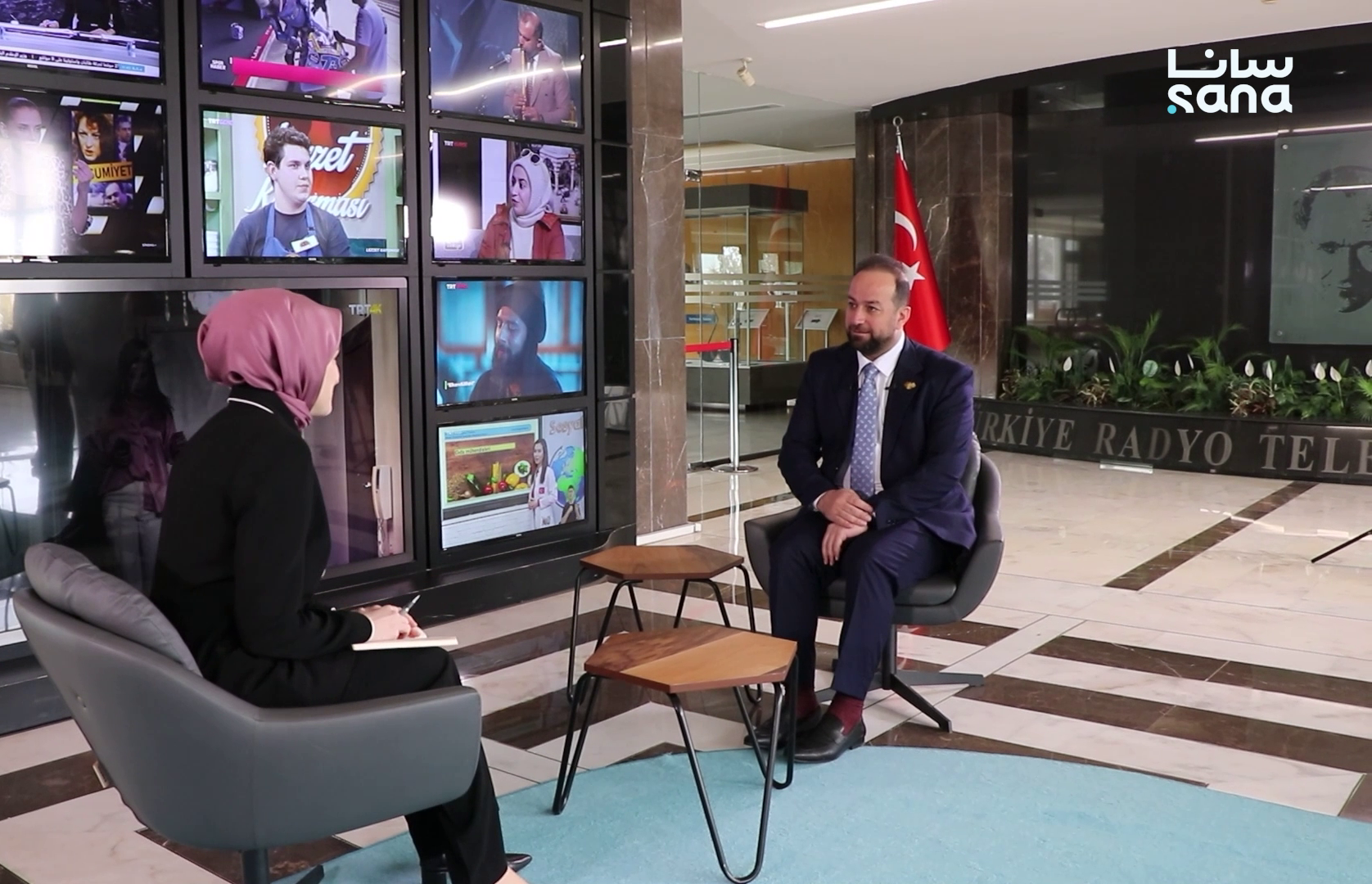
Speaking during an extensive interview with Turkey’s Anadolu Agency in Ankara, Information Minister Hamza al-Mustafa detailed how cooperation is already flourishing across media, ministerial and political channels between the neighboring countries.
“We’re witnessing unprecedented momentum in Syrian-Turkish relations since the fall of the former regime,” al-Mustafa said. “Our shared history and geographical proximity make us natural partners in addressing regional challenges.”
The minister expressed particular enthusiasm for a proposed 24-hour communication channel between the two nations, an initiative first announced two weeks ago by Turkish Presidential Communications Deputy Ferhat Pirinççi. The mechanism aims to provide a rapid-response system to combat misinformation affecting both countries.
This partnership comes at a critical time for Syria, where years of conflict have fragmented traditional media ecosystems. Al-Mustafa noted that many Syrians now rely primarily on social media for news consumption, creating what he described as “fertile ground for false narratives and deliberate disinformation campaigns.”
“When official information channels are weakened, malicious actors can exploit the vacuum,” al-Mustafa explained. “We’re working internally to raise public awareness about these risks while simultaneously building international partnerships to establish fact-based communication networks.”
The Information Ministry is developing media literacy programs aimed at helping Syrian citizens better evaluate online information sources. These efforts parallel similar initiatives in Turkey, where government agencies have increasingly focused on combating false information that could affect national security or social cohesion.
Regional analysts view the warming Syrian-Turkish relationship as a significant diplomatic shift in a Middle East landscape that has seen dramatic realignments in recent years. The two countries share a 911-kilometer border and face common security challenges, including cross-border terrorism and refugee movements.
On Thursday, al-Mustafa met with Turkish Presidential Communications Director Burhanettin Duran to establish the groundwork for strategic partnerships in anti-disinformation efforts and public diplomacy. The meeting represented the highest-level communications discussion between the countries since the change in Syrian leadership.
“Syria stands ready to serve as a hub for regional and global collaboration,” al-Mustafa emphasized. “We recognize and value Turkey’s pivotal regional role and their steadfast support for the Syrian people through difficult times.”
Economic cooperation also features prominently in the countries’ developing relationship. Trade delegations have recently exchanged visits, exploring opportunities for increased cross-border commerce in sectors ranging from agriculture to construction materials—industries crucial to Syria’s reconstruction efforts.
Turkey, which hosts approximately 3.6 million Syrian refugees, stands to benefit from improved relations and potential stabilization in its southern neighbor. Ankara has expressed interest in creating conditions that would allow for the voluntary return of refugees to safe areas within Syria, though humanitarian organizations emphasize this process must adhere to international standards.
Regional security experts note that the rapprochement between Damascus and Ankara represents part of a broader pattern of diplomatic normalization efforts across the Middle East, as countries increasingly prioritize stability and economic development over ideological positions that dominated the past decade.
The coming months will likely see further institutionalization of Syrian-Turkish cooperation, with joint committees expected to address issues including border security, water resource management, and cultural exchange programs designed to rebuild trust between the neighboring populations.
Fact Checker
Verify the accuracy of this article using The Disinformation Commission analysis and real-time sources.

8 Comments
Establishing formal coordination mechanisms between Syria and Turkey’s media and information sectors is a prudent move. Rapid response to misinformation is crucial, so the proposed 24-hour communication channel sounds like a valuable initiative.
Years of conflict in Syria have certainly fragmented traditional media and information channels. This new bilateral cooperation could help restore more reliable and trusted sources of news and information for citizens in both countries.
I hope the partnership will also focus on building media literacy and critical thinking skills among the public, as that can be an effective long-term defense against the spread of disinformation.
This bilateral cooperation between Syria and Turkey to combat disinformation is an interesting development. It’s crucial that neighboring countries work together to address regional challenges and mitigate the spread of misinformation, which can have serious consequences.
I’m curious to learn more about the specific mechanisms they plan to implement, like the proposed 24-hour communication channel. Coordinating media and information efforts could be an effective way to counter false narratives.
The Syrian Information Minister’s enthusiasm for this cooperation is encouraging. Addressing regional challenges through diplomatic goodwill and concrete action is the right approach to combat the serious problem of disinformation.
The shared history and geographic proximity of Syria and Turkey make them natural partners in this endeavor. Disinformation can undermine regional stability, so I’m glad to see these nations taking proactive steps to strengthen their cooperation and address this issue.
It will be important to monitor how this partnership evolves and whether it is successful in combating misinformation affecting both countries. Transparency and accountability will be key to building public trust in these efforts.