


Listen to the article
Russian Disinformation Campaign Floods France With Fake News Ahead of Elections
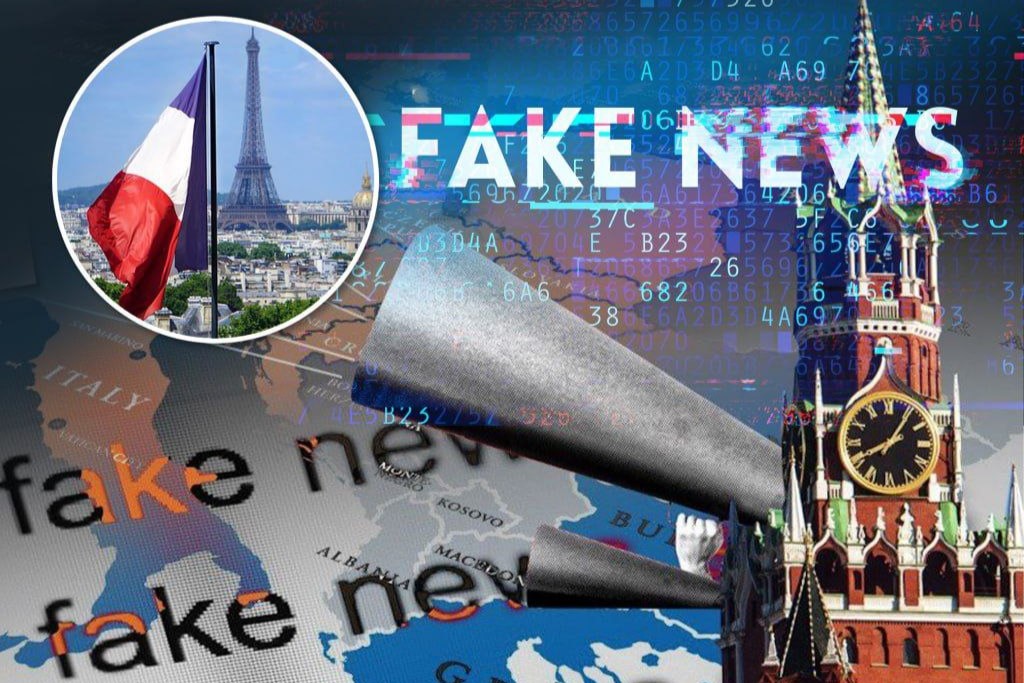
French voters are being targeted by a sophisticated Russian disinformation operation that has created over 200 fake media websites this year, according to Ukrainian intelligence analysts. The surge in fabricated content represents Moscow’s latest effort to influence Western democratic processes.
The Center for Countering Disinformation (CCD) reports that more than 140 of these sites are designed to mimic legitimate French news outlets, publishing distorted versions of real reporting with pro-Kremlin narratives woven throughout. The operation appears timed to shape public opinion well ahead of France’s 2026 municipal elections.
“This isn’t about a single fake news story dropping before election day,” said a French cybersecurity expert familiar with the investigation. “It’s about gradually eroding public trust in institutions and creating an information environment where voters are constantly questioning what’s real.”
Ukrainian analysts have linked the network to “Storm-1516,” also known as Doppelgänger, a long-running influence operation reportedly connected to John Mark Dougan, an American-born propagandist who has resided in Moscow since 2016. Dougan is believed to operate a similar network called CopyCop using identical tactics.
The disinformation campaign leverages artificial intelligence to mass-produce convincing articles that mimic local French reporting styles. Since October, researchers have documented a sharp increase in content volume from these fabricated outlets.
“What makes this particularly effective is how these sites blend legitimate local news with subtle distortions,” said a researcher at Recorded Future who spoke to Euronews about the operation. “They’ll take a genuine story about local politics but insert a paragraph praising Putin or criticizing Western institutions.”
One documented example involved coverage of the Saint-Étienne mayor’s resignation, where a counterfeit site republished a legitimate news article but added fabricated quotes expressing admiration for Russian President Vladimir Putin.
Reporters Without Borders has independently identified at least 85 active websites connected to the broader operation, noting they have collectively published thousands of articles since early autumn.
The CCD believes the primary goal is undermining public confidence in French democratic institutions and specifically targeting President Emmanuel Macron ahead of the 2026 elections. Recent examples include a fabricated IQ test supposedly connected to Macron, distributed through pro-Russian social media channels and sham outlets mimicking established French media.
“The pattern is strikingly similar to what we observed during Germany’s recent snap elections,” noted a French media analyst tracking the campaign. “There’s a methodical escalation of content as the electoral timeline approaches.”
The operation reflects Russia’s evolution in influence operations, moving beyond crude fake news to more sophisticated methods that are harder to detect and counter. Rather than creating obviously false stories, these networks twist legitimate reporting and exploit existing social tensions.
European security officials warn that without stronger digital defense mechanisms and greater public awareness, such campaigns will continue to threaten electoral integrity across the European Union.
“This isn’t just France’s problem,” emphasized a CCD representative. “The techniques refined here will be deployed throughout Europe. Today’s fabricated local news story becomes tomorrow’s political talking point.”
French authorities have begun working with social media platforms to identify and remove the most egregious examples, but the scale and sophistication of the operation present significant challenges.
Media literacy experts stress that public education remains the most effective long-term defense, urging French citizens to verify sources, check publication dates, and be skeptical of emotional content designed to provoke strong reactions.
Fact Checker
Verify the accuracy of this article using The Disinformation Commission analysis and real-time sources.

8 Comments
This is certainly concerning. We’ve seen how foreign disinformation campaigns can undermine trust in democratic institutions. I hope French authorities are closely monitoring this and taking appropriate action to protect the integrity of their elections.
Agreed. Fake news sites that impersonate legitimate media outlets are especially insidious. Voters need to be vigilant in verifying the sources of information they consume.
This is a concerning development, but not entirely unexpected. Russia has a long history of using disinformation to interfere in Western democracies. I hope the French authorities are well-prepared to identify and mitigate these attacks.
Undermining public trust in institutions is a classic strategy of authoritarian regimes. I hope the French government and civil society can mount an effective response to counter these malicious efforts to sow division and confusion.
Agreed. Protecting the integrity of the electoral process should be a top priority. Transparency and public awareness campaigns will be crucial.
Two hundred fake news sites is an alarming number. This shows the scale and sophistication of Russia’s disinformation operations. I’m curious to know more about the specific narratives and tactics they are using to target French audiences.
It’s disappointing but not surprising to see Russia continuing to interfere in Western elections. This tactic of flooding the information space with fabricated content is particularly worrying. Hopefully, French citizens will be able to see through these disinformation efforts.
Absolutely. Media literacy and critical thinking will be key for voters to navigate this landscape. Governments and tech platforms also have a responsibility to identify and remove these fake sites.