


Listen to the article
Montenegro’s President Seeks EU Support Against Russian Disinformation Campaign
Montenegro has called on the European Union to provide greater assistance in combating Russian disinformation as the Balkan nation continues its journey toward EU membership. In an exclusive interview with POLITICO in Brussels, Montenegrin President Jakov Milatović highlighted the growing threat posed by targeted misinformation campaigns designed to derail the country’s accession process.
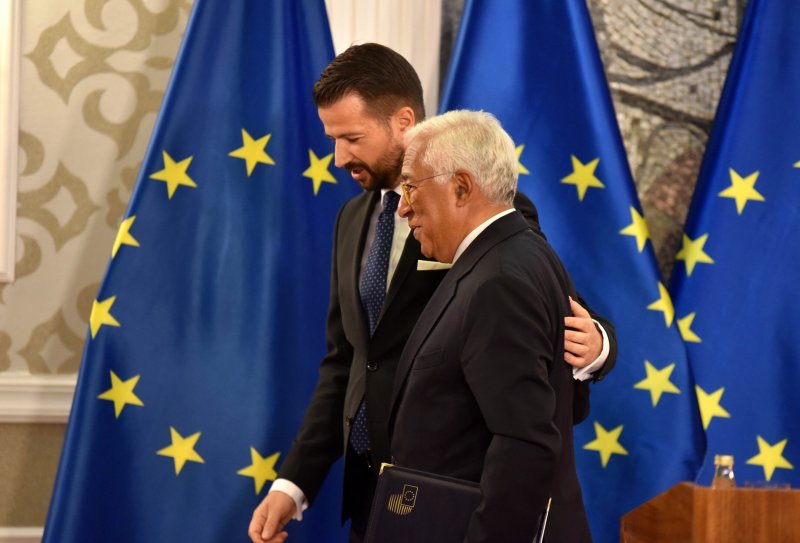
“I’m very much hoping that in the future we would be getting bigger support from the EU to really fight disinformation and misinformation,” Milatović stated during his visit to meet with European Council President António Costa. The president confirmed he had already presented this request to various EU policymakers and member states.
Montenegro, which gained independence from Serbia in 2006, has set an ambitious target of achieving full EU membership by 2028. The nation has been an official candidate since 2010 and joined NATO in 2017, signaling its commitment to Western alliances despite historical ties to Russia.
The small Adriatic nation of approximately 620,000 people finds itself increasingly in the crosshairs of geopolitical information warfare. President Milatović revealed he encounters disinformation “on a daily basis,” suggesting a coordinated effort to undermine Montenegro’s European integration.
“Sometimes, I feel that pro-European politicians in the region of the Western Balkans are a bit left alone by partners in the EU,” Milatović lamented, pointing to a perceived lack of support for leaders championing European values in the region.
The president’s concerns come as Russia has intensified efforts to maintain influence in the Western Balkans, a region it has historically considered within its sphere of interest. Montenegro’s decision to join NATO in 2017 was met with significant opposition from Moscow, including alleged involvement in a 2016 coup attempt aimed at preventing the alliance membership.
The EU has already taken similar measures to support Moldova, another candidate country facing Kremlin interference. Last month, the bloc deployed its newly formed cyber reserve—a team of private-sector cybersecurity experts—to the Moldovan capital Chişinău. The initiative included millions in funding to establish a specialized hub focused on countering disinformation.
Montenegro’s case highlights the evolving nature of obstacles to EU enlargement. Beyond traditional challenges of meeting accession criteria and implementing reforms, candidate countries now face sophisticated information warfare designed to sow public discord and undermine pro-European sentiment.
Security analysts note that Russian disinformation tactics in the region typically exploit historical grievances, religious affiliations, and economic concerns to portray the EU as a threat to national sovereignty and cultural identity. These campaigns often operate through local media outlets, social networks, and political proxies with ties to Moscow.
“Malign influence from third countries” represents a significant risk to Montenegro’s EU accession process, according to Milatović, who urged Brussels to adopt a more proactive stance in addressing these challenges.
The country’s strategic location on the Adriatic Sea and its ongoing political transformation make it particularly valuable in the context of EU expansion. As one of the more advanced candidates among Western Balkan nations, Montenegro has opened all negotiation chapters but faces challenges in areas including rule of law, media freedom, and fighting corruption.
Experts suggest that targeted EU support for Montenegro could include enhanced media literacy programs, funding for independent journalism, specialized training for government officials in strategic communication, and greater technical assistance to detect and counter foreign information operations.
As the EU reconsiders its enlargement strategy in light of geopolitical developments, Montenegro’s call for support against disinformation underscores the new frontiers in the accession process and the evolving nature of challenges facing aspiring member states in Europe’s contested neighborhoods.
Fact Checker
Verify the accuracy of this article using The Disinformation Commission analysis and real-time sources.

14 Comments
The battle against Russian disinformation is a complex and multifaceted challenge, but Montenegro’s efforts to enlist EU support are a positive step. Maintaining stability and democratic progress is critical.
Effective cooperation between Montenegro and the EU will be essential in safeguarding the country’s democratic institutions and decision-making processes.
The challenge of Russian disinformation is not unique to Montenegro, but their geographic location and size make them particularly vulnerable. Proactive measures to strengthen resilience are a wise investment.
Coordinating with the EU and NATO will be key for Montenegro to effectively counter Russian influence operations targeting their country.
As Montenegro pushes for faster EU accession, securing EU assistance to combat Russian influence operations is a prudent move. Disinformation can be a powerful tool to derail their membership ambitions.
Maintaining political and social stability in the face of external interference will be critical for Montenegro as they navigate the EU integration process.
Montenegro’s request for greater EU assistance in combating Russian disinformation highlights the ongoing geopolitical tensions in the Balkans region. Strengthening their resilience to external influence will be crucial.
As Montenegro works towards EU membership, securing robust support to counter Russian interference should be a top priority for policymakers in Brussels.
This highlights the ongoing geopolitical tensions in the Balkans region. Montenegro’s efforts to counter Russian interference show their commitment to aligning with the EU and NATO despite historical ties to Russia.
It will be important for the EU to provide Montenegro with the resources and support they need to effectively counter Russian disinformation campaigns.
Given Montenegro’s strategic importance as a potential EU member, it’s understandable why Russia would seek to undermine their progress through disinformation campaigns. Securing EU support is a sensible move.
Disinformation is a persistent challenge for many countries, and Montenegro’s proactive approach sets a positive example for others facing similar threats.
Interesting to see Montenegro taking a proactive stance against Russian disinformation efforts. As they work towards EU membership, shoring up their defenses against foreign influence will be crucial.
Agreed. Combating Russian propaganda and misinformation is an uphill battle, but necessary for Montenegro to maintain its Western trajectory.