


Listen to the article
Tensions in the Middle East have sparked a wave of disinformation targeting Taiwan’s natural gas security, according to government officials who moved quickly this week to counter false claims circulating on social media platforms.
The rumors, which gained traction following recent escalations in the Israel-Hamas conflict, suggested Taiwan’s liquefied natural gas (LNG) supplies were at imminent risk due to shipping disruptions in the Red Sea. Taiwan’s Ministry of Economic Affairs issued a statement Wednesday refuting these claims and reassuring the public about the stability of the island’s energy infrastructure.
“Taiwan’s natural gas supply remains secure and unaffected by current geopolitical tensions in the Middle East,” said Energy Minister Wang Mei-hua during a press briefing. “We maintain strategic reserves sufficient to meet domestic demand for 30 days, and our supply chain diversification efforts over the past three years have significantly reduced vulnerability to regional disruptions.”
The false information appeared to exploit legitimate concerns about global shipping routes, as Houthi militants in Yemen have targeted vessels in the Red Sea in recent months, forcing many shipping companies to divert around the Cape of Good Hope. These longer routes have raised freight costs and created logistical challenges for global commerce.
However, Taiwan’s state-owned CPC Corporation, which manages approximately 70% of the island’s natural gas imports, confirmed that none of its contracted shipments traverse the affected Red Sea routes. The company sources most of its LNG from Australia, Qatar, and the United States, with deliveries following Pacific Ocean pathways that remain unaffected by the Middle East conflict.
Market analysts note that Taiwan has been strategically diversifying its energy imports since 2021. “Taiwan learned valuable lessons from previous energy crises,” explained Chen Wei-ting, energy sector analyst at Capital Securities. “The government has worked to reduce dependence on any single region and has established redundancies in its supply chain specifically to weather geopolitical disruptions.”
The disinformation campaign appears to be part of a broader pattern targeting Taiwan’s critical infrastructure and public confidence. Taiwan’s Digital Minister Audrey Tang acknowledged that the island nation faces “persistent information warfare” that often correlates with global conflicts and tensions with neighboring countries.
Taiwan, which China claims as its territory, has been the target of numerous disinformation campaigns in recent years. Security experts believe such efforts aim to create public anxiety and undermine trust in the government’s ability to provide essential services during crises.
“Energy security disinformation is particularly effective because it touches on basic needs and can trigger panic buying or market instability,” said Lin Ying-yu, a security analyst at Tamkang University. “When people worry about heating their homes or keeping the lights on, social cohesion can quickly deteriorate.”
Taiwan’s energy landscape has been in transition as the government pursues greater sustainability while ensuring supply security. Natural gas currently accounts for approximately 36% of Taiwan’s electricity generation mix, with plans to increase this proportion as part of efforts to reduce coal dependence and achieve carbon neutrality goals by 2050.
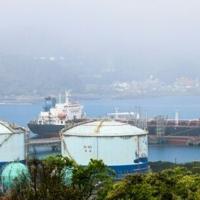
The island is in the process of expanding its LNG receiving terminals, with a new facility in Taoyuan expected to become operational later this year. This infrastructure investment will increase storage capacity and improve Taiwan’s ability to manage supply fluctuations.
Despite official reassurances, the disinformation incident highlights Taiwan’s position at the intersection of global energy markets and geopolitical tensions. As an island economy heavily dependent on imports, Taiwan remains vigilant against both physical and information threats to its resource security.
Government officials emphasized that citizens should verify information through official channels before spreading unconfirmed reports. The Economic Affairs Ministry has established a dedicated fact-checking portal where the public can confirm energy-related information during times of uncertainty.
“Energy security requires both physical infrastructure and information resilience,” Minister Wang added. “We are committed to providing accurate, timely information to counter disinformation that could destabilize markets or create unnecessary public concern.”
Fact Checker
Verify the accuracy of this article using The Disinformation Commission analysis and real-time sources.

11 Comments
It’s concerning how quickly misinformation can spread on social media, even about critical infrastructure like Taiwan’s gas supply. Glad the government was proactive in refuting these false claims.
Absolutely. Transparency and clear communication from officials is key to combating disinformation and maintaining public trust.
Taiwan’s energy resilience is an interesting topic. I’m curious to learn more about their specific supply chain diversification efforts and how they’ve reduced vulnerability to regional disruptions.
The ability to quickly counter false narratives and reassure the public is an important skill for governments dealing with disinformation campaigns. Taiwan’s response seems measured and effective.
Agreed. Maintaining calm and projecting confidence in the face of rumors is crucial when it comes to critical infrastructure and national security.
This highlights the complex geopolitical dynamics at play and how far-reaching conflicts can impact energy security in distant regions. Taiwan’s diversification efforts seem prudent given the volatility.
It’s good to see Taiwan taking a proactive stance in refuting false claims about its natural gas supply. Maintaining transparency and public trust is vital, especially during times of geopolitical tension.
Absolutely. Disinformation campaigns can erode confidence in critical infrastructure, so a swift and authoritative response from officials is the right approach.
Interesting to see how global conflicts can fuel disinformation campaigns targeting a country’s energy security. Taiwan seems to have a solid plan in place to maintain its natural gas supply, even with disruptions elsewhere.
Yes, diversifying supply chains and building strategic reserves are smart moves to enhance Taiwan’s energy resilience.
This situation highlights the importance of energy security and the need for countries to have robust contingency plans in place. Taiwan’s strategic reserves and supply chain diversification seem like prudent measures.