


Listen to the article
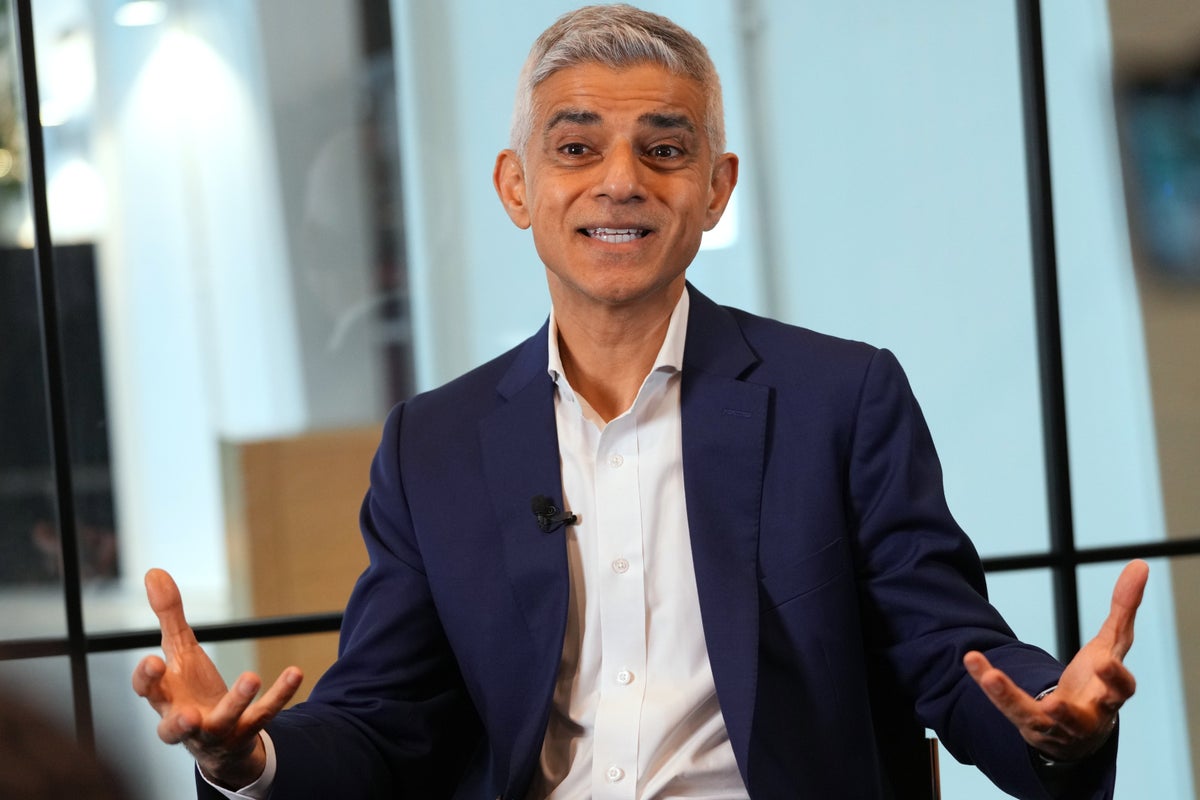
London’s mayor Sadiq Khan has issued a stark warning about the proliferation of false information about the UK capital circulating online, describing it as a “dark blizzard of disinformation” that threatens public safety and social cohesion.
Speaking at a disinformation summit in Cambridge on Thursday, Khan called for stronger government intervention to regulate social media companies and prevent individuals from “profiting from division” through the spread of misleading narratives.
According to data from the Greater London Authority (GLA), while overall London-related social media posts increased by approximately seven percent between March 2024 and March 2026, content promoting “London in decline” narratives surged by 150-200 percent. Even more dramatically, migration-related narratives referencing London jumped by more than 350 percent during the same period.
The mayor emphasized that these online narratives sharply contradict official crime statistics, which show declining rates in many categories, including serious violent offenses and homicides.
“We’re right to expect big tech to do better, but we should not rely on it,” Khan stated. “If platforms fail to act, the state must have the tools to make them. That’s why I’ll continue lobbying the government publicly and privately to take a much tougher approach.”
Khan proposed the establishment of a new central regulatory body with sufficient authority and agility to protect democracy from disinformation. He also called for more aggressive enforcement of existing rules, arguing that regulators like Ofcom need greater power to impose meaningful penalties on non-compliant companies.
The GLA’s analysis revealed that misleading online narratives about London frequently focus on migration, cultural identity issues, and public safety concerns. Other common themes include antisemitic and homophobic content. The report identified “clear signs of coordinated and inauthentic activity,” including the use of AI-generated content to create and amplify false claims.
Particularly concerning is the apparent involvement of foreign actors in spreading disinformation about London. The report cited evidence suggesting participation from accounts aligned with Russian or Chinese state interests, as well as US-based political movements. One example included a Vietnam-based Facebook network of at least 42 pages with a combined following of approximately 1.25 million users. These pages posted repeated AI-generated imagery while impersonating local media outlets.
Other identified networks included a Sri Lanka-based content farm producing monetized AI-generated posts and a Nigeria-based cluster impersonating UK media outlets.
Common narratives in the disinformation ecosystem included exaggerated claims about phone-snatching, violence against women, and knife crime. The report also noted “persistent” posts related to public health, climate, and LGBTQ+ issues, although in lower volumes.
Khan warned that the consequences of unchecked disinformation could be severe, potentially leading to more domestic terrorism offenses perpetrated by individuals radicalized by conspiracy theories they encounter online.
“The outrage economy is eating away at the basic bonds of trust that hold our societies together,” the mayor said. “It isn’t just a challenge for progressives like me. It’s a challenge for anyone who believes in democracy – wherever they are.”
He noted that similar disinformation campaigns are already targeting other major cities globally, describing London as “the canary in the coal mine” for a growing international problem.
In response to the mayor’s concerns, a spokesperson for the Department for Science, Innovation, and Technology stated that the Online Safety Act requires social media platforms to remove illegal misinformation and disinformation to protect communities from related harms. They added that Ofcom possesses strong enforcement powers and has the government’s full support to take necessary action against non-compliant platforms.
Fact Checker
Verify the accuracy of this article using The Disinformation Commission analysis and real-time sources.

9 Comments
The mayor raises valid concerns about the dangers of disinformation online. While social media has many benefits, the proliferation of misleading narratives that contradict official data is concerning. I hope policymakers can find ways to address this challenge without stifling legitimate discourse.
This is an important issue. While social media has many benefits, the spread of disinformation can undermine public trust and safety. Regulating these platforms to combat malicious narratives seems prudent, though the details will be critical.
Agreed. Misinformation and misleading narratives are a growing concern that need to be addressed, especially when they contradict official crime data. Striking the right balance between free speech and responsible moderation will be key.
Disinformation on social media is a complex challenge without easy solutions. I appreciate the mayor’s call for action, but hope any new policies strike a careful balance between public safety and civil liberties.
Interesting to see the data on the surge in London-related narratives, especially the large increase in migration-focused content. I agree that these trends deserve scrutiny, but any regulatory response will require thoughtful consideration of the broader implications.
The surge in ‘London in decline’ narratives is concerning, especially if they don’t align with crime statistics. Disinformation can erode public confidence and cohesion. Thoughtful regulation seems warranted, but the devil will be in the details.
Regulating social media to combat the spread of misleading narratives is a tricky issue. While addressing disinformation is important, we must be vigilant against overreach that could infringe on legitimate free speech. Nuanced policymaking will be critical.
I’m curious to see what specific policies the mayor proposes for regulating social media companies. Combating disinformation is vital, but any new rules must be carefully crafted to avoid infringing on legitimate discourse.
That’s a fair point. Overregulation could backfire and empower bad actors claiming censorship. Transparency, user empowerment, and targeted interventions may be more effective than broad restrictions.