


Listen to the article
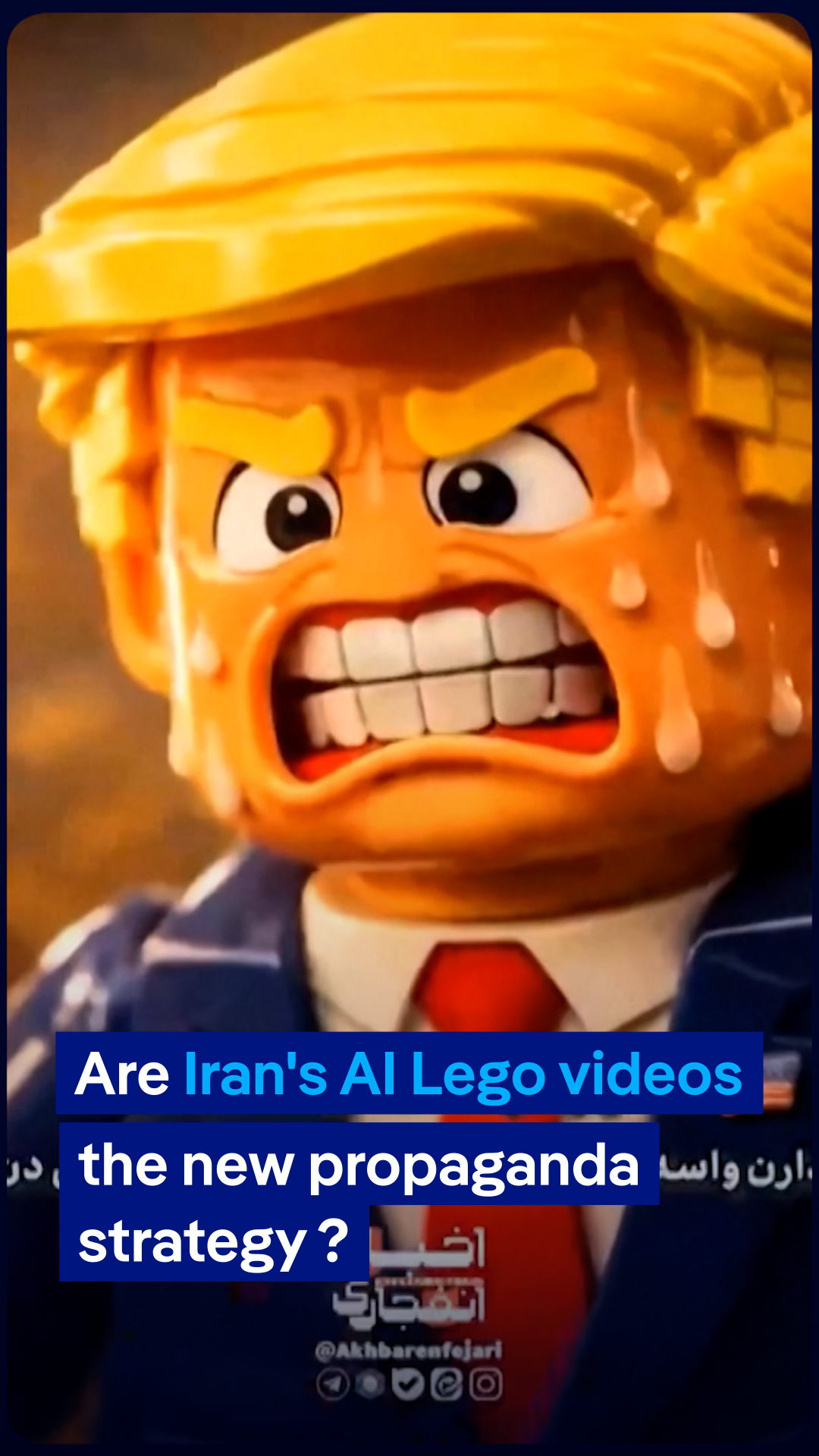
Social media platforms have been inundated with AI-generated Lego-themed videos that promote pro-Iranian messaging, according to recent findings by disinformation researchers. The sophisticated campaign appears designed to shape public perception of ongoing Middle East conflicts, particularly regarding tensions between Iran, Israel, and the United States.
David Gilbert, a reporter specializing in disinformation and extremism for WIRED Magazine, has investigated these videos that use the familiar aesthetic of Lego animation to deliver politically charged content. The videos specifically attempt to reframe narratives around what they characterize as a “US-Israel war,” presenting Iran’s perspective on regional conflicts.
“What we’re seeing is an evolution of propaganda techniques,” Gilbert explained in an interview with DW News. “These videos are carefully crafted to appear harmless and even nostalgic at first glance, making viewers more receptive to the messaging.”
The AI-generated content typically features Lego-style characters and settings while subtly embedding pro-Iranian talking points. By leveraging the recognizable and typically non-threatening Lego aesthetic, the creators have found a way to potentially bypass content moderation systems while making their messaging more palatable to casual viewers.
Experts point out that this campaign represents a concerning development in the information warfare landscape. The use of AI to mass-produce visually appealing content allows for rapid deployment across multiple platforms simultaneously, creating an impression of widespread sentiment that may not reflect organic discourse.
Social media analysts have noted that these videos are appearing on mainstream platforms including TikTok, Instagram, and Facebook, with engagement numbers suggesting they’re reaching significant audiences. The campaign appears to target Western viewers in particular, with most videos produced in English and employing cultural references familiar to American and European audiences.
“The production quality is surprisingly high,” noted Dr. Sarah Hoffman, a digital media researcher at Columbia University who was not directly quoted in the original report but has studied similar phenomena. “This isn’t just crude propaganda. There’s sophisticated narrative construction happening that blends entertainment with political messaging.”
The timing of this campaign coincides with heightened tensions in the Middle East, particularly following incidents involving Iranian missile launches and ongoing conflicts involving Israel. By portraying these events from Iran’s perspective, the videos attempt to counter Western media narratives and build sympathy for Iranian positions.
Tech companies have struggled to address this new form of influence operation. The videos often don’t contain explicit calls to violence or other clear violations of platform policies, existing instead in a gray area that challenges content moderation systems. Additionally, the use of a children’s toy aesthetic complicates efforts to identify and flag political content.
Gilbert warns that this campaign likely signals a new front in digital influence operations. “We’re going to see more of this hybrid content that blends innocuous cultural elements with state-aligned messaging,” he said. “The barriers to creating convincing video content are dropping rapidly with AI advancement.”
Security experts recommend that viewers maintain heightened awareness when encountering animated content discussing geopolitical issues, particularly when the messaging seems designed to elicit strong emotional responses about complex international conflicts.
As artificial intelligence tools become more accessible and sophisticated, the challenge of distinguishing authentic discourse from coordinated influence campaigns will likely intensify. This Lego-themed campaign demonstrates how seemingly innocent cultural references can be weaponized in the ongoing battle for narrative control in global conflicts.
Fact Checker
Verify the accuracy of this article using The Disinformation Commission analysis and real-time sources.

12 Comments
Interesting how propaganda can be disguised as nostalgic Lego videos. I wonder if this signals a concerning trend of AI-generated disinformation aimed at shaping public opinion on geopolitical conflicts.
Yes, it’s a concerning development. The use of familiar, seemingly innocuous imagery to deliver politically charged messaging is quite insidious.
This report highlights the evolving nature of disinformation campaigns and the growing role of AI in shaping narratives. It’s a sobering reminder of the importance of critical thinking and fact-checking, even when confronted with seemingly innocuous content.
I wonder what other industries or sectors might be targeted by similar AI-driven disinformation campaigns. The mining and energy sectors, with their geopolitical significance, could also be vulnerable.
That’s a good point. Any industry or topic with high stakes or political implications could potentially be targeted. Vigilance and critical thinking will be essential.
This highlights the growing challenge of combating sophisticated disinformation campaigns that leverage emerging technologies like AI. Maintaining an informed and discerning public will be crucial going forward.
Absolutely. Educating people on how to identify and resist such manipulative tactics will be key to preserving the integrity of public discourse.
This report highlights the ongoing struggle to maintain the integrity of public discourse in the face of increasingly sophisticated disinformation tactics. As new technologies like AI are leveraged, the need for robust fact-checking and media literacy efforts only grows.
The use of Lego-themed videos to promote pro-Iranian messaging is an intriguing tactic. I wonder if similar approaches might be used to target other industries, like mining or energy, where geopolitical tensions are also a factor.
That’s a good point. The mining and energy sectors, with their global significance, could certainly be vulnerable to such disinformation campaigns. Vigilance and media literacy will be key to combating this threat.
The use of familiar, nostalgic imagery to deliver politically charged content is quite concerning. It speaks to the sophistication of these disinformation tactics and the need for robust media literacy efforts.
Agreed. Helping the public develop the skills to recognize and resist such manipulative techniques should be a priority for social media platforms, educators, and policymakers.