


Listen to the article
Residents of Iraq’s Kurdistan Region were jolted by an explosion of alarming social media messages Monday night warning of “armed clashes,” “mass displacement,” and “unprecedented security chaos” in Lajan village west of Erbil. Within hours, digital networks portrayed a capital city on the verge of collapse.
The reality on the ground, however, told a markedly different story—one more localized and complex than the sweeping crisis narrative circulating online.
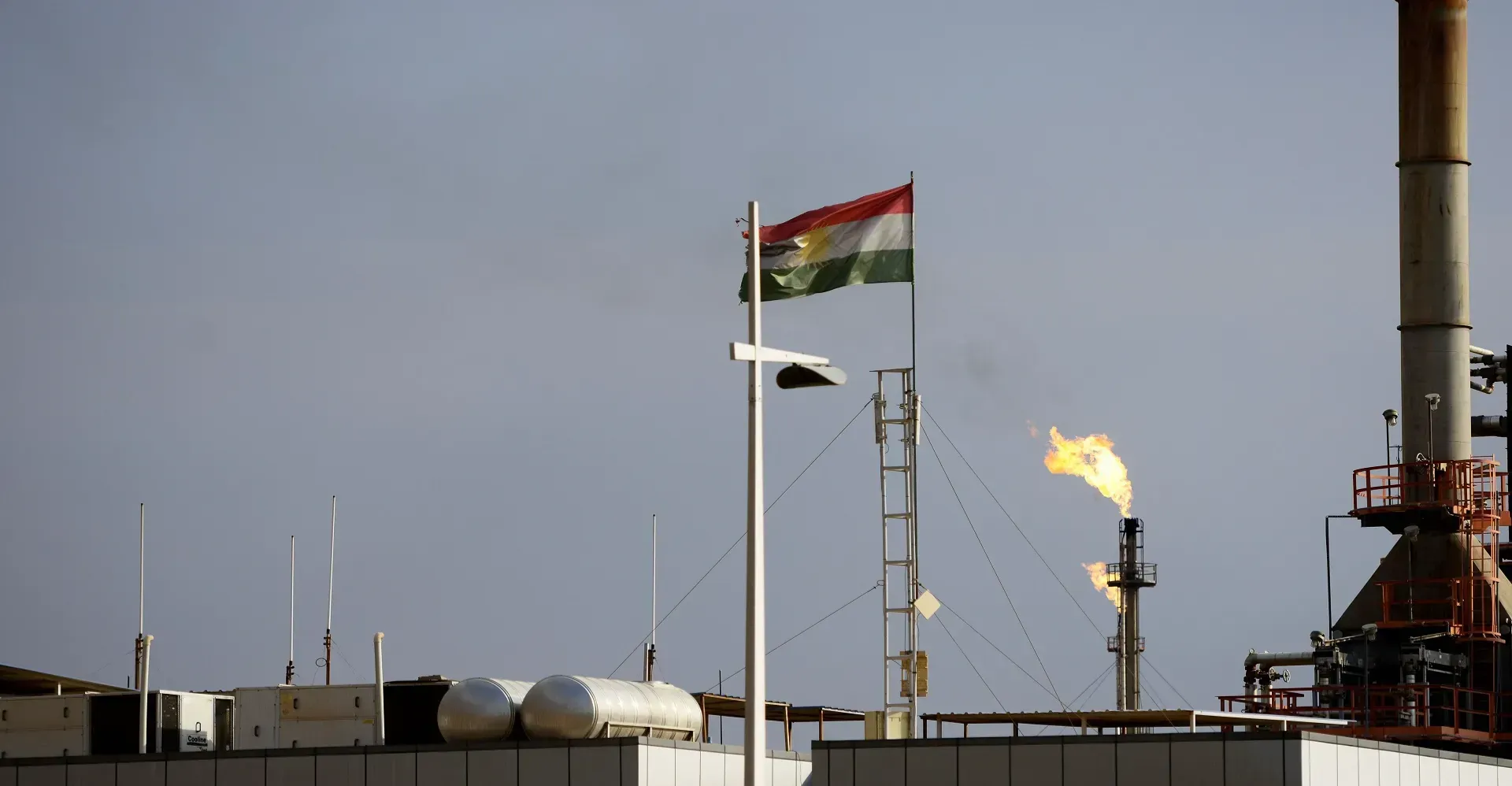
The incident originated from protests near the Lanaz refinery on the Erbil-Kwer road days earlier. Lajan residents had demonstrated against unfulfilled promises to employ local youth at the facility. What began as a peaceful gathering escalated into confrontations between protesters and security forces, resulting in one protester killed and injuries on both sides.
In this tense environment, politically aligned platforms and anonymous accounts constructed an alternative narrative. A localized protest transformed into reports of “the situation exploding,” “armed groups advancing toward the city,” and claims of “mass flight” and imminent “civil war.”
“The challenge for security agencies in moments like this is not only on the ground,” a senior security source in Erbil told Shafaq News, “but in confronting a flood of disinformation that tries to turn every localized incident into a story about the fall of Erbil.”
Public anxiety intensified after a video circulated showing masked individuals at an elevated position near the Lanaz facility. One person pointed an RPG launcher toward the refinery while a voice declared in Kurdish dialect: “We will attack if they advance.” The visual suggested an open confrontation near a critical energy installation rather than a protest clash.
Lajan’s location adds crucial context to the unfolding situation. The village sits in Khabat district, approximately 40 minutes from central Erbil, within the complex belt of territories disputed between Iraq’s federal government and the Kurdistan Regional Government (KRG). These areas frequently experience tensions due to overlapping political and security influences.
After relative calm returned, the Kurdistan Region Security Council (KRSC) issued a statement revealing that investigations showed “the involvement of internal and external arms” in the unrest. The Council characterized the events as part of broader “sabotage conspiracies” previously linked to attacks on the Khor Mor gas field, disruptions to electricity production, targeting of refineries, planned explosions in Erbil and Duhok, and the use of partisan and foreign media to incite the public.
According to the KRSC, gunfire was used with the intention of provoking security forces into a deadly response that could be weaponized to justify militia intervention against the Kurdistan Region.
The Council published a confession from a detainee, Nechirvan Issa Mir, who claimed to have joined the Patriotic Union of Kurdistan (PUK) in 2021 and later became head of its Branch 14. Mir alleged meeting with Jawhar Agha Herki in Al-Sulaymaniyah, who informed him of coordination with Iran-aligned Kataib Sayyid al-Shuhada militia and tasked him with overseeing related activities in Erbil.
The confession detailed meetings in Mosul with a militia-affiliated figure, the recruitment and training of 135 individuals, and coordination “to launch demonstrations inside Erbil” in cooperation with both the militia group and the PUK. These allegations suggest complex networks spanning party, tribal, and armed actors across Iraq’s political and geographic fault lines.
The Security Council explicitly connected the Lajan escalation to attempts to test security responses near critical energy facilities—a significant concern following recent attacks on the Khor Mor gas field, electricity stations, and transmission lines. A security source noted that threats to Kurdistan’s energy infrastructure were no longer limited to external rocket and drone attacks but could emerge as internal unrest disguised as socioeconomic protests.
Despite the online panic, life in Erbil continued largely normally. Cafés remained open and traffic flowed, interrupted only by additional security checkpoints. Families spent the evening trying to understand what was happening in Lajan, calling relatives across the city or consulting maps to gauge the distance to the village.
The situation was further complicated by tensions surrounding press access. Rights groups reported that media teams were prevented from reaching Lajan and Khabat, with some equipment damaged. This lack of independent reporting widened the gap between ground reality and public perception.
The KRSC accused opposition-linked and foreign media platforms of amplifying the unrest as part of a “psychological and media warfare” campaign targeting the Region. Media thus became both observer and battleground in the struggle over competing narratives.
This pattern has repeated during previous crises. Missile strikes, salary disputes, and political tensions have routinely triggered predictions of “the end of the Kurdish experiment” or portrayals of Erbil authorities as unable to secure the region. Local incidents frequently become entry points for broader narratives tied to intra-Kurdish rivalries or regional actors seeking to project the Region’s fragility.
The Lajan incident ultimately served as a test of crisis management in the digital age. In mere hours, brief clips and sensational headlines created the impression of a city in chaos. While the reality proved less dramatic, the events revealed significant vulnerabilities in the security belt surrounding Erbil and highlighted the central role of energy infrastructure in ongoing contests over the Region’s future.
Fact Checker
Verify the accuracy of this article using The Disinformation Commission analysis and real-time sources.

9 Comments
Interesting to see how disinformation can quickly spiral out of control, even around relatively localized incidents. It’s a good reminder of the need for reliable, fact-based reporting, especially on sensitive security matters.
The role of social media in amplifying and distorting local events is really concerning. Responsible platforms and users have an important part to play in limiting the spread of unverified claims, especially around sensitive security issues.
I’m curious to learn more about the specific factors that led the protest at the Lanaz refinery to turn violent. Was it an isolated incident, or part of broader tensions in the region around energy infrastructure and employment?
The energy security angle is really interesting. With tensions over resources and infrastructure, it’s clear that local disputes can quickly take on broader geopolitical dimensions. Careful management of these issues will be crucial going forward.
It’s troubling to see how quickly a localized protest can morph into reports of widespread chaos and displacement. Fact-checking and responsible reporting are essential to prevent this kind of damaging disinformation.
This highlights the vulnerability of regions like the Kurdistan Region to external influence and the weaponization of information. Strengthening local resilience and crisis response capabilities seems like a key priority.
This highlights the fragility of stability in the region and the potential for small events to escalate quickly, especially when coupled with the spread of unverified claims online. Effective security and crisis response protocols seem crucial.
Agreed. Balancing public transparency with operational security must be a delicate challenge for authorities in these situations.
This incident speaks to the complexity of the security environment in the Kurdistan Region. While economic development and job creation are crucial, it’s clear that managing local grievances and the flow of information is an ongoing challenge for authorities.