


Listen to the article
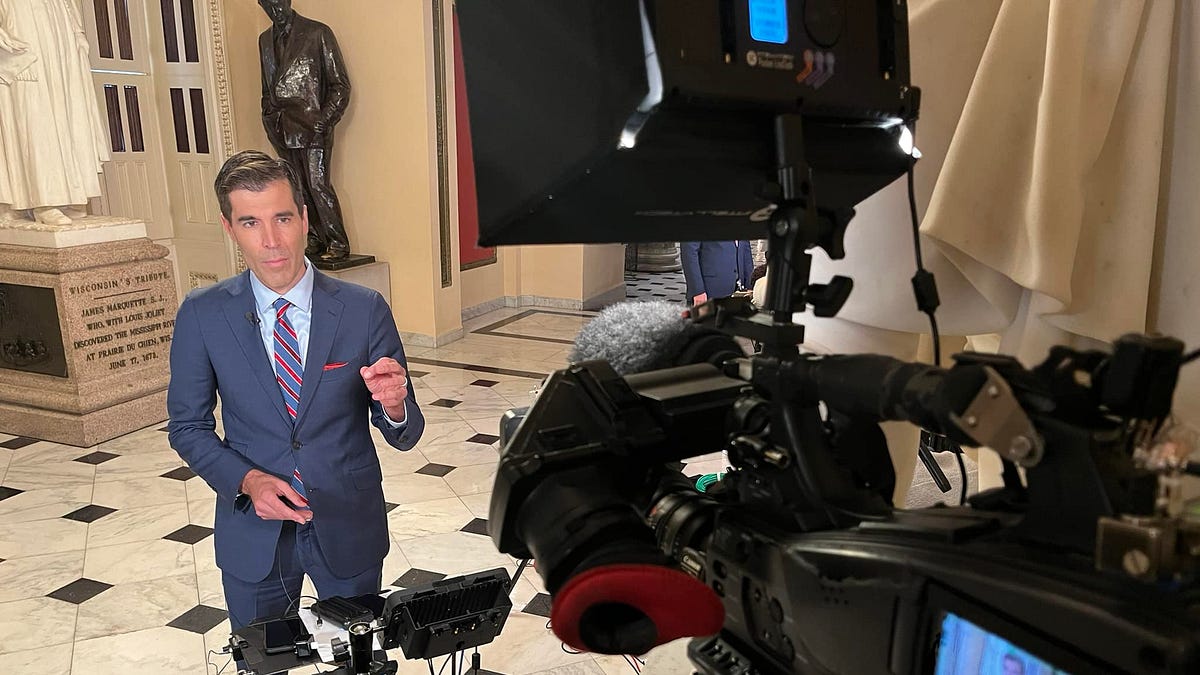
In a bold career pivot that signals the evolving landscape of journalism, veteran reporter Scott MacFarlane has embraced independence after decades with major news organizations. Just one month ago, MacFarlane quietly stepped away from traditional media to launch his own journalistic venture, marking a significant personal transition that reflects broader changes reshaping the industry.
MacFarlane now hosts “Scott MacFarlane Reports,” a daily news program available on YouTube and Substack that promises “exclusive and breaking news 365 days a year.” Simultaneously, he serves as Chief Washington Correspondent for the MeidasTouch Network, a progressive media organization that has gained prominence in recent years.
The move comes at a time when trust in mainstream media continues to erode across the political spectrum. According to a 2023 Gallup poll, Americans’ confidence in mass media has hit near-record lows, with only 32 percent saying they have “a great deal” or “fair amount” of trust in news organizations. This environment has created both challenges and opportunities for journalists looking to establish direct relationships with audiences.
In his new independent role, MacFarlane has begun offering behind-the-scenes insights into his journalistic process, a transparency that many media consumers now demand. He discusses the mechanics of independent reporting, his approach to sourcing and verification, and why he believes this model serves an important function in today’s fractured information ecosystem.
Media analysts note that MacFarlane’s transition is part of a growing trend. “We’re seeing more established journalists with significant credentials move to independent platforms,” says Dr. Jennifer Kaplan, professor of media studies at American University. “They bring institutional knowledge and reporting skills but operate without the constraints of corporate ownership or traditional broadcast schedules.”
This shift comes as Americans increasingly seek trustworthy news sources amid concerns about both deliberate misinformation campaigns and perceived media bias. A Knight Foundation study found that 73 percent of Americans believe the spread of misinformation is a major problem, highlighting the market opportunity for journalists who can establish credibility through transparency and consistency.
MacFarlane’s approach includes explaining not just what the news is, but how it’s gathered and verified. This meta-journalistic perspective provides audiences with tools to better evaluate news sources across the board. His candid discussions about journalistic methods, coupled with his established reputation from years in mainstream media, offer a bridge between traditional news values and new delivery models.
The economics of independent journalism remain challenging, however. Without the backing of major networks or publications, journalists must build sustainable business models through subscriptions, advertising, or other revenue streams. MacFarlane has implemented a hybrid approach, offering some content freely while reserving certain features like his “Five Questions” series for paid subscribers.
“This model allows me to thank those who financially support my work while still ensuring essential information reaches everyone,” MacFarlane explains in his outreach to readers.
Industry observers point out that the success of independent journalists often depends on their ability to cultivate community around their reporting. By directly engaging with audiences and establishing personal connections, they can create loyalty that traditional media outlets sometimes struggle to match.
The rise of platforms like Substack, which has attracted numerous high-profile journalists in recent years, has facilitated this shift by providing infrastructure for content distribution and monetization. However, questions remain about the sustainability of such models and whether they can support comprehensive reporting, particularly on resource-intensive beats.
As MacFarlane navigates this new chapter of his career, his experience highlights the tension between traditional journalistic institutions and emerging models of news delivery. Whether his independent venture represents the future of quality journalism or simply one alternative among many remains to be seen, but his transition illustrates the ongoing reinvention of an industry at a crossroads.
Fact Checker
Verify the accuracy of this article using The Disinformation Commission analysis and real-time sources.

7 Comments
Interesting pivot for Scott MacFarlane – leaving mainstream media to launch his own independent news venture. I’m curious to see how he navigates this changing industry landscape and builds trust with audiences.
Eroding trust in traditional media outlets is a concerning trend, but it’s also creating opportunities for independent journalists to connect directly with readers. I’ll be interested to follow MacFarlane’s work and see how his approach differs.
Agreed, the shift towards independent journalism is an important development. Direct audience relationships could allow more transparency and responsiveness from reporters.
MacFarlane’s career pivot raises questions about the future of journalism. Will more experienced reporters follow suit and strike out on their own? And how will this impact the industry as a whole?
Launching his own news program is a bold move by MacFarlane. With declining trust in mainstream media, there may be an appetite for the kind of exclusive, breaking news coverage he’s promising.
The decline in public trust of media organizations is a complex issue, but independent journalists like MacFarlane may be able to rebuild that trust through transparency and direct engagement with readers.
It will be fascinating to see how MacFarlane’s new role as Chief Washington Correspondent for MeidasTouch influences his reporting. Maintaining impartiality could be a challenge, but his insider access could also yield valuable insights.