


Listen to the article
In Finland, the battle against fake news begins in the earliest classrooms, with media literacy education starting for children as young as three years old. This decades-old educational approach has now expanded to include artificial intelligence literacy, a response to Russia’s increased disinformation campaigns following its invasion of Ukraine and Finland’s NATO membership in 2023.
“We think that having good media literacy skills is a very big civic skill,” explains Kiia Hakkala, a pedagogical specialist for Helsinki. “It’s very important to the nation’s safety and to the safety of our democracy.”
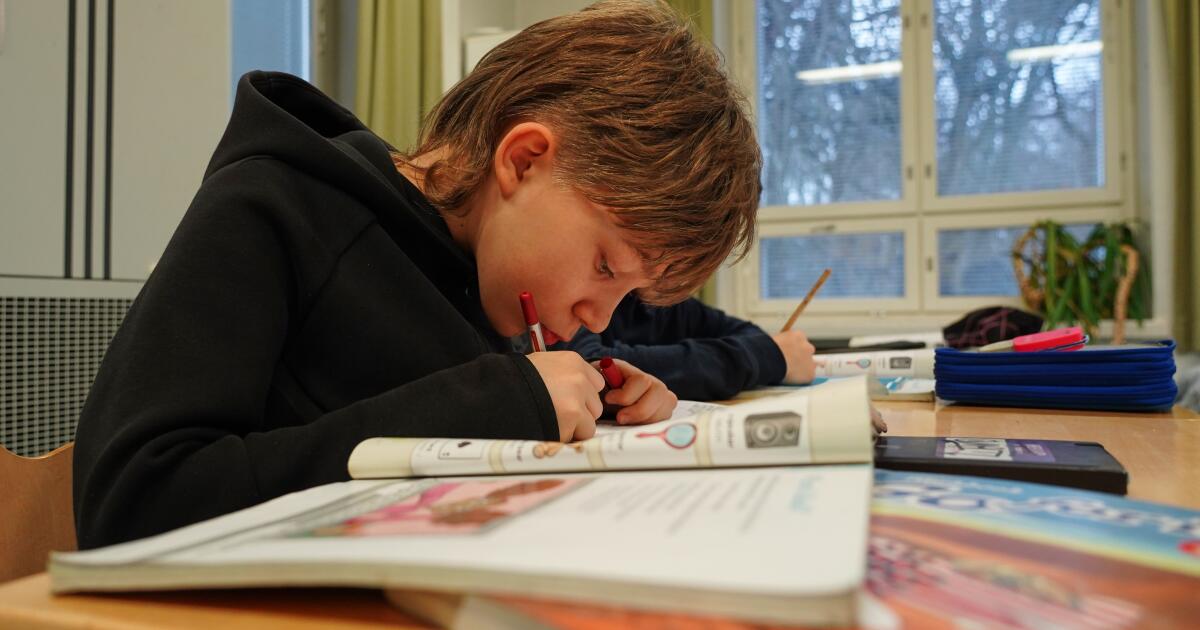
At Tapanila Primary School in northern Helsinki, teacher Ville Vanhanen guides fourth graders through exercises designed to help them identify false information. During a recent lesson, students worked to develop criteria for evaluating online news credibility.
“It is a little bit hard,” admits 10-year-old student Ilo Lindgren, as he evaluates content during a “Fact or Fiction?” exercise.
The curriculum now increasingly focuses on AI-generated content. “We’ve been studying how to recognize if a picture or a video is made by AI,” says Vanhanen, who also serves as the school’s vice principal.
This systematic approach to media education extends beyond the classroom. Finnish news outlets actively participate in building media literacy through initiatives like the annual “Newspaper Week,” which distributes news content to young people nationwide. In 2024, Helsinki’s leading newspaper, Helsingin Sanomat, helped create the “ABC Book of Media Literacy,” provided to every 15-year-old entering upper secondary education.
“It’s really important for us to be seen as a place where you can get information that’s been verified, that you can trust and that’s done by people you know in a transparent way,” says Jussi Pullinen, the newspaper’s managing editor.
Finland’s commitment to media literacy dates back to the 1990s, when it first became part of the national curriculum. Today, these educational offerings extend to older adults, who may be particularly vulnerable to misinformation campaigns.
This national emphasis on critical media consumption has consistently placed Finland at the top of the European Media Literacy Index, compiled by Bulgaria’s Open Society Institute between 2017 and 2023. The country’s 5.6 million citizens are broadly equipped with the tools to evaluate media critically—a skill that has become increasingly vital given Finland’s 830-mile border with Russia.
Education Minister Anders Adlercreutz acknowledges that the current information landscape has evolved beyond early expectations. “I don’t think we envisioned that the world would look like this,” he says. “That we would be bombarded with disinformation, that our institutions are challenged—our democracy really challenged—through disinformation.”
The rapid advancement of artificial intelligence has created new urgency for educators and experts. Distinguishing between authentic and fabricated content grows more difficult as technology evolves, particularly with the emergence of increasingly sophisticated AI tools.
Martha Turnbull, director of hybrid influence at Helsinki’s European Centre of Excellence for Countering Hybrid Threats, notes the changing nature of this challenge: “It already is much harder in the information space to spot what’s real and what’s not real. It just so happens that right now, it’s reasonably easy to spot the AI-generated fakes because the quality of them isn’t as good as it could be.”
She warns of greater challenges ahead: “But as that technology develops, and particularly as we move toward things like agentic AI, I think that’s when it could become much more difficult for us to spot.”
Finland’s proactive approach to media literacy represents a national security strategy as much as an educational one. By equipping citizens from an early age to critically evaluate information, the country aims to safeguard its democratic institutions against both traditional propaganda and increasingly sophisticated AI-generated disinformation. This model of comprehensive media education—beginning in preschool and extending throughout citizens’ lives—offers potential lessons for other nations facing similar challenges in the modern information landscape.
Fact Checker
Verify the accuracy of this article using The Disinformation Commission analysis and real-time sources.

8 Comments
Interesting approach to combat disinformation at such a young age. Building media literacy skills early on will serve these Finnish children well as they navigate the digital landscape. Proactive education is key to maintaining an informed, resilient populace.
I agree, investing in critical thinking and fact-checking abilities from an early age is crucial. Recognizing AI-generated content is an important new frontier as well.
This is a smart and forward-looking initiative by Finland. Developing a skeptical eye towards online information at a young age can inoculate people against the spread of propaganda and misinformation. Kudos to the Finnish education system for prioritizing these vital life skills.
Absolutely. In today’s digital landscape, media literacy must be a core part of the curriculum. Finland is setting a great example that other countries would do well to emulate.
Finland’s approach of teaching media literacy to young children is commendable. Equipping the next generation with the tools to critically evaluate online content is an essential investment in the future of their democracy. Tackling disinformation head-on at an early age is a model worth considering globally.
It’s great to see Finland taking proactive steps to combat the spread of disinformation, especially in the face of heightened Russian propaganda efforts. Cultivating critical thinking and media evaluation skills from a young age is a wise long-term strategy. Kudos to the Finnish education system.
Agreed. Giving children the ability to discern fact from fiction online is a vital life skill in the modern era. Finland’s approach sets an admirable example for other nations to follow.
Finland’s emphasis on media literacy education, including AI content recognition, is an innovative and necessary response to the evolving disinformation landscape. Empowering young people to be critical consumers of online information is a wise investment in the future of their democracy. A model worth replicating elsewhere.