


Listen to the article
Disinformation Campaign Targets Armenian Prime Minister Ahead of Elections
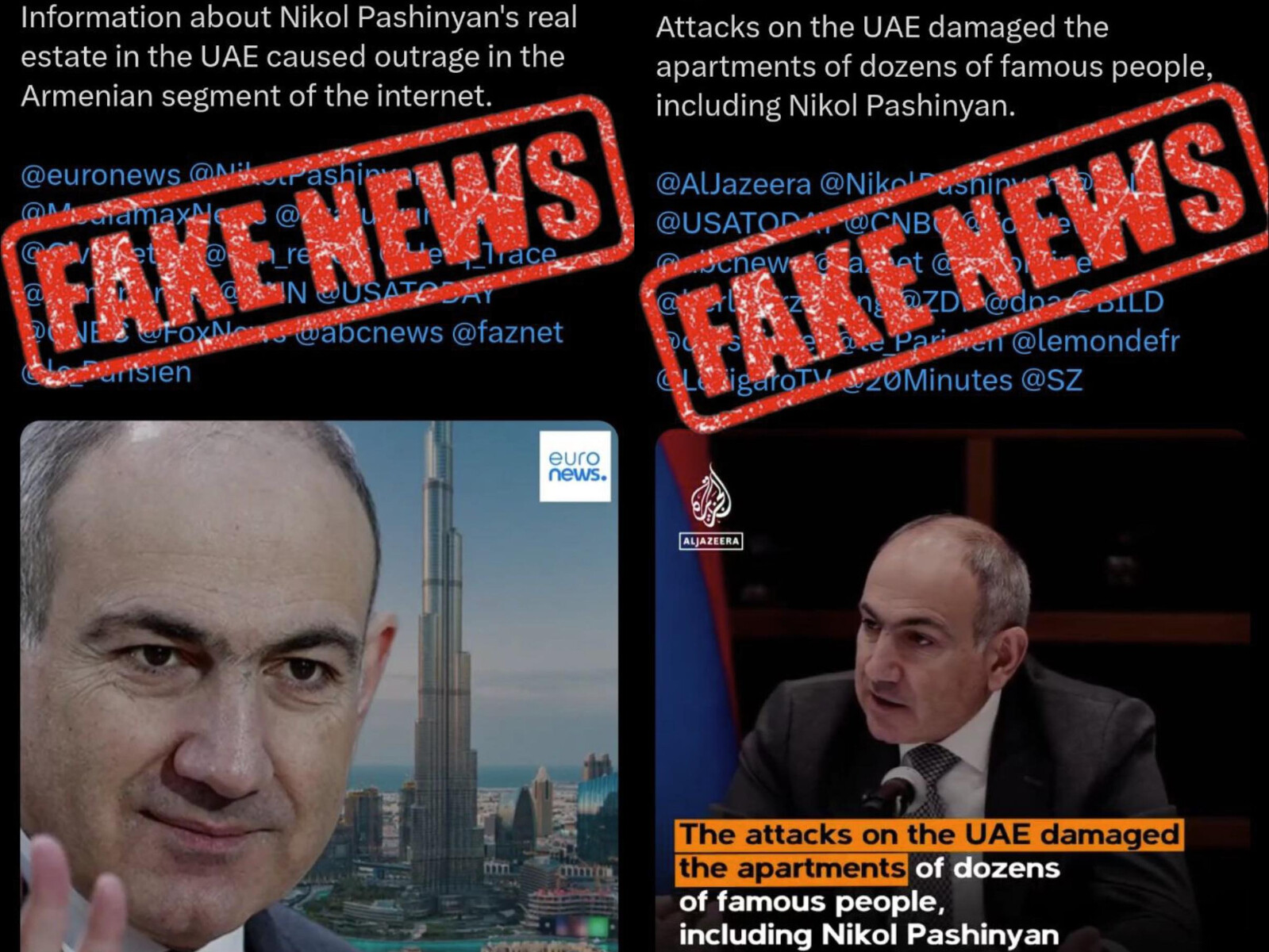
Several suspicious social media accounts have been spreading false information about Armenian Prime Minister Nikol Pashinyan, using fabricated content that bears the logos of reputable international news organizations, officials warned Wednesday.
The coordinated disinformation effort comes just weeks before Armenia’s parliamentary elections scheduled for June 7, raising concerns about foreign interference in the country’s democratic process.
According to Nazeli Baghdasaryan, Pashinyan’s spokesperson, the fraudulent posts on X (formerly Twitter) feature manipulated images with Al Jazeera and Euronews logos alongside the Prime Minister’s photograph. These posts falsely claim that Pashinyan owns expensive real estate in the United Arab Emirates that was allegedly damaged during recent missile strikes in Dubai.
“I hereby declare that Prime Minister Nikol Pashinyan does not own any property in the UAE or in any other country,” Baghdasaryan stated firmly in a social media post addressing the situation. “All numbers and ‘values’ presented in these videos, as well as the statements attributed to me on behalf of the Prime Minister, are entirely fabricated and do not correspond to reality.”
The timing of this disinformation campaign is particularly significant as Armenia prepares for crucial parliamentary elections. The South Caucasus nation has faced political turbulence in recent years, particularly following the 2020 Nagorno-Karabakh conflict with neighboring Azerbaijan and subsequent territorial concessions.
Baghdasaryan characterized the false claims as a “classic case of Foreign Information Manipulation and Interference” that employs several recognizable tactics. These include falsely attributing content to credible international media outlets to lend an appearance of legitimacy, simultaneous dissemination from multiple anonymous accounts, and accelerated spread through suspected bot networks.
“In recent days, we have recorded a systematic activation: massive repetition of the same texts, same phrasing, and synchronized comments, which indicates coordinated information interference,” the spokesperson explained.
Media experts note that such sophisticated disinformation campaigns have become increasingly common worldwide, particularly targeting countries in politically sensitive regions or during election periods. Armenia, given its geopolitical position between Russia, Turkey, Iran, and Azerbaijan, has frequently been subject to information warfare from various actors with competing interests in the region.
The fabricated story specifically claimed that Pashinyan’s supposed Dubai property had been damaged in recent attacks, presumably referencing the unprecedented January 2024 drone strikes by Yemen’s Houthi rebels that targeted the UAE. By linking the Armenian leader to luxury foreign real estate, the campaign appears designed to portray him as corrupt and out of touch with ordinary Armenians, many of whom continue to face economic challenges.
Disinformation researchers point out that false claims about hidden wealth and foreign property ownership are common tactics used to undermine political leaders globally, as they can effectively trigger public outrage regardless of their veracity.
Armenian authorities have not yet identified the source of the disinformation campaign, though the government has previously expressed concerns about foreign interference in its domestic affairs from various regional actors.
This incident highlights the growing challenge democracies face in combating sophisticated disinformation, particularly during sensitive electoral periods. As Armenia approaches its June elections, officials and media literacy advocates are urging citizens to verify information through official channels and be wary of sensational claims that appear on social media platforms, even when they seem to come from trusted news sources.
Fact Checker
Verify the accuracy of this article using The Disinformation Commission analysis and real-time sources.

8 Comments
It’s troubling to see this coordinated disinformation effort targeting the Armenian Prime Minister. Spreading misinformation through manipulated images and false narratives is a dangerous interference in the democratic process.
You’re right, this kind of foreign-backed disinformation campaign is a serious threat to free and fair elections. The authorities should investigate the source of these false claims and take appropriate action to protect the integrity of the electoral process.
The allegations about the Prime Minister’s purported real estate in Dubai seem completely fabricated. It’s concerning that these false stories are being amplified on social media, likely as part of a broader effort to discredit the PM ahead of the elections.
The allegations about the Prime Minister’s alleged real estate holdings in Dubai seem to be completely fabricated. This coordinated disinformation campaign is a dangerous attempt to interfere in Armenia’s democratic process and should be condemned.
This disinformation campaign is a troubling development that warrants close scrutiny. Spreading false information through manipulated content is a concerning tactic aimed at undermining public trust in the Prime Minister and the electoral process.
I agree, these kinds of coordinated disinformation efforts pose a serious threat to democratic institutions. It’s crucial that the authorities investigate the source of these false claims and take steps to educate the public about the importance of verifying information.
This disinformation campaign against the Armenian PM seems like a concerning attempt to undermine his credibility ahead of the elections. Fabricating stories about expensive foreign real estate is a common tactic used to discredit political figures.
I agree, these false claims are likely aimed at damaging the PM’s reputation and swaying public opinion. It’s important to scrutinize these types of allegations and verify the facts before drawing conclusions.