


Listen to the article
In her new book “Cyber Citizens: Saving Democracy with Digital Literacy,” author Heidi Boghosian delivers a timely warning about the intersection of declining civic engagement and digital manipulation in American society. As director of the AJ Muste Foundation for Peace and Justice, Boghosian brings her expertise as a civil liberties attorney to examine how technological change threatens democratic values.
The book arrives at a critical moment when many Americans struggle with basic civic knowledge. Boghosian cites alarming statistics showing only 22% of U.S. students demonstrating proficiency in civics education, with many adults unable to name the three branches of government. This educational deficit, she argues, creates dangerous vulnerabilities in the democratic system.
Structured in three parts—”Back to Basics,” “Democracy in Tilt,” and “Practices for the People”—the book methodically examines modern threats to democracy while proposing practical solutions. Boghosian’s central argument positions digital literacy and civics education not merely as academic skills but as essential tools for democratic participation in an era defined by misinformation and surveillance capitalism.
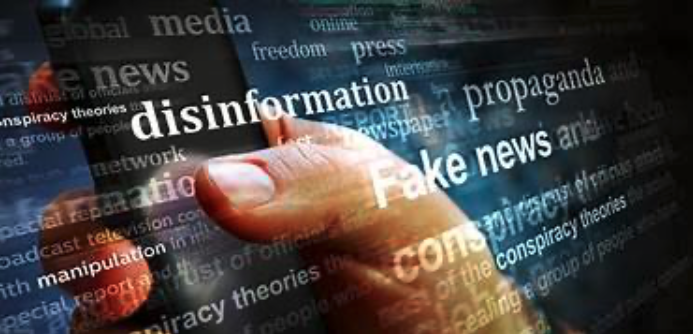
The author identifies “truth decay”—a term borrowed from the RAND Corporation—as a growing inability among citizens to distinguish fact from fiction. From government propaganda websites to deepfake technology and AI “hallucinations,” today’s internet landscape requires heightened media literacy skills that many Americans lack.
What distinguishes Boghosian’s analysis is her intersectional approach. She meticulously documents how misinformation disproportionately impacts marginalized communities, detailing the emotional and reputational damage experienced by mass shooting survivors and victims’ families targeted by conspiracy theorists. The book consistently highlights how unequal access to quality education and digital tools deepens existing social divides.
The final section offers practical solutions grounded in real-world examples. Boghosian points to Finland’s successful national media literacy programs and student-led civics lawsuits in Rhode Island as models worth emulating. She also explores how organizations are disrupting Big Tech dominance through blockchain innovations, privacy advocacy, and grassroots activism.
Beyond individual actions, the book implicitly calls for coordinated social movements capable of transforming awareness into collective power. While providing tools for personal growth, Boghosian suggests that only organized public pressure can effectively challenge entrenched power structures in a digital ecosystem where tech giants shape public discourse and disinformation spreads algorithmically.
The author’s legal background provides rich policy context, though some readers might wish for more direct engagement with the role lawmakers must play in shaping digital rights, privacy laws, and equitable tech access. In an era where partisan divides impact how disinformation spreads and tech policy struggles to keep pace with innovation, the need for justice-oriented leadership in public office becomes increasingly urgent.
Boghosian’s vision extends beyond preserving existing democratic structures. She advocates for a more inclusive, participatory democracy that acknowledges past exclusions while actively expanding access, equity, and accountability. Democracy emerges in her analysis not as a fixed governmental system but as an evolving practice of collective care, informed debate, and moral clarity.
For readers wondering how to respond to these challenges, Boghosian provides actionable advice: assess your media consumption habits, attend local government meetings, support digital rights organizations, and demand greater transparency from elected officials. Through examples of communities successfully pushing back—from youth-led lawsuits to neighborhood surveillance bans—she illustrates how democratic renewal begins with small, intentional actions at the community level.
While the book’s steady stream of statistics and case studies on civic failure might overwhelm some readers, this approach reflects the urgency of the crisis. Boghosian ultimately succeeds in balancing academic rigor with accessibility, offering both a sobering assessment and a practical handbook for strengthening democracy in the digital age.
Fact Checker
Verify the accuracy of this article using The Disinformation Commission analysis and real-time sources.

17 Comments
If AISC keeps dropping, this becomes investable for me.
Good point. Watching costs and grades closely.
Good point. Watching costs and grades closely.
Interesting update on Digital Literacy, Civics Education Key to Combating Disinformation Era. Curious how the grades will trend next quarter.
Good point. Watching costs and grades closely.
If AISC keeps dropping, this becomes investable for me.
Good point. Watching costs and grades closely.
If AISC keeps dropping, this becomes investable for me.
Uranium names keep pushing higher—supply still tight into 2026.
Good point. Watching costs and grades closely.
Interesting update on Digital Literacy, Civics Education Key to Combating Disinformation Era. Curious how the grades will trend next quarter.
Good point. Watching costs and grades closely.
Exploration results look promising, but permitting will be the key risk.
Good point. Watching costs and grades closely.
Interesting update on Digital Literacy, Civics Education Key to Combating Disinformation Era. Curious how the grades will trend next quarter.
Good point. Watching costs and grades closely.
Production mix shifting toward Disinformation might help margins if metals stay firm.