


Listen to the article
Australia’s Climate Disinformation War Poses Critical National Security Threat
Climate change disinformation campaigns and Australia’s continued dependence on fossil fuels represent significant national security threats that undermine the country’s ability to respond to global crises, according to a sobering new report.
Retired Australian Defence Force admiral Chris Barrie warns that these intertwined challenges are actively hampering Australia’s path toward energy sovereignty and weakening its capacity to protect citizens from external threats.
“There has been a failure to understand how energy dependence on fossil fuels will cause both economic disruption and more perilous physical conditions for Australians,” Barrie stated in the report. “We are facing an unprecedented energy crisis worsened by the world’s failure to face its fossil fuel addiction, layered with a climate disinformation war that is actively undermining the capacity to build a renewable, clean-energy future.”
The report, titled “The Climate Disinformation War,” reveals that Australia has been embroiled in an information battle over climate change for at least two decades. During this time, “anti-climate propaganda and disinformation networks” have evolved into multi-billion dollar permanent campaigns that significantly influence public perception.
Intelligence analyst and report author Anastasia Kapetas emphasizes that this issue transcends mere communication concerns. “It is a national security threat with consequences for Australia’s sovereignty, economic resilience, disaster preparedness, institutional trust and strategic autonomy. We are already seeing a drift toward authoritarian politics linked to climate denial.”
The financial scale of these disinformation efforts is staggering. Marketing group Clean Creatives estimated that in 2024, the top 29 oil majors spent US$6.97 billion (A$9.9 billion) on media management and public relations. Some of these funds were directed toward “astroturfing” campaigns—fake grassroots movements—and monitoring environmental activists.
In Australia specifically, fossil fuel interests reportedly spent $7 million backing conservative politicians in the 2025 federal election. Connections have been established between conservative think tanks promoting anti-renewable energy perspectives and both local and US-based fossil fuel donors.
The report characterizes anti-renewable campaigns as efforts not primarily aimed at persuasion, but rather at degrading the information environment by creating confusion, mistrust, and institutional delegitimization. Over time, this weakens democratic decision-making processes.
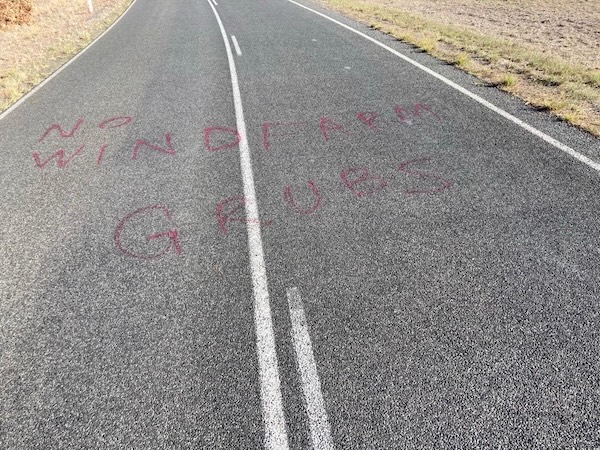
A Senate committee inquiry last year exposed the deep entrenchment of misinformation in Australian communities, documenting what Renew Economy managing editor Giles Parkinson described as “harrowing evidence of abuse, threats, and intimidation – much of it driven by fear and loathing inspired by deliberate campaigns to demonise renewables.”
Complicating matters further, Australia’s media regulator lacks the authority to direct platforms or media outlets to remove inaccurate information, leaving community groups vulnerable to coordinated and sophisticated social media attacks.
The report calls for comprehensive solutions, including anti-trust architecture similar to the European Union Digital Markets Act to prevent tech platforms that amplify disinformation from becoming too powerful to regulate. It also advocates for digital regulation requiring companies to take responsibility for online disinformation, along with “urgent, enforceable” regulation of generative AI that can rapidly scale false information.
Despite these challenges, global evidence increasingly suggests that renewable energy offers a path to greater energy independence. International Energy Agency chief Fatih Birol notes that “homegrown” energy sources are now equated with security, pointing to Europe’s dramatic growth in renewables since 2022, “mainly driven by security concerns.”
Several countries are accelerating their renewable transitions in response to energy crises. The UK recently fast-tracked balcony solar rules specifically to strengthen energy security, while Australian electricity retailer Discover Energy pivoted away from gas to focus on solar-batteries and virtual power plants. Nations like Nepal, Cuba, and Pakistan have also advanced their transitions following country-specific energy crises.
Birol encourages Australians to be “very, very proud” of the country’s achievements with solar and home batteries, suggesting that Australia’s renewable potential may offer a more suitable path to energy security than nuclear power, despite his personal support for the latter technology.
As global tensions continue to rise and climate impacts intensify, addressing the dual threats of fossil fuel dependency and climate disinformation will likely become increasingly critical to Australia’s long-term security and resilience.
Fact Checker
Verify the accuracy of this article using The Disinformation Commission analysis and real-time sources.

8 Comments
This is a concerning report on the national security threats posed by climate disinformation campaigns. It’s critical that governments and citizens work to counter these misleading narratives and take urgent action on climate change and energy transition.
I agree, the spread of climate disinformation is a serious issue that undermines our ability to address the very real risks of climate change. Fact-based, science-driven policymaking is essential.
The report highlights how climate disinformation can have national security implications by undermining a country’s capacity to respond to global crises. This is a concerning trend that merits further research and policy attention.
The report’s findings on the link between fossil fuel dependence and national security vulnerabilities are quite sobering. Australia’s energy transition will be critical not just for climate, but for broader geopolitical and resilience considerations as well.
Australia’s continued reliance on fossil fuels and the climate disinformation war both seem to be hampering the country’s energy security and climate resilience. This is a complex challenge that requires a multifaceted solution.
Absolutely. Reducing fossil fuel dependence while also combating disinformation campaigns will be crucial for Australia to build a more sustainable, secure energy future. Stakeholders across government, industry and civil society must work together.
I’m curious to learn more about the specific tactics and actors involved in Australia’s climate disinformation war. Understanding the mechanics of these campaigns is key to developing effective countermeasures.
Agreed, mapping out the disinformation networks and funding sources would provide valuable insights. Transparency and accountability around these activities is essential for safeguarding democratic discourse on climate policy.