


Listen to the article
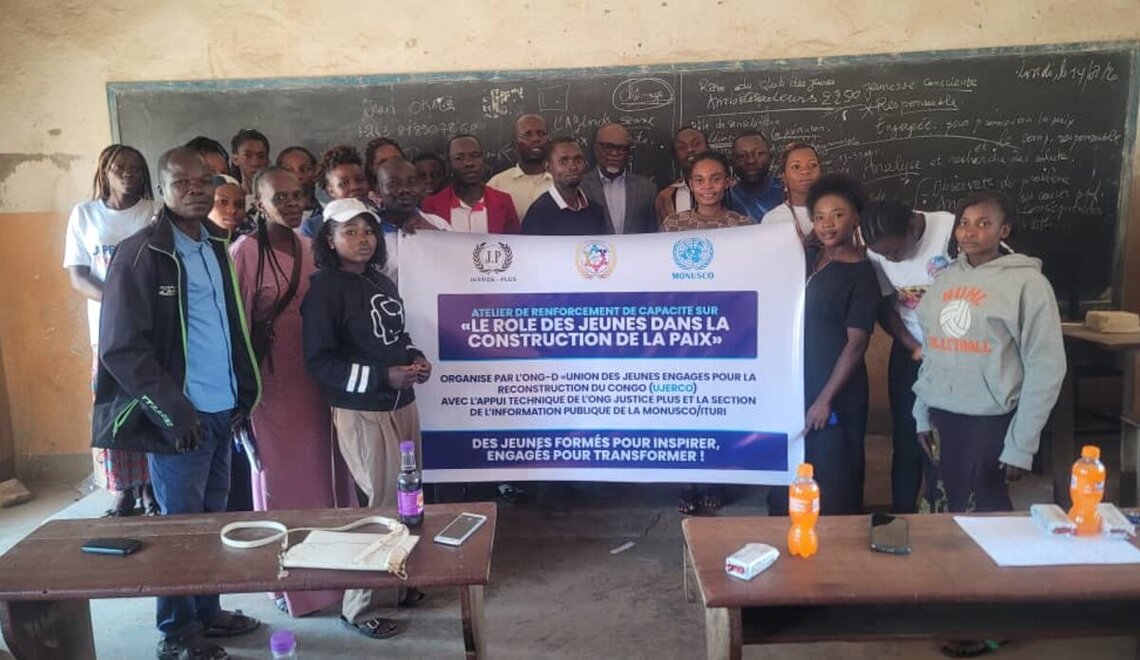
In a decisive move to combat digital misinformation, 33 young people from Bunia’s Lembabo neighborhood recently completed a specialized training program focused on identifying false information and promoting social cohesion. The three-day workshop, which included 18 young women, was conducted at Diangenda Public School in partnership with MONUSCO, the United Nations peacekeeping mission in the Democratic Republic of Congo.
Organized by the Union of Young People Engaged for the Reconstruction of Congo (UJERCO), the training addressed “the role of young people in peacebuilding” with particular emphasis on countering misinformation spreading through social media. The initiative comes at a critical time for Ituri province, which continues to face community tensions and armed conflicts.
“Today’s youth is particularly exposed to manipulation. Disinformation can lead to violence or behavioral disorders. It was therefore urgent to talk to them about it and give them tools to protect themselves,” explained Emmanuel Unen Can, coordinator of UJERCO.
Participants received practical instruction on recognizing dubious content, verifying information sources, and developing critical thinking skills before sharing content online. The training highlighted how false information can trigger violence, deepen social divisions, and undermine trust in institutions—issues that have particular resonance in conflict-affected Ituri.
In an innovative approach to extend the program’s impact, participants pledged to share their newly acquired knowledge with at least ten people in their personal networks, creating a multiplier effect throughout Bunia’s neighborhoods.
“If each of them raises awareness among just ten or fifteen other young people, it can really move the needle,” noted Unen Can, emphasizing the potential for community-wide impact.
The initiative forms part of a broader campaign spearheaded by MONUSCO and local partners to strengthen media literacy and combat misinformation across the region. Just days before the Diangenda school workshop, a similar event brought together 130 young Muslims, including 80 women and girls, at Bunia’s central mosque.
Imam Tchomba, president of the Union of Young Muslims for Development in Ituri, expressed strong support for the initiative: “This campaign helps us convey a message of peace, truth, and better promote the values of Islam.”
The training responds to increasing concerns about how digital misinformation can exacerbate existing tensions in conflict zones like Ituri, where rumors can quickly escalate into violence. In regions with limited access to verified information sources, social media platforms often become primary news channels, making digital literacy particularly crucial.
Adjati Saidabi Waga, provincial advisor in charge of Muslim women, emphasized the importance of responsible information sharing: “We must encourage mothers to be vigilant. Sharing unverified information can cause great harm. Thanks to this awareness-raising, we now know that we must take time to verify before disseminating anything.”
The training comes as international organizations increasingly recognize the role of misinformation in conflict settings. Recent studies have shown that areas experiencing violence are particularly vulnerable to information manipulation, with false reports potentially triggering new cycles of conflict or hampering peace processes.
By equipping young people with critical digital skills, MONUSCO and UJERCO aim to establish a network of informed citizens who can help stem the tide of misinformation that often flows unchecked through social networks and messaging applications.
As the participants return to their communities armed with new knowledge and skills, they represent a significant step toward building a more informed and resilient population. In a region still working toward sustainable peace, these young people have become important advocates for truth, responsibility, and peaceful coexistence.
The Bunia initiative represents an emerging model for community-based approaches to information literacy that could potentially be replicated in other conflict-affected regions across Central Africa and beyond.
Fact Checker
Verify the accuracy of this article using The Disinformation Commission analysis and real-time sources.

12 Comments
Addressing the role of youth in peacebuilding through a focus on countering disinformation is a smart approach. Equipping them with practical tools to verify information sources is invaluable.
The training program’s emphasis on promoting social cohesion alongside countering disinformation is a holistic approach that recognizes the interconnectedness of these challenges. Well done.
This is an important initiative to equip youth with the skills to identify and counter disinformation. Strengthening social cohesion through critical thinking is crucial in conflict-affected areas like Ituri province.
Recognizing the susceptibility of today’s youth to online manipulation is an important first step. This training program seems like a solid model that could be replicated in other conflict-affected regions.
This initiative highlights the importance of digital media literacy education, especially in conflict-affected regions where misinformation can have devastating consequences. Kudos to the organizers for their efforts.
Disinformation can indeed fuel community tensions and conflicts. This program seems well-targeted to address that challenge in Ituri province. Kudos to the organizers for involving both young men and women.
Yes, the gender-balanced approach is commendable and will help ensure the training reaches a diverse cross-section of the community.
It’s encouraging to see the UN peacekeeping mission MONUSCO partnering with local youth groups like UJERCO on this initiative. Collaborative efforts are crucial to build resilience against disinformation at the community level.
It’s great to see young people leading the fight against digital misinformation. Practical training on verifying information sources and developing critical thinking will empower them to be more discerning consumers of online content.
Agreed, this type of media literacy education is essential to build resilience against the spread of harmful falsehoods.
Developing critical thinking skills is key to empowering young people to be discerning consumers of online information. This training program seems well-designed to achieve that objective.
It’s heartening to see young people taking the lead in this fight against digital misinformation. Their energy and engagement will be crucial to the long-term success of this initiative.