


Listen to the article
European Leaders Unite to Combat Information Manipulation and Protect Democratic Integrity
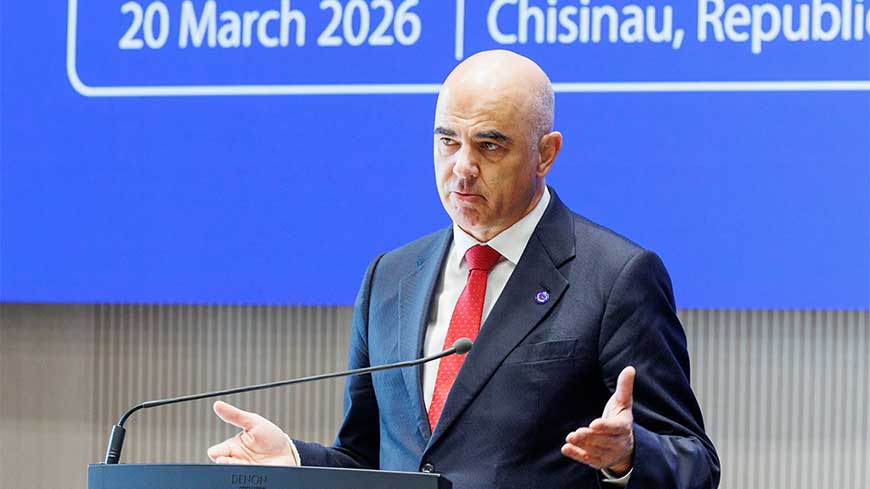
A high-level Council of Europe conference convened in Chişinău on March 20 to address the growing threats of disinformation, foreign information manipulation, and hate speech that are increasingly undermining democratic institutions across Europe.
The conference, organized during Moldova’s Presidency of the Committee of Ministers of the Council of Europe, brought together government representatives, international organizations, academics, civil society, and media professionals to develop coordinated responses to what many participants described as an ongoing “cognitive war.”
Moldovan President Maia Sandu set a stark tone in her opening address, emphasizing that information warfare represents a persistent condition rather than a temporary challenge. “Cognitive war is a condition, not an episode. And it affects not only Moldova. Across Europe, we are seeing the same patterns,” Sandu stated. She highlighted coordinated efforts to divide societies, weaken institutional trust, and influence political choices from external actors.
Sandu drew direct connections to Russia’s military aggression against Ukraine, noting that alongside physical warfare, there exists “a parallel effort to shape perceptions across Europe. To reduce support for Ukraine. To create doubt, fatigue, and division.”
Council of Europe Secretary General Alain Berset reinforced this perspective, framing information security as essential to democratic survival. “In a world in rupture, where everything is framed as security, control over information becomes a question of democratic security,” Berset said. “A democracy that cannot protect its information space will not be able to protect its institutions for long.”
The conference marks a significant step toward creating formal international legal mechanisms to address these challenges. Berset confirmed that the Council of Europe is actively developing a new legal instrument specifically designed to counter foreign information manipulation and interference, potentially establishing the first comprehensive international framework for addressing such threats.
Michael O’Flaherty, Commissioner for Human Rights, emphasized that combating disinformation requires a holistic human rights approach. “A human-rights approach to disinformation and information manipulation is about more than freedom of expression; it is about protecting the very aspects of human life and dignity that are undermined by manipulation,” O’Flaherty explained, citing threats to privacy, electoral integrity, and vulnerable communities.
The conference coincides with significant progress toward a new Council of Europe legal instrument in criminal law to counter foreign information manipulation, disinformation, election interference, and related hybrid threats. Member states have already completed a feasibility study, which will be presented to foreign ministers during the Committee of Ministers session scheduled for May 14-15, 2026, in Chişinău.
Two substantial policy guides were also launched during the conference, developed by the Council of Europe’s intergovernmental committee on media and information society. The first guide provides frameworks for member states to develop comprehensive national media and information literacy strategies. The second guide, titled “Resisting disinformation: ten building blocks to strengthen information integrity,” outlines practical measures to combat disinformation and bolster information resilience.
This initiative falls under the umbrella of the New Democratic Pact for Europe, a broader Council of Europe framework aimed at strengthening democratic institutions against emerging threats. The focus on information integrity reflects growing recognition among European leaders that information manipulation constitutes a fundamental security challenge requiring coordinated international response.
The conference in Moldova represents a critical step toward establishing common European standards and practices to protect democratic processes in an increasingly complex information environment where the boundaries between domestic and foreign influence operations continue to blur.
Fact Checker
Verify the accuracy of this article using The Disinformation Commission analysis and real-time sources.

7 Comments
The connections drawn between Russia’s military aggression and information warfare tactics are troubling. This underscores the need for a comprehensive strategy to combat foreign interference and defend democratic values.
Absolutely. Exposing the patterns of these coordinated efforts is an important step in building resilience. Transparent, fact-based responses will be crucial going forward.
Disinformation is a global challenge that requires global solutions. I’m glad to see European leaders taking a united stand against these threats to democratic institutions and public discourse.
It’s encouraging to see European leaders coming together to address the growing challenge of foreign information manipulation. Strengthening resilience against these tactics is crucial for safeguarding democratic processes and public trust.
Agreed. Developing effective countermeasures and raising public awareness are key priorities. This is a complex issue that will require sustained effort and collaboration across borders.
Cognitive warfare is a concerning term, but an accurate reflection of the modern information landscape. Protecting democratic integrity in the face of sophisticated disinformation campaigns is an ongoing battle that requires vigilance.
This is an important issue that requires a coordinated, multi-stakeholder response. Disinformation is a serious threat to democratic institutions and must be countered with robust fact-checking, digital literacy, and international cooperation.