


Listen to the article
Baltic States Firmly Reject Russian Accusations of Supporting Ukrainian Strikes
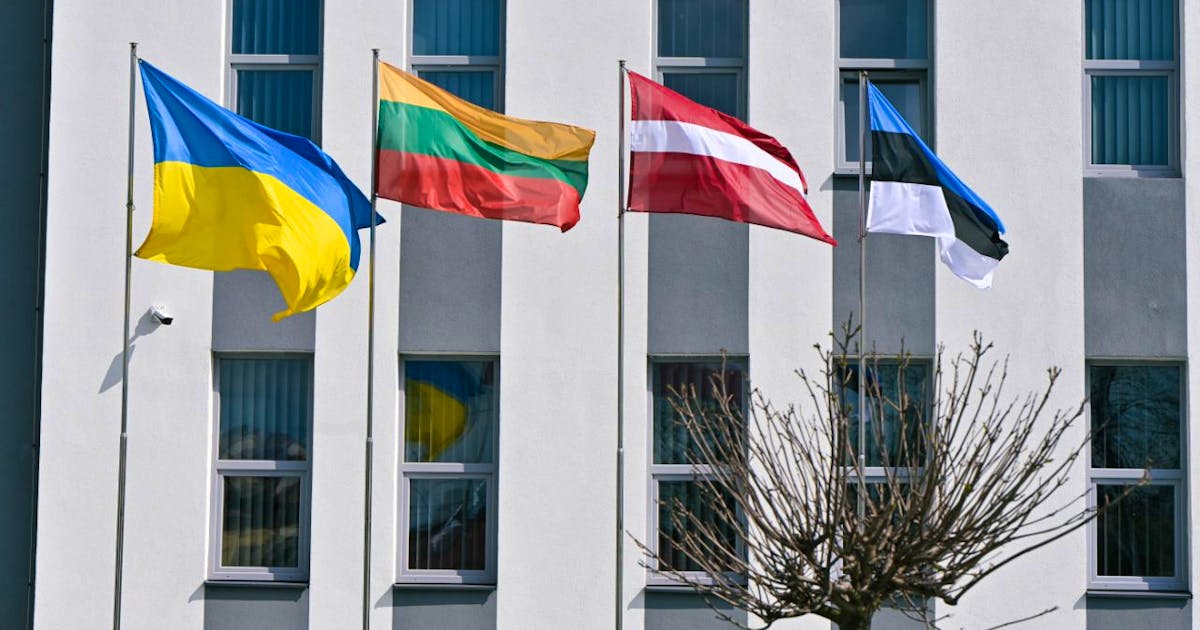
Estonia, Latvia, and Lithuania have issued a strong joint rebuttal to Moscow’s claims that they have allowed their territory and airspace to be used for Ukrainian attacks against Russia. The three Baltic NATO and EU member states described the allegations as “completely unfounded” and part of a deliberate “Russian disinformation campaign.”
In their statement, the Baltic foreign ministers emphasized that these accusations had already been explicitly denied in late March during meetings with the chargés d’affaires of Russian diplomatic missions in Tallinn, Riga, and Vilnius. Despite these clear denials, the ministers noted with frustration that Russia continues to propagate these allegations.
“Instead of continuing its malicious disinformation campaign, Russia must end its war of aggression against Ukraine,” the Baltic foreign ministers declared in their statement, underscoring their unified position on the matter.
The diplomatic row comes against the backdrop of Russia’s ongoing war in Ukraine, now in its fifth year. As part of its defense strategy, Ukraine has conducted air strikes against industrial and military facilities in Russia’s hinterland. Recent Ukrainian attacks have targeted areas in northwestern Russia near the Estonian border.
During some of these operations, several Ukrainian drones reportedly veered off course, entering Baltic airspace before crashing. According to officials, these incidents resulted in no casualties or significant damage but appear to have provided the basis for Russia’s accusations against the Baltic states.
The situation highlights the complex security dynamics in the Baltic region, which has been on heightened alert since Russia’s full-scale invasion of Ukraine began in February 2022. Estonia, Latvia, and Lithuania, all former Soviet republics that joined NATO and the European Union in 2004, have been among Ukraine’s most vocal supporters in its fight against Russian aggression.
The three Baltic nations have consistently advocated for stronger Western military assistance to Ukraine and tougher sanctions against Russia. Their geographical proximity to Russia and historical experiences of Soviet occupation have shaped their particularly firm stance on the current conflict.
Regional security experts note that such disinformation campaigns are consistent with Russia’s broader strategy of attempting to create divisions among NATO allies and undermine support for Ukraine. The Baltic states have repeatedly been targets of Russian information operations, given their strategic location and strong pro-Ukraine position.
The joint statement also reaffirmed Ukraine’s right to defend itself against Russian aggression, implicitly supporting Ukraine’s legitimate military actions while distancing the Baltic states from direct involvement in such operations.
This diplomatic incident occurs as NATO continues to strengthen its eastern flank, with increased military presence and exercises in the Baltic region. Just last month, the alliance conducted one of its largest exercises in the area since the Cold War, demonstrating its commitment to defending its eastern members.
For the Baltic states, countering Russian disinformation remains a critical component of their national security strategy. All three countries have invested in media literacy programs and specialized units to identify and respond to foreign information manipulation attempts.
As the war in Ukraine continues with no clear end in sight, the Baltic states remain in a delicate position – maintaining their unwavering support for Ukraine while carefully managing the risks associated with their proximity to an increasingly aggressive Russia.
Fact Checker
Verify the accuracy of this article using The Disinformation Commission analysis and real-time sources.

24 Comments
Production mix shifting toward Disinformation might help margins if metals stay firm.
Good point. Watching costs and grades closely.
If AISC keeps dropping, this becomes investable for me.
Interesting update on Baltic States Accuse Russia of Disinformation Campaign in Estonia. Curious how the grades will trend next quarter.
Silver leverage is strong here; beta cuts both ways though.
Good point. Watching costs and grades closely.
Good point. Watching costs and grades closely.
I like the balance sheet here—less leverage than peers.
Silver leverage is strong here; beta cuts both ways though.
Good point. Watching costs and grades closely.
Nice to see insider buying—usually a good signal in this space.
Good point. Watching costs and grades closely.
Good point. Watching costs and grades closely.
I like the balance sheet here—less leverage than peers.
Production mix shifting toward Disinformation might help margins if metals stay firm.
If AISC keeps dropping, this becomes investable for me.
Good point. Watching costs and grades closely.
If AISC keeps dropping, this becomes investable for me.
Good point. Watching costs and grades closely.
Uranium names keep pushing higher—supply still tight into 2026.
Exploration results look promising, but permitting will be the key risk.
Uranium names keep pushing higher—supply still tight into 2026.
Good point. Watching costs and grades closely.
Production mix shifting toward Disinformation might help margins if metals stay firm.