


Listen to the article
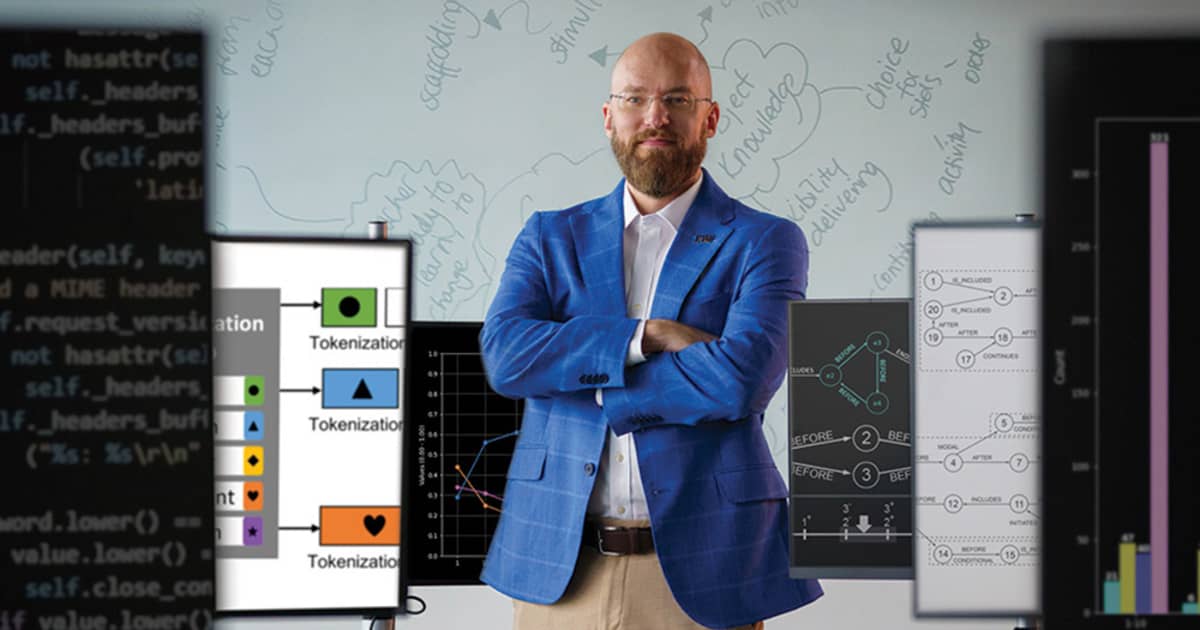
In the battle against disinformation, one researcher has discovered that the most effective defense might not be fact-checking but story analysis. Mark Finlayson, a recipient of the prestigious U.S. Presidential Early Career Award for Scientists and Engineers in 2025, is pioneering artificial intelligence systems that identify the narrative patterns making disinformation so persuasive and difficult to counter.
“A good story can change someone’s mind more easily than facts alone. That’s precisely what makes narrative such a powerful tool for those spreading disinformation,” explains Finlayson, whose groundbreaking work has attracted funding from both the Department of Defense and Department of Homeland Security.
Unlike conventional approaches that focus solely on verifying individual claims, Finlayson’s research examines how adversaries structure their messaging through sophisticated storytelling techniques. His systems analyze multiple dimensions of narrative construction that often go unnoticed in manual analysis—from how usernames are crafted to project credibility to the strategic deployment of cultural symbols that resonate differently with various audience segments.
The timing couldn’t be more critical. As foreign actors increasingly target democratic discourse with increasingly sophisticated influence operations, intelligence agencies face growing pressure to identify coordinated disinformation campaigns before they gain traction. Finlayson’s tools provide analysts with computational capabilities to detect patterns across thousands of social media accounts simultaneously—a scale that would overwhelm human analysts working alone.
One of his most significant technical achievements addresses a fundamental challenge in narrative intelligence: the non-chronological nature of storytelling. Real-world narratives rarely present events in sequential order, often using flashbacks, foreshadowing, and other temporal manipulations that make computational analysis difficult. Finlayson developed an algorithm that can correctly extract and reorganize timelines from complex narratives, allowing analysts to track how disinformation evolves and proliferates across platforms.
The national security implications of this work extend beyond election interference. Disinformation campaigns have targeted public health initiatives, military operations, and international alliances. By identifying the narrative fingerprints of coordinated campaigns, intelligence agencies can potentially attribute operations to specific state or non-state actors based on their storytelling patterns and techniques.
Experts in computational linguistics note that Finlayson’s approach represents a significant advance over previous attempts to combat disinformation. While simple fact-checking remains valuable, sophisticated disinformation campaigns are designed to work around such measures by appealing to emotion and identity rather than rational assessment of facts.
These AI systems don’t aim to replace human judgment. Instead, they augment analysts’ capabilities by finding connections and patterns that would otherwise remain hidden in the vast ocean of online content. The technology highlights potentially coordinated narratives for human review, preserving the critical role of expert analysis in the final assessment.
Privacy advocates have raised questions about the potential domestic applications of such technology, though Finlayson’s team emphasizes their tools are designed specifically for foreign influence operations that target democratic institutions. The systems focus on narrative patterns rather than individual user data, analyzing how stories are constructed and spread rather than profiling specific users.
As social media platforms continue to struggle with content moderation at scale, Finlayson’s narrative intelligence approach offers a complementary strategy that looks beyond individual posts to identify the storytelling patterns that make disinformation compelling.
For intelligence agencies facing increasingly sophisticated information operations, these tools represent a critical evolution in their defensive capabilities—bringing computational precision to the deeply human art of storytelling analysis and helping protect democratic discourse from manipulation.
Fact Checker
Verify the accuracy of this article using The Disinformation Commission analysis and real-time sources.

8 Comments
This is really cutting-edge stuff. I’ll be keeping an eye out for updates on this research and how it develops. Tackling disinformation at the narrative level is a bold new frontier.
Agreed, this could be a major breakthrough if the AI systems prove effective at identifying the storytelling tactics behind online misinformation.
This research could have important implications for critical thinking and media literacy education. Teaching people to recognize manipulative narrative tactics is vital in the digital age.
Fascinating research on using AI to detect disinformation narratives. Analyzing the storytelling techniques behind false claims could be a powerful tool in the fight against online misinformation.
I’m intrigued by the idea of using AI to unpack the narrative patterns that make disinformation so persuasive. Understanding the psychology behind effective storytelling is key to countering it.
Absolutely. Focusing on the structural elements of disinformation, rather than just fact-checking individual claims, is a smart approach.
Kudos to the researchers for securing funding from the DoD and DHS. This work seems highly relevant to national security and protecting democratic discourse online.
I wonder how this AI-powered narrative analysis could be applied to other domains beyond disinformation, like marketing or political messaging. Fascinating potential applications.