


Listen to the article
Former Wall Street Journal Reporter Testifies Against Dow Jones in Pivotal Hong Kong Labor Case
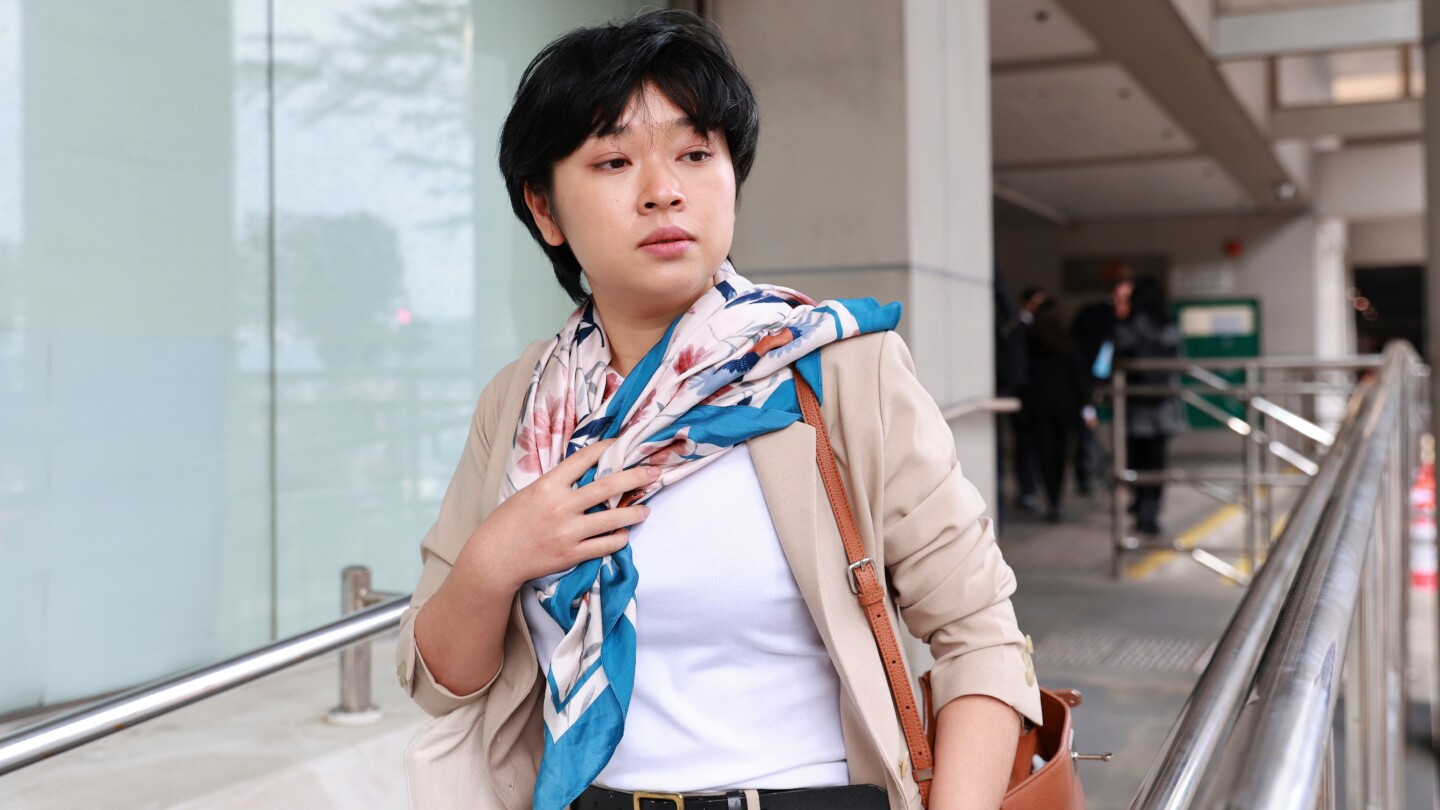
A former Wall Street Journal reporter began testifying Monday in a closely watched labor dispute that highlights growing concerns about press freedom in Hong Kong. Selina Cheng, who also serves as chairperson of the Hong Kong Journalists Association, has launched a private prosecution against Dow Jones Publishing Co. (Asia) Inc., the Journal’s parent company, following her termination in July 2024.
During her testimony, Cheng told the court that her supervisor objected to her candidacy in the journalists’ union election. “She said my participation in the union election was problematic and she said she needed to discuss this with Wall Street Journal management in New York and also with legal,” Cheng stated, referring to in-house lawyers at Dow Jones.
Cheng alleges that while the company cited restructuring as the official reason for her dismissal, the actual motivation stemmed from her refusal to withdraw from the union election as requested by her supervisor. The case represents a rare instance of a journalist taking legal action against a major international news organization in Hong Kong.
Dow Jones faces two charges under Hong Kong’s Employment Ordinance. The first alleges the company prevented or deterred an employee from exercising union participation rights, while the second claims the company terminated employment, penalized, or discriminated against an employee for exercising those rights. The company has pleaded not guilty to both charges, each carrying a maximum fine of 100,000 Hong Kong dollars (approximately $12,850).
The company’s legal strategy has already shown signs of aggression. During pre-testimony proceedings last week, Dow Jones representative Benson Tsoi accused Cheng of abusing the criminal process and acting in bad faith. Tsoi highlighted emails showing Cheng had demanded 3 million Hong Kong dollars ($385,500) as settlement or reinstatement with a formal apology. He also claimed that while Cheng had told the Labor Tribunal she didn’t intend to settle out of court, these emails contradicted that assertion by showing she had pressed for mediation.
The case unfolds against a backdrop of deteriorating press freedom in Hong Kong, once considered a media stronghold in Asia. Despite the city’s mini-constitution, the Basic Law, which guarantees Western-style civil liberties under the “one country, two systems” framework established when Hong Kong returned to Chinese rule in 1997, the media landscape has changed dramatically in recent years.
The implementation of Beijing’s national security law in 2020 marked a significant turning point. Two prominent local news outlets known for government-critical coverage—Apple Daily and Stand News—were forced to cease operations following arrests of their senior management. Apple Daily publisher Jimmy Lai was convicted under the security law just last Monday and now faces a potential life sentence. Despite government insistence that his case has no connection to press freedom, rights groups including Amnesty International have described the conviction as “the death knell for press freedom in Hong Kong.”
In another troubling development, two former editors at Stand News were convicted of sedition in August 2024, becoming the first journalists found guilty under this colonial-era law since Hong Kong’s handover to China.
Cheng’s termination has sent shockwaves through Hong Kong’s journalistic community, particularly as foreign news outlets had traditionally operated with fewer restrictions than local media. The case raises questions about whether international news organizations operating in Hong Kong can maintain editorial independence and protect their journalists from political pressure.
The deterioration of press freedom is reflected in international rankings. Hong Kong now sits at 140th out of 180 countries and territories in Reporters Without Borders’ World Press Freedom Index—a dramatic fall from its 80th position just three years ago in 2021.
As Cheng’s testimony continues, journalists, legal experts, and human rights advocates are watching closely to see whether Hong Kong’s courts will uphold labor protections for journalists engaging in union activities, potentially setting an important precedent for press freedom in the territory.
Fact Checker
Verify the accuracy of this article using The Disinformation Commission analysis and real-time sources.

18 Comments
It’s concerning to see a major media company accused of dismissing a journalist over their union involvement. I hope the trial provides clarity and accountability.
Absolutely. Protecting the independence of the press is crucial, and this case highlights the challenges journalists can face, even at the highest levels.
This case highlights the ongoing challenges facing journalists in Hong Kong. I hope the trial sheds light on the situation and leads to positive change.
Absolutely. The ability of the press to operate freely and independently is a key indicator of the health of a democracy. This case bears close watching.
This is a complex issue with implications for both labor rights and press freedom. I’ll be following the trial closely to see how it unfolds.
Agreed, the intersection of these issues makes this a very important case. Kudos to the reporter for taking legal action to defend her rights.
Allegations of retaliation against a journalist for union activities are very concerning. I’ll be following this trial closely to understand the full context.
Agreed. Protecting press freedom and the right to organize are critical for a healthy media ecosystem and democratic society.
This is a complex issue that touches on important principles of labor rights and press freedom. I’ll be following the trial with great interest.
Absolutely. The outcome of this case could have significant ramifications for the media landscape in Hong Kong and beyond.
This seems like a concerning case that could have broader implications for press freedom in Hong Kong. I’m curious to see how the trial unfolds and what the outcome will be.
Agreed, the alleged retaliation against the reporter for her union involvement is troubling. Transparency and press independence are so important, especially in a region facing democratic backsliding.
Dismissing a reporter over their union activities raises red flags. I hope this case shines a light on the challenges facing journalists in Hong Kong and leads to positive changes.
Absolutely. The right to unionize and advocate for workers’ interests is a fundamental freedom that should be protected, especially for members of the press.
The alleged dismissal of a reporter over union involvement is very troubling. I’m curious to learn more about the details and implications of this case.
Agreed. Protecting worker rights and press freedom are both essential, and this case seems to raise serious concerns on both fronts.
This case seems to raise important questions about the state of press freedom and labor rights in Hong Kong. I’m interested to see how the trial plays out.
Yes, it’s a complex issue that touches on some fundamental democratic principles. I hope the trial leads to a fair and transparent resolution.