


Listen to the article
Louvre Hikes Admission Fees for Non-European Visitors Amid Financial Strain
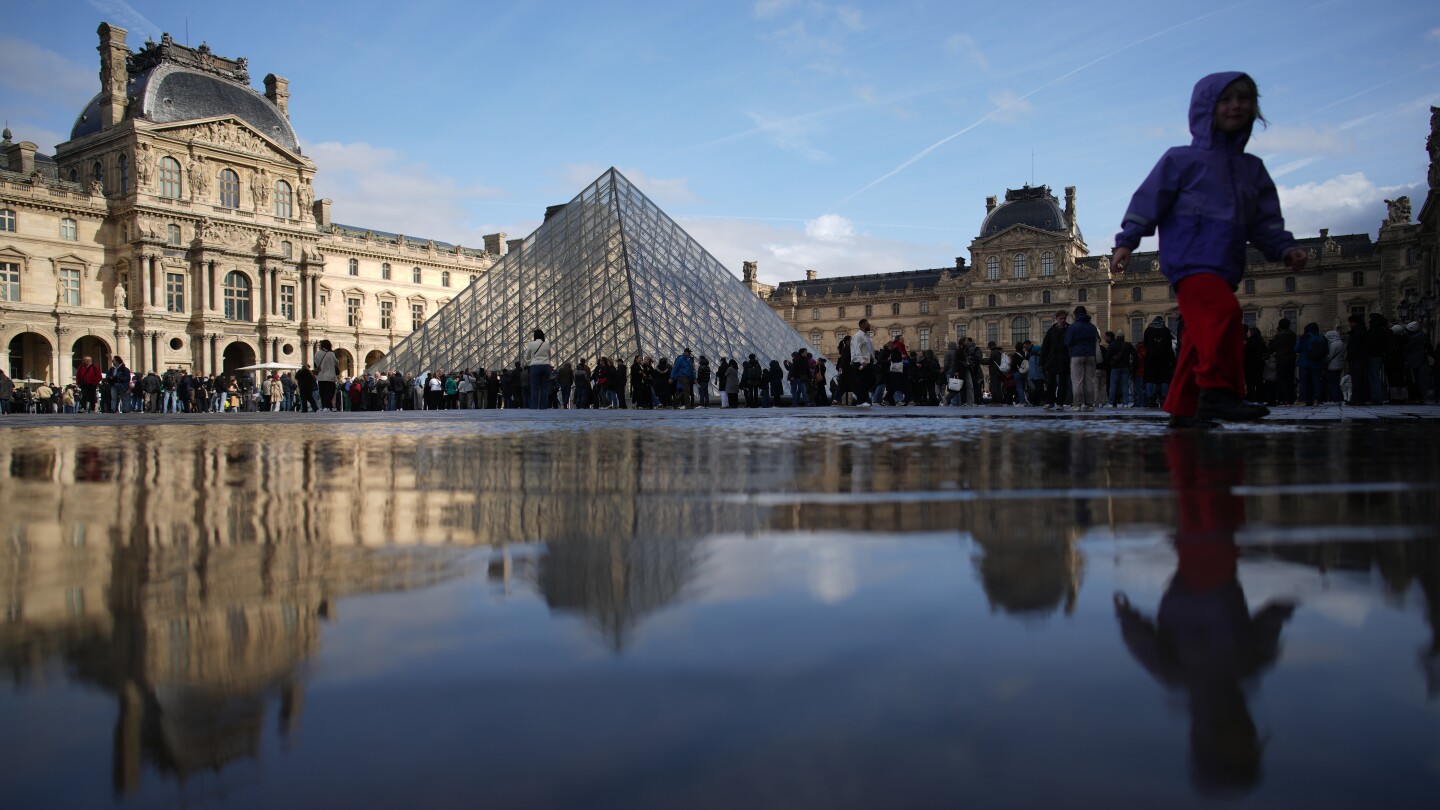
Long lines beneath I.M. Pei’s iconic glass pyramid have become as much a fixture of the Louvre experience as viewing the “Mona Lisa” itself. Now, the world’s most visited museum has implemented a significant price increase that will affect millions of international visitors each year.
The Louvre raised admission prices by 45% on Wednesday for most non-European visitors, bringing the standard entry fee to 32 euros ($37) from the previous 22 euros. This substantial hike comes as the institution grapples with financial pressures stemming from repeated worker strikes, chronic overcrowding, and the aftermath of a brazen French Crown Jewels heist that shocked the art world last October.
Museum officials frame the increase as part of a broader “differentiated pricing” policy announced early last year that’s now being implemented across major French cultural institutions, including the Versailles Palace, Paris Opera, and Sainte-Chapelle. The two-tier pricing structure specifically targets visitors who are neither citizens nor residents of the European Union, Iceland, Liechtenstein, or Norway.
French labor unions have strongly condemned the change, arguing it undermines the Louvre’s universal mission and transforms access to culture into a “commercial product” while creating unequal access to national heritage. The CGT Culture union has been particularly vocal in its opposition.
“Culture should be open to everyone—yes—at the same price,” said Laurent Vallet, a domestic visitor from Burgundy who expressed concerns about the new policy.
The price hike has done little to resolve ongoing labor disputes. On Monday, just days before the new rates took effect, Louvre workers walked out in the latest strike over pay and working conditions, highlighting the museum’s internal strains that have repeatedly spilled into public view.
American tourists, who typically represent the largest segment of the Louvre’s international visitors, will be most affected by the change. Under the new structure, guided tours will be capped at 20 people “to maintain the quality of the visit,” with group rates set at 28 euros per person.
Some tourists questioned the rationale behind charging visitors from abroad more. “In general, for tourists things should be a little bit cheaper than local people because we have to travel to come all the way here,” said Darla Daniela Quiroz, a visitor from Vancouver.
Others were undeterred by the higher cost. “It’s one of the main attractions here in Paris… We’re still going to go,” said Allison Moore, a Canadian tourist from Newfoundland. “Hopefully it’ll be all worth it in the end.”
Museum officials expect the new pricing structure to generate approximately 20 million euros in additional annual revenue, which they say will help finance investments under the institution’s “Louvre—New Renaissance” modernization project. Several visitor categories remain eligible for free admission, including those under 18 years of age.
This latest increase follows a previous price adjustment in January 2024, when the standard entry fee rose from 17 euros to 22 euros—making this the second significant price increase within a single year.
The October 2019 theft of the French Crown Jewels, valued by investigators at approximately 88 million euros, intensified scrutiny of how France protects its cultural treasures. The robbery, carried out in daylight and completed within minutes, highlighted security concerns and fueled debate over funding for cultural institutions.
Compared to other European landmarks, the Louvre’s new pricing sits at the higher end of the spectrum. Standard entry to Rome’s Colosseum, Forum, and Palatine Hill costs 18 euros ($20), while an adult ticket for Athens’ Acropolis is 30 euros ($33).
The Louvre’s internal challenges have repeatedly surfaced in public demonstrations. In June, a wildcat strike by gallery attendants, ticket agents, and security staff delayed the museum’s opening, leaving thousands of visitors stranded beneath the pyramid. Workers cited unmanageable crowds, chronic understaffing, and deteriorating conditions.
By December, unions had escalated their concerns, arguing that the heist and the building’s condition had transformed their grievances into a national reckoning. Louvre workers voted to continue striking until substantive changes are implemented at the aging former royal palace.
The question remains whether higher ticket prices will lead to improved visitor experiences or simply create a more exclusive environment at what was once a royal collection that became accessible to the public following the French Revolution.
Fact Checker
Verify the accuracy of this article using The Disinformation Commission analysis and real-time sources.

13 Comments
It’s understandable that the Louvre would need to raise prices, but I hope they can find ways to make the museum accessible to a wide range of visitors, not just the wealthy. Art and culture should be for everyone.
Well said. Maintaining affordability and inclusivity is so important for major cultural institutions like the Louvre. They’ll need to carefully balance their funding needs with their public service mission.
Curious to see how this differentiated pricing policy plays out across other major French cultural institutions. Maintaining historic sites and museums is costly, but accessibility is also important. Finding the right balance will be key.
Good point. Differential pricing is a common strategy, but they’ll need to ensure it doesn’t price out lower-income visitors or damage France’s reputation as a cultural tourism destination.
The Louvre’s iconic status means this move will likely be closely watched by other major museums around the world. It will be interesting to see if they experience any backlash or if visitors simply accept the higher prices.
As a lover of art and culture, I’m a bit torn on this price hike. On one hand, museums need sustainable funding to operate. But on the other, I worry it could limit access, especially for younger or less affluent travelers. Curious to see how it plays out.
That’s a fair perspective. Maintaining a balance between funding needs and accessibility is always tricky for cultural institutions. Hopefully the Louvre can find ways to offset the impact on lower-income visitors.
The Louvre has certainly had its challenges, from overcrowding to security incidents. Hopefully the additional revenue can help address these issues and improve the overall visitor experience. It will be interesting to see if other museums follow suit.
Interesting move by the Louvre to hike admission fees for non-European visitors. Wonder how this will impact tourism numbers and revenue. Hopefully they can use the extra funds to improve the visitor experience and security measures.
Agreed. With the financial pressures the museum is facing, the price increase seems understandable, though it may deter some international visitors.
I wonder if the Louvre has considered offering discounted or free admission days/times to help maintain accessibility. Many museums use this strategy to balance their budgets while still serving a wide audience.
That’s a good suggestion. Flexible pricing models that account for different visitor needs and budgets could help mitigate the impact of the overall increase.
As someone who has visited the Louvre, I can appreciate the museum’s desire to improve the visitor experience. Overcrowding and security issues can really detract from the art appreciation. Hopefully this move helps address those challenges.