


Listen to the article
Volkswagen has embarked on a bold $3.5 billion gamble in China’s fiercely competitive automotive market, opening its largest research and development facility outside Germany in the central Chinese city of Hefei. This strategic pivot represents a fundamental shift in how the German automaker operates in what was once its most dominant international market.
The sprawling new R&D center symbolizes Volkswagen’s recognition that its traditional approach—importing foreign-designed vehicles and sharing technology with local partners—has been rendered obsolete by nimble Chinese competitors who have rapidly eroded the market share of international brands.
“This business model is now gone,” acknowledged Thomas Ulbrich, Volkswagen Group’s Chief Technology Officer in China, describing the situation as a paradigm shift for the company.
Since 2022, Volkswagen has fundamentally overhauled its China strategy. The company is now developing vehicles specifically tailored to Chinese consumer preferences—cars that will likely never appear on European roads, though they may eventually reach markets in Southeast Asia and the Middle East.
The stakes couldn’t be higher for Volkswagen, which once commanded over 50% market share in China. Today, domestic automakers like BYD and Geely have dramatically changed the competitive landscape, forcing foreign manufacturers to adapt or risk irrelevance in the world’s largest automotive market.
Industry analysts remain cautiously optimistic about the strategy. Rella Suskin, an automotive equity analyst at Morningstar, believes the approach is essential for maintaining competitiveness but suggests it will merely “enable them to maintain market share levels in line with current levels, rather than allow them to regain the market share that has been lost over the last few years.”
The financial viability of this strategy remains uncertain in a market where intense competition has driven prices to potentially unsustainable levels. Claire Yuan, director of corporate ratings for China autos at S&P Global Ratings, described it as “a million-dollar question whether this strategy will pay off,” while acknowledging that Volkswagen appears to be “on the right track of catching up in the race.”
The Chinese automotive market has undergone dramatic transformation in recent years. Electric vehicles now comprise approximately half of all new car sales, and Chinese consumers expect cutting-edge digital features—from expansive touchscreen displays to sophisticated autonomous driving capabilities—in their vehicles.
This evolution rendered Volkswagen’s traditional offerings increasingly out of step with market demands, despite China accounting for roughly one-third of the company’s global sales. For four decades, basic VW models like the Santana and Jetta were fixtures in taxi fleets and popular first cars for urban residents, but those days are firmly in the past.
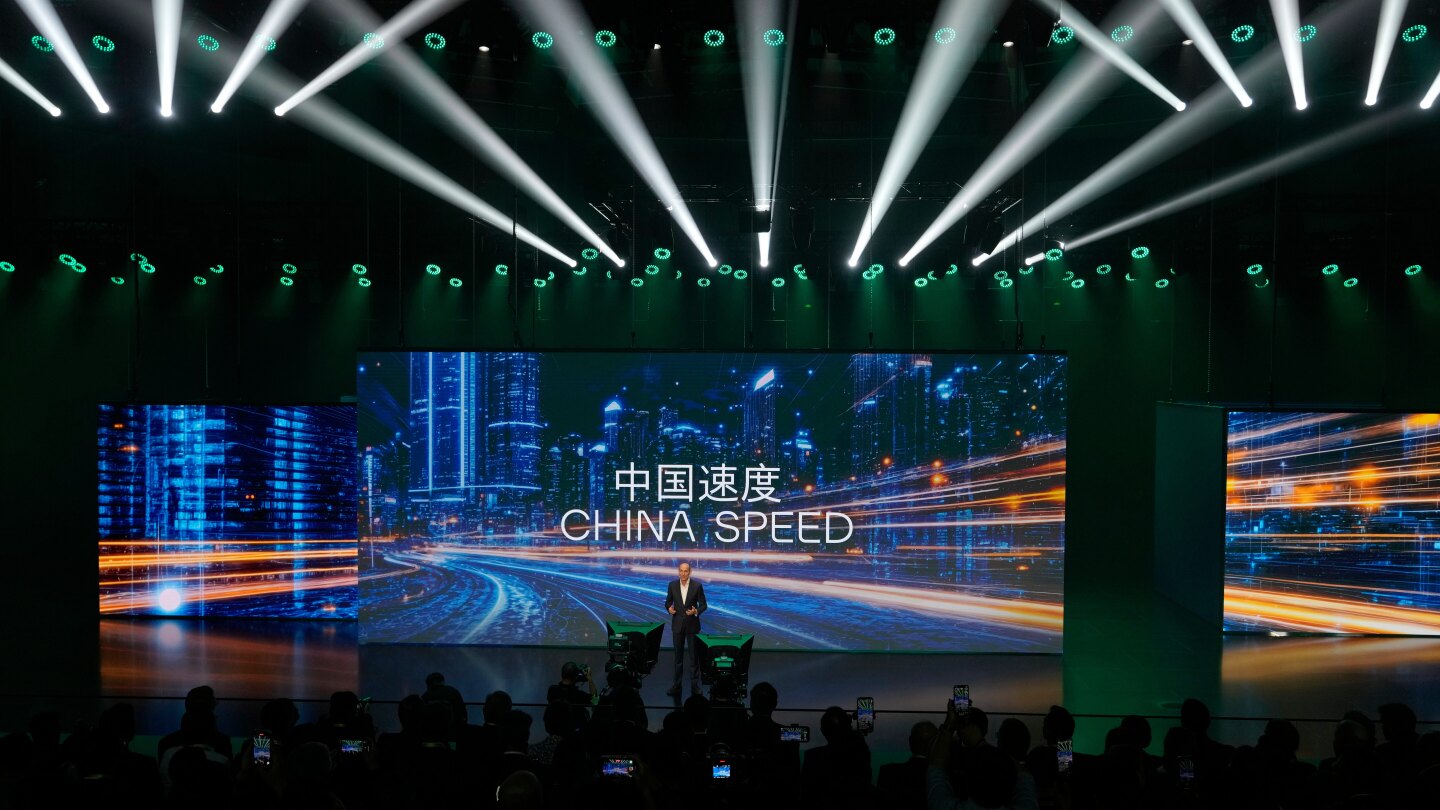
To compete effectively, Volkswagen must now operate at what industry insiders call “China speed.” Bill Russo, CEO of Shanghai-based consultancy Automobility, notes that Chinese EV manufacturers can bring new models to market in just 12 to 18 months, compared to the three to five years typically required by global automakers.
“The pace is not a choice but a necessity—and that pressure fuels global competitiveness,” Russo explained.
Volkswagen’s transformation reflects how dramatically China’s automotive industry has evolved. Thirty years ago, when Ulbrich worked in northeastern China, the company imported nearly everything from seats to wheel rims because parts weren’t available locally. Today, almost everything is manufactured in China—and increasingly designed there too.
To accelerate product development, Volkswagen headquarters has delegated substantial decision-making authority to its local operation. This approach mirrors strategies adopted by other foreign automakers like Toyota, which has granted its China team “unprecedented autonomy in product planning and development,” according to Yuan.
The German manufacturer is also leveraging partnerships with Chinese EV startups, notably teaming up with Xpeng to accelerate model development and create its own electronic architecture—the computer system that controls a vehicle’s functions.
This collaborative approach reflects a growing recognition among foreign automakers that innovation flows both ways between China and traditional automotive powerhouses. Martin Hofmann, a Volkswagen executive who chairs the German Chamber of Commerce in North China, described knowledge exchange as “a two-way street between China and Germany.”
A recent survey of the Chamber’s membership reinforces this perspective: approximately half of the more than 600 responding companies expect Chinese competitors to become innovation leaders within five years, while 9% believe they already hold that position.
As Volkswagen rolls out its new China-specific models, beginning with the rebranded “AUDI” this year and followed by dedicated Volkswagen vehicles in 2026, the automotive world will be watching closely to see if this massive investment can restore the company’s competitive edge in this crucial market.
Fact Checker
Verify the accuracy of this article using The Disinformation Commission analysis and real-time sources.

9 Comments
It’s smart of Volkswagen to acknowledge that their traditional model is no longer working in China. Developing vehicles specifically for Chinese consumers is a necessary shift. I wonder how this will impact their global product lineup and strategy going forward.
Agreed, Volkswagen is making the right call here. Tailoring vehicles to the Chinese market is essential, even if it means diverging from their global platforms. It’s a risk, but one they likely have to take.
Interesting move by Volkswagen to double down on the Chinese market. It makes sense they need to adapt their products and strategy to compete with nimble local players. Wonder how their new R&D center and China-focused vehicles will perform.
Absolutely, the Chinese auto market is incredibly competitive and dynamic. Volkswagen is right to pivot and develop vehicles tailored for local consumers.
This is a high-stakes gamble for Volkswagen. $3.5 billion is a huge investment, but the company has little choice but to adapt its model if it wants to regain lost ground in China. I’m curious to see what kind of China-specific vehicles they come up with.
You’re right, Volkswagen really needs this to pay off. The Chinese market is so crucial for them, they have to get this right. A lot is riding on the success of their new R&D efforts.
Volkswagen’s new R&D center and China-focused vehicle strategy are an important recognition that the old playbook no longer works. The German automaker has to be willing to develop cars that cater to local preferences, even if that means they won’t be sold globally. It’s a big gamble, but a necessary one.
This is a bold move by Volkswagen, but I can see the logic behind it. The Chinese auto market is extremely competitive, and local players have been quickly eroding the share of international brands. Developing China-specific vehicles is probably their best path forward.
Absolutely. Volkswagen needs to adapt or risk being left behind in the world’s largest auto market. A $3.5 billion investment shows how seriously they’re taking this strategic shift.