


Listen to the article
U.S. Imposes Sanctions on Rwandan Military Officials for Supporting M23 in Congo
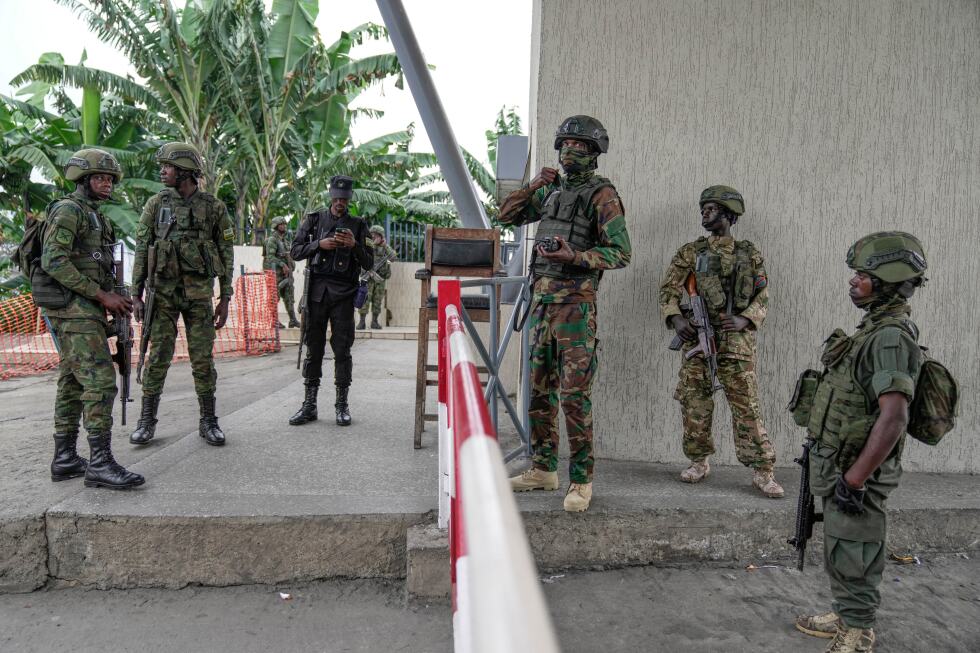
The United States imposed sanctions Monday on the Rwandan Defence Forces and four of its senior officials for supporting the March 23 Movement (M23), an armed group accused of widespread human rights abuses in the Democratic Republic of Congo.
The sanctions come despite a peace agreement mediated by the U.S. and signed last December by Congolese President Felix Tshisekedi and Rwandan President Paul Kagame in Washington. That agreement, which included provisions for opening the region’s valuable mineral reserves to U.S. interests, has failed to stop the fighting that continues to rage across eastern Congo.
“We expect the immediate withdrawal of Rwanda Defence Force troops, weapons and equipment,” U.S. Treasury Secretary Scott Bessent said in a statement. “The department will use all tools at its disposal to ensure that the parties to the Washington Accords uphold their obligations.”
Among those targeted by the sanctions are Vincent Nyakarundi, the Rwandan Defence Forces’ army chief of staff; Ruki Karusisi, a major general; Mubarakh Muganga, chief of defense staff; and Stanislas Gashugi, special operations force commander. The Treasury Department’s Office of Foreign Assets Control alleges that M23’s military offensives would not have been possible without active support from these officials and the Rwandan government.
Rwanda has consistently denied these allegations. Following the announcement, Rwandan government spokesperson Yolande Makolo released a statement calling the sanctions “unjust” and claiming they “misrepresent the reality and distort the facts of the conflict.” Makolo further accused Congo of violating the peace agreement through “indiscriminate” drone attacks and ground offensives.
The conflict in eastern Congo has created one of the world’s most severe humanitarian crises. According to the United Nations refugee agency, more than 7 million people have been displaced by the fighting. M23 has grown dramatically in recent years, expanding from several hundred members in 2021 to an estimated 6,500 fighters today, according to UN assessments.
M23 is the most prominent of approximately 100 armed groups operating in mineral-rich eastern Congo, where control of valuable resources like cobalt, copper, and gold has fueled decades of conflict. Congo, the U.S., and UN experts have consistently accused Rwanda of backing M23, allegations that Rwanda continues to deny.
The region holds strategic importance beyond its humanitarian impact. Eastern Congo contains some of the world’s largest deposits of critical minerals essential for technologies like electric vehicle batteries, smartphones, and renewable energy systems. The December peace agreement included provisions for U.S. access to these resources, highlighting the economic and geopolitical dimensions of the conflict.
State Department spokesman Thomas Pigott emphasized the humanitarian concerns driving U.S. action, noting that M23 “is responsible for horrific human rights abuses, including summary executions and violence against civilians, including women and children.” The group has been under U.S. sanctions since 2013.
Despite the ongoing violence, diplomatic efforts continue. The Congolese government and M23 are currently engaged in negotiations for a peace deal, with Qatar and the United States serving as mediators. However, the effectiveness of these talks remains in question as fighting continues to claim civilian and military lives across multiple fronts in eastern Congo.
The sanctions represent the latest attempt by the U.S. to exert pressure on the parties to honor their commitments under the Washington Accords. Whether they will succeed in curbing Rwanda’s alleged support for M23 or bring stability to the region remains to be seen.
Fact Checker
Verify the accuracy of this article using The Disinformation Commission analysis and real-time sources.

6 Comments
This is a complex regional conflict with high stakes for the mineral resources involved. I’m curious to see how the U.S. will leverage its sanctions to pressure Rwanda and get the M23 rebels to withdraw. Diplomatic solutions are needed alongside the punitive measures.
The ongoing instability in eastern Congo is a major concern, both in terms of the humanitarian crisis and the impact on regional mineral supplies. I hope the sanctions send a strong message and help bring the parties back to the negotiating table.
It’s good to see the U.S. taking firm action against Rwandan officials supporting the M23 rebels. This conflict has had devastating consequences for the people of eastern Congo. Maintaining pressure for accountability and a peaceful resolution is critical.
This is a concerning development in the regional conflict. The continued support for M23 rebels by Rwandan officials despite the peace agreement is troubling. I hope the sanctions will compel them to withdraw support and uphold their obligations.
The DRC’s mineral wealth has long been a source of conflict and exploitation. It’s disappointing to see the Washington Accords failing to adequately address these issues. Stronger enforcement and accountability are clearly needed.
I agree. The mineral resources in eastern Congo should benefit the local population, not fuel further violence and human rights abuses.