


Listen to the article
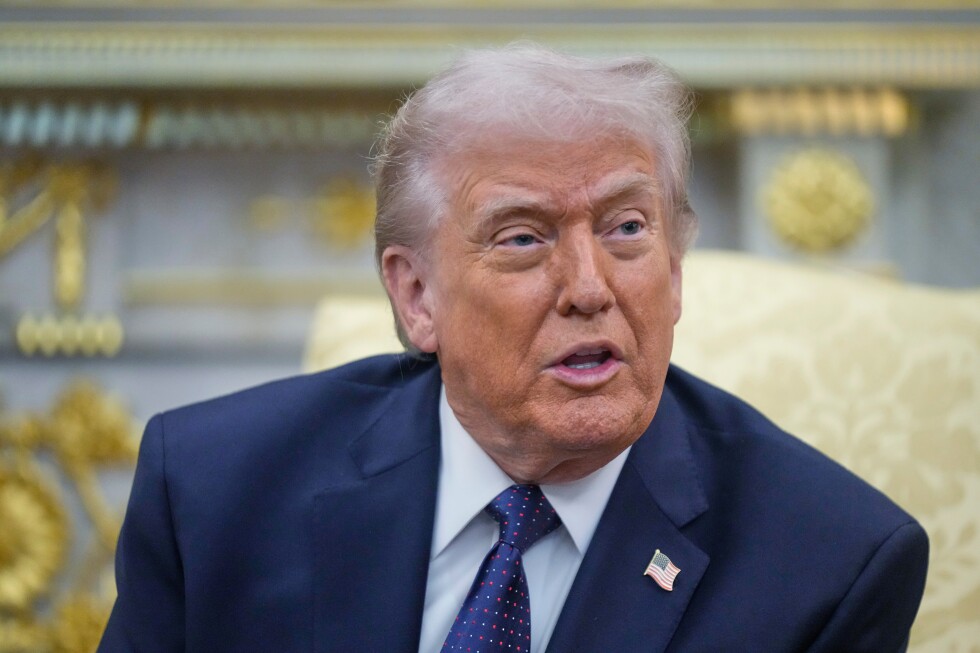
President Donald Trump threatened Tuesday to sever all trade with Spain, citing the European nation’s refusal to support recent U.S. and Israeli military strikes on Iran and its resistance to increasing NATO defense spending.
“We’re going to cut off all trade with Spain,” Trump declared during an Oval Office meeting with German Chancellor Friedrich Merz. “We don’t want anything to do with Spain.”
The president’s comments came just one day after Spanish Foreign Minister José Manuel Albares stated that Spain would not permit the use of jointly operated military bases in southern Spain for any strikes not authorized under the United Nations charter. Albares specifically noted that these bases were not utilized during the recent weekend attack on Iran.
Trump dismissed Spain’s position, asserting, “We could use their base if we want. We could just fly in and use it. Nobody’s going to tell us not to use it, but we don’t have to.”
The feasibility of Trump’s threat remains questionable, as Spain operates under the European Union’s trade framework. The EU, not individual member states, negotiates trade agreements on behalf of all 27 countries in the bloc.
A spokesperson from Spanish Prime Minister Pedro Sánchez’s office responded to Trump’s threat by stating, “If the U.S. administration wishes to review the trade agreement, it must do so respecting the autonomy of private companies, international law, and bilateral agreements between the European Union and the United States.”
The European Commission also weighed in, with spokesperson Olof Gill emphasizing that the EU expects the Trump administration to honor the trade deal negotiated with the bloc in Scotland last year. “The Commission will always ensure that the interests of the European Union are fully protected,” Gill stated.
This latest incident represents another example of Trump wielding tariffs or trade embargoes as a punitive measure. It follows a recent Supreme Court decision that struck down Trump’s broad application of global tariffs. While the court ruled that the International Emergency Economic Powers Act does not authorize the president to unilaterally impose sweeping tariffs, Trump has since claimed that the ruling instead permits him to implement full-scale embargoes on countries at his discretion.
During the meeting with Merz, Trump also criticized Spain’s decision last year to reject NATO’s 5% defense spending target. Spain had previously indicated it could meet its military capabilities by spending 2.1% of its GDP, a position that prompted earlier tariff threats from Trump.
“Spain is the only country that in NATO would not agree to go up to 5%,” Trump said. “I don’t think they agreed to go up to anything. They wanted to keep it at 2% and they don’t pay the 2%.”
Merz supported Trump’s assessment, adding, “We are trying to convince them that this is a part of our common security, that we all have to comply with this.”
Spain defended its NATO commitment, with a spokesperson from Sánchez’s office stating that Spain is “a key member of NATO, fulfilling its commitments and making a significant contribution to the defense of European territory.”
During the Oval Office meeting, Trump sought validation from U.S. Treasury Secretary Scott Bessent regarding his embargo authority. Bessent affirmed, “I agree that the Supreme Court reaffirmed your ability to implement an embargo,” adding that the U.S. Trade Representative and Commerce Department would “begin investigations and we’ll move forward with those.”
The U.S. Treasury Department did not respond to requests for additional comment from The Associated Press.
The diplomatic tension has been further exacerbated by Spain’s criticism of recent U.S. and Israeli military actions against Iran. Prime Minister Sánchez has characterized these strikes as “unjustifiable” and “dangerous,” calling for immediate de-escalation and dialogue while also condemning Iran’s regional strikes.
Trump dismissed Spain’s strategic importance, stating, “Spain has absolutely nothing that we need other than great people. They have great people, but they don’t have great leadership.”
This disagreement over military base usage marks the latest deterioration in Spain’s relationship with the Trump administration. Under Sánchez, who remains one of Europe’s last major progressive leaders, Spain has also been an outspoken critic of Israel’s war in Gaza, further straining relations with the United States.
Fact Checker
Verify the accuracy of this article using The Disinformation Commission analysis and real-time sources.

7 Comments
This is an interesting geopolitical situation. While the US likely values access to Spanish military bases, it’s questionable whether Trump can unilaterally cut off trade with Spain given the EU’s trade framework. Spain seems to be asserting its sovereignty and principles here.
Trump’s threat to cut off trade with Spain seems like an extreme response, especially since Spain is operating within the EU framework. It will be interesting to see if cooler heads prevail and if the two countries can find a diplomatic resolution.
The implications of this dispute could be significant for global energy and commodities markets, given Spain’s strategic location and role in NATO operations. However, it remains to be seen how this will play out diplomatically and economically.
You raise a good point. Any disruption to trade and cooperation between the US and Spain could have ripple effects across Europe’s energy and resource sectors.
It’s concerning to see such harsh rhetoric and threats of economic retaliation over this dispute. Hopefully the US and Spain can find a way to resolve their differences through diplomacy and negotiation rather than escalating tensions.
This situation highlights the complexities of global geopolitics and the competing interests at play. While the US may want unfettered access to Spanish bases, Spain appears to be prioritizing principles of international law and its own national sovereignty.
Absolutely. Spain is likely weighing a range of strategic and economic factors in its decision, beyond just US demands. Maintaining EU unity and its own independence will be key considerations.