


Listen to the article
President Trump’s Tariff Revolution Reshapes Global Trade in 2025
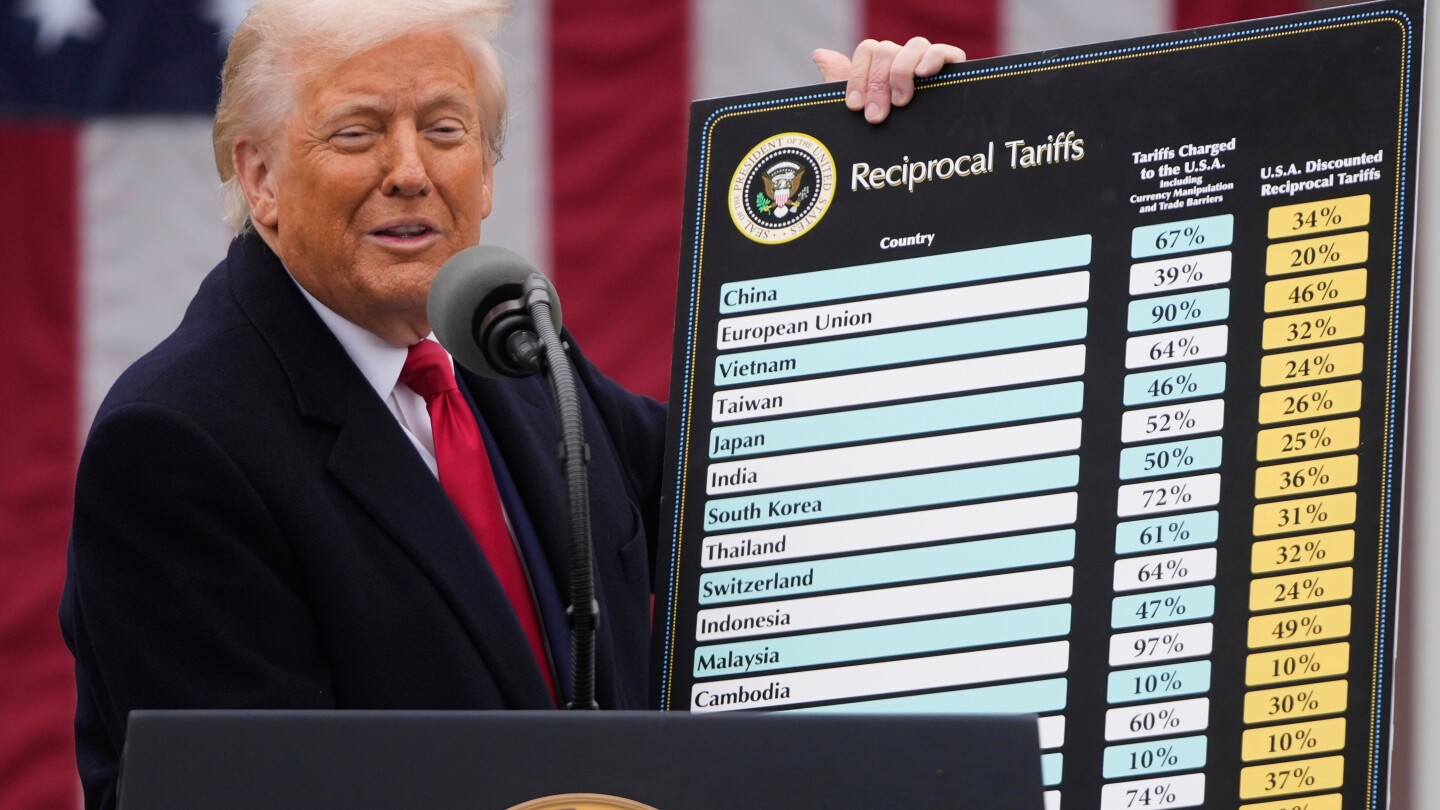
President Donald Trump’s return to the White House this year has dramatically transformed America’s trade landscape, creating what analysts describe as a protectionist barrier around what was once one of the world’s most open economies.
The administration’s sweeping tariff implementation has affected imports from nearly every global trading partner, sending ripples through international commerce and creating significant financial pressure on consumers and businesses worldwide. While these taxes have generated substantial revenue for the U.S. Treasury—over $236 billion through November—they’ve also sparked heated debate about their economic impact.
Trump has repeatedly framed these import taxes as essential for reclaiming American wealth he claims was “stolen” from the country. His administration maintains the tariffs will help narrow the nation’s persistent trade deficit and revitalize domestic manufacturing. “These tariffs are bringing jobs back to America that never should have left in the first place,” the president stated during a recent economic forum.
However, economic data reveals a more complex picture. The sudden disruption to global supply chains has contributed to rising prices for American households, with many consumer goods now subject to tariffs that businesses often pass on to customers. The implementation strategy—characterized by sudden announcements, suspensions, alterations, and new waves of tariffs—has made 2025 unusually turbulent for businesses attempting to navigate international trade.
The effective U.S. tariff rate, which provides a more accurate picture than headline figures by averaging actual import taxes paid, peaked in April but remains dramatically elevated compared to January levels. By November, this rate approached 17%—seven times higher than at the year’s start and the highest since the Great Depression era in 1935.
While the administration highlights increased tariff revenue and a shrinking trade deficit as policy successes, economic experts point to significant nuance in these figures. The $236 billion in tariff revenue represents just a fraction of total federal income and falls far short of Trump’s suggestion that it could replace federal income taxes or fund dividend checks for Americans.
The trade deficit has indeed narrowed substantially since peaking at a monthly record of $136.4 billion in March—a surge attributed to businesses rushing imports before tariff implementation. By September, the gap had shrunk to $52.8 billion. However, the year-to-date deficit through September still ran 17% ahead of the same period in 2024, suggesting more complex factors at work than tariff policy alone.
America’s trading relationships have undergone significant realignment. China, formerly the largest source of U.S. imports, has fallen to third place behind Canada and Mexico. With Chinese goods now facing average tariffs of 47.5%, according to Peterson Institute economist Chad Bown, imports from China decreased nearly 25% in the first three quarters of 2025.
This shift has redirected trade flows, with imports from Mexico, Vietnam, and Taiwan increasing during the same period. The redirection highlights how global supply chains adapt to tariff barriers rather than necessarily returning production to the United States as the administration had hoped.
Financial markets have responded dramatically to the trade upheaval. The S&P 500 experienced its most significant daily and weekly volatility in April, coinciding with major tariff announcements. March saw the largest monthly losses, while June brought the biggest monthly gains as investors adjusted to the new trade reality.
Manufacturing associations have voiced mixed reactions. “While some domestic producers have seen short-term benefits, the increased costs for raw materials and components have created significant challenges,” noted a recent Manufacturing Institute report.
As 2025 draws to a close, economists remain divided on whether Trump’s tariff revolution will ultimately strengthen America’s economic position or impose long-term costs that outweigh the benefits. What remains clear is that the president has fundamentally altered America’s approach to global trade, creating ripple effects that will likely influence international commerce for years to come.
Fact Checker
Verify the accuracy of this article using The Disinformation Commission analysis and real-time sources.

8 Comments
Restructuring global trade relationships is undoubtedly a complex challenge. The data suggests both positive and negative impacts from the tariffs. A thoughtful, evidence-based approach will be crucial as policymakers navigate these issues.
The data paints a complex picture of the tariffs’ effects. Domestic industries may have benefited, but consumers and other sectors appear to have faced challenges. It will be interesting to see how future policy evolves in this area.
Interesting to see the impact of Trump’s trade policies. While the tariffs may have boosted some domestic industries, the overall economic effects seem mixed. I wonder how the new administration will approach trade going forward.
The data suggests the trade policies had both positive and negative consequences. It’s an interesting case study on the complexities of global trade. I wonder if a more nuanced approach could have achieved the desired outcomes more effectively.
Tariffs can be a double-edged sword, providing some benefits but also creating challenges. It’s a complex issue without easy solutions. I’m curious to see how policymakers navigate these trade dynamics in the years ahead.
Reshaping trade relationships is always a delicate balance. While the tariffs may have provided some short-term boosts, the broader economic impacts seem concerning. It will be crucial to find the right long-term strategy.
While the administration’s goals around trade may have been understandable, the execution and outcomes seem to have been more complicated. It’s a delicate balancing act that will require nuanced policymaking going forward.
The shift towards more protectionist trade policies is certainly a notable development. It will be crucial to monitor the long-term effects on consumers, businesses, and the broader economy. A balanced approach is likely needed.