


Listen to the article
Frustration Mounts as Omaha Streetcar Project Falls Nearly Two Years Behind Schedule
Questions flew at the city engineer during a January information session as he explained what the “heaviest construction year” on the Omaha streetcar project would mean for downtown’s Capitol District. About 20 neighborhood business owners and residents attended the meeting, pressing officials about road closures and pedestrian access.
When the presentation ended, 77-year-old Connie Winkler spoke up from the back row, wearing a homemade sign reading “Speed it up” around her neck. “I’m gonna be dead before there’s a streetcar down here,” she declared, capturing the growing impatience among local residents.
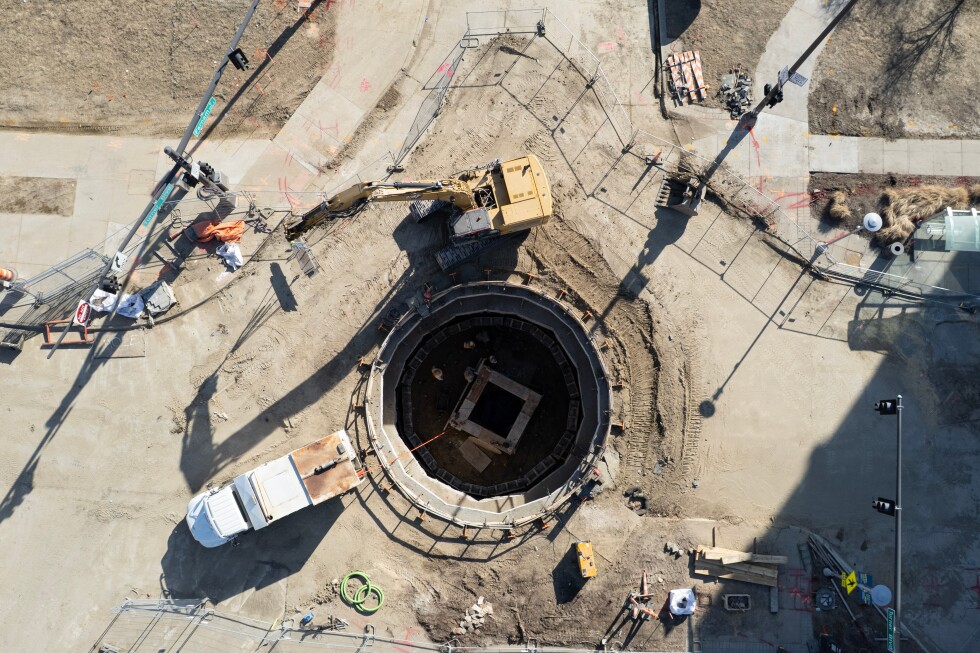
Two years of heavy construction has severely disrupted lives and livelihoods throughout downtown and midtown Omaha. Business owners point to plummeting sales, while residents complain about noise, dust, and a confusing maze of closed roads. What’s worse, the project originally slated for completion in 2026 is now nearly two years behind schedule, with a 2028 opening date.
Behind the scenes, city officials attribute about a year of delay to the Metropolitan Utilities District (MUD), claiming the utility demanded extra work on water and gas infrastructure at the city’s expense. MUD leaders, however, deny these allegations, insisting they’ve worked to accommodate the city’s aggressive streetcar schedule while protecting ratepayers.
Facing two more years of construction, struggling businesses have banded together. A newly formed Streetcar Impact Alliance met for the first time this week, compiling demands to present to City Hall. Without financial assistance, many restaurant and bar owners told the Flatwater Free Press they might not survive until the streetcar opens.
Tim Addison, owner of Addy’s Sports Bar and Grill, reports his downtown location has lost approximately $300,000 in sales since construction intensified last year. “Even usually reliable events like Creighton basketball games and pro volleyball matches are delivering less than half a crowd,” Addison explained.
Now, Addy’s faces orange barricades and a block-long strip of missing road directly in front of its entrance on 10th Street. “If construction would’ve been a tighter timeframe, we could’ve planned for it a lot better,” Addison said. “If we continue at this pace, a lot of us won’t be around to benefit from that.”
The dispute between the city and MUD came to a head in May 2025, when MUD withdrew a crew that was supposed to install new gas pipes at 19th and Harney streets. This escalated a months-long disagreement over the scope of necessary utility work and financial responsibility.
Two years earlier, the agencies had reached an agreement: MUD would pay $7.6 million for infrastructure upgrades under the track, with the city’s Streetcar Authority covering remaining costs. MUD initially estimated all utility work would cost $20.5 million.
City Public Works Director Bob Stubbe contends that MUD subsequently expanded the scope of work beyond the original agreement, which was to replace pipes within approximately 10 feet of the tracks on either side. Additionally, MUD began insisting on replacing a 48-inch water main under Turner Boulevard, potentially adding millions in costs and causing significant delays.
By spring 2025, estimated utility costs had ballooned to $43 million, though MUD maintained it wouldn’t pay beyond its committed $7.6 million. MUD President Mark Doyle defends this position, explaining the utility negotiated that amount to protect ratepayers from rate increases.
MUD temporarily pulled one of its gas crews from the streetcar route on May 13, 2025, returning in July after the sides established a payment process. Doyle maintains that any resulting delays were the city’s responsibility, since it wasn’t covering MUD’s costs.
Former Mayor Jean Stothert attributes nearly two years of project delay primarily to MUD, while Stubbe estimates about one year of delay. Doyle strongly denies these claims.
Current Mayor John Ewing, who took office during MUD’s partial work stoppage, has fought against further delays. “There were discussions when I first took office about the spring of 2029 and I said, ‘No, we can’t do that,'” Ewing stated. Weeks into his term, the city agreed to cover the $5.3 million water main replacement on Turner Boulevard.
The conflict has taken a devastating toll on local businesses. More than half a dozen establishments along the streetcar route have closed since road construction began, including Bob & Willie’s Wonderbowl in the Blackstone District, Sea Thai restaurant, and Cold Stone Creamery in Midtown Crossing.
Clark Ross, owner of Mercury bar, launched the Streetcar Impact Alliance this month after experiencing a 20% decrease in sales last year. Situated between streetcar construction and a year-old sinkhole, Mercury has been hit “like another pandemic, except this time there has been no government relief,” Ross said.
Long Dog Fat Cat in Midtown Crossing saw sales drop 18% last year due to limited parking access. Nosh Restaurant and Wine Lounge lost water service for three lunch periods when crews broke a water line, and during the holiday season—their prime business period—workers placed a dumpster directly in front of the restaurant.
Mayor Ewing expressed understanding of business owners’ frustrations, saying his goal is to help them survive to benefit from the completed streetcar. The city has implemented promotional efforts including running “Ollie the Trolley” to affected businesses and distributing “passport” booklets encouraging visits to these establishments.
Last year, the Greater Omaha Chamber distributed $1 million from an anonymous donor to Blackstone and Midtown Crossing businesses, though details about recipients and amounts remain undisclosed.
At the Streetcar Impact Alliance’s inaugural meeting, over 100 business owners and residents approved a series of demands, including a direct grant fund, targeted tax breaks, and free parking along the route. Ross emphasized their determination: “We refuse to let the future of Omaha be built on the bankruptcies of our local shops or the displacement of our neighborhoods.”
Mayor Ewing maintains it would be illegal to provide city funds directly to private businesses. A spokesperson indicated his office will review the alliance’s demands.
For business owners like Addison, optimism is difficult when previous transit initiatives like the ORBT bus and protected bike lanes delivered minimal benefits. “We want to support it. We really do,” Addison said of the streetcar. “To put this many people’s livelihoods on the line for a hope, God, that scares the hell out of me.”
Fact Checker
Verify the accuracy of this article using The Disinformation Commission analysis and real-time sources.

16 Comments
Delays in major infrastructure projects like this are always frustrating, but the impact on local businesses is especially concerning. The city needs to do more to support the affected businesses and get this project back on track.
Agreed. The city should be transparent about the reasons for the delays and work closely with the business community to mitigate the negative impacts.
It’s really unfortunate to see the Omaha streetcar project facing such significant delays. The impact on local businesses is especially concerning, and the city needs to do more to support them during this disruption. Transparent communication and a clear plan to get the project back on track are crucial.
I agree. The city should explore ways to fast-track the project or provide financial assistance to the struggling businesses. The local community deserves better than this prolonged disruption.
This is a tough situation for the Omaha businesses. Two years behind schedule is a significant delay, and it’s understandable that they’re frustrated and worried about their survival. The city needs to take decisive action to get this project back on track and support the affected businesses.
Absolutely. The city should be held accountable for the management of this project and the impact on the local community. Transparent communication and concrete measures to support the businesses are essential.
This is really frustrating to hear. Delays on major infrastructure projects like this can be devastating for local businesses. I hope the city can get this back on track quickly to minimize the impact on the community.
Agreed. The city needs to be more transparent about the reasons for the delays and provide more support for struggling businesses during the construction.
Two years behind schedule is a long time. I wonder what the root causes are – supply chain issues, labor shortages, poor planning? The city needs to be held accountable for managing this project properly.
Absolutely. The businesses that are suffering from the disruption deserve better. The city should explore ways to fast-track the project or provide relief funds to keep them afloat.
It’s unfortunate to see the downtown businesses struggling like this. The streetcar project was meant to revitalize the area, but the prolonged construction is having the opposite effect. I hope they can get it back on schedule soon.
This is a tough situation for the businesses. The city should consider offering temporary tax breaks or other incentives to help them weather the disruption until the streetcar is up and running.
It’s disheartening to hear that the Omaha streetcar project is so far behind schedule. The city should be doing more to support the struggling businesses and get this project completed as soon as possible.
This is a real setback for the city’s plans to revitalize the downtown area. The city needs to take urgent action to get the project back on track and provide relief for the affected businesses.
The delays in the Omaha streetcar project are really concerning, especially for the local businesses that are suffering as a result. The city needs to be more transparent about the reasons for the delays and take concrete steps to support the affected businesses.
I agree. The city should explore ways to fast-track the project or provide financial assistance to the struggling businesses to help them survive until the streetcar is operational.