


Listen to the article
Iran-Israel Conflict Disrupts Global Supply Chains Beyond Oil
The escalating conflict between Iran and Israel has effectively halted oil tanker movement through the strategic Strait of Hormuz, creating ripple effects across global supply chains that extend far beyond petroleum products.
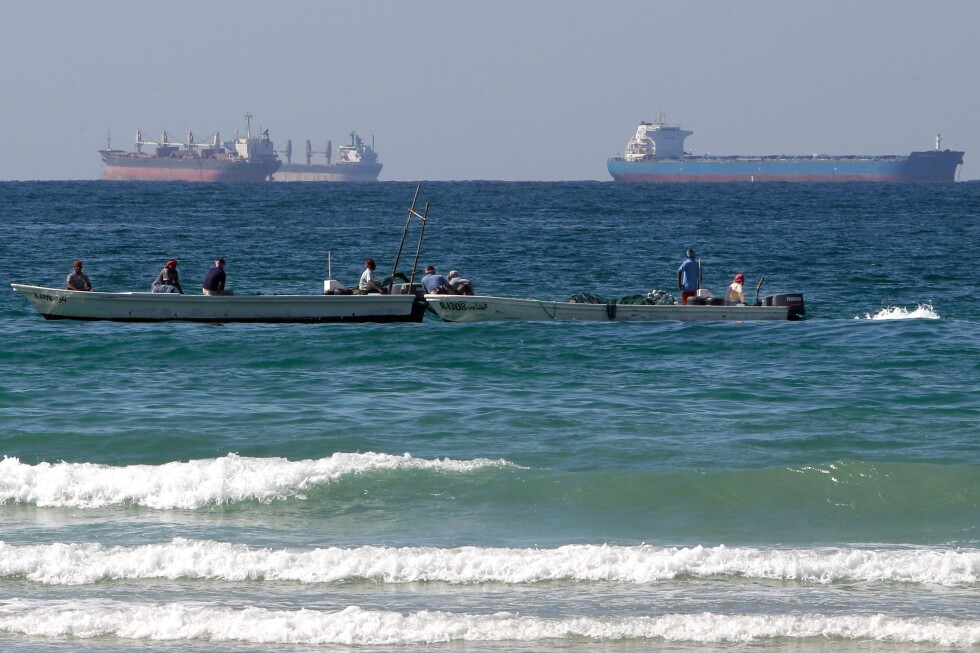
Approximately 3,200 ships, representing about 4% of global shipping tonnage, are currently idle inside the Persian Gulf, according to data from Clarksons Research. An additional 500 vessels, or 1% of global tonnage, wait in limbo outside the Gulf in ports off the United Arab Emirates and Oman.
While these percentages might appear modest, supply chain experts warn of a domino effect throughout the global logistics network.
“The supply chain is kind of like a long train with many cars, and each car represents a port in the world,” explains Michael Goldman, general manager North America of CARU Containers. “If one car gets derailed, it can have a domino effect to many other cars. So although we only have a small number of ports affected by this military action, it can really have a big effect on the total supply chain.”
On Tuesday, President Trump announced measures aimed at restoring oil and trade flows through the Strait. His plan directs the U.S. International Development Finance Corporation to provide political risk insurance for tankers at what he called “a very reasonable price.” Such insurance protects firms against financial losses caused by political instability, government actions, or violence—particularly important as marine insurers have been canceling coverage or dramatically raising rates for vessels in the region.
Trump also indicated that, if necessary, U.S. Navy vessels would escort oil tankers through the Strait of Hormuz. The Navy currently maintains at least eight destroyers and three smaller littoral combat ships in the region, which have previously provided merchant shipping escorts both in the Persian Gulf and Red Sea.
The disruption impacts a diverse range of products beyond the approximately 20% of the world’s oil that flows through the region. Petrochemical feedstocks—essential for manufacturing plastics and rubber—and nitrogen fertilizers from Middle Eastern producers face significant delays. Pharmaceuticals exported from India and semiconductors and batteries from Asian manufacturers are similarly affected as they rely on these shipping routes to reach global markets.
Compounding the crisis, shipping giant Maersk and other carriers have suspended transits through both the Strait of Hormuz and the recently reopened Red Sea routes, which had just begun to recover from years of Houthi rebel attacks on vessels. Instead, ships are being diverted around Africa’s Cape of Good Hope—a detour that adds 10-14 days to journey times and approximately $1 million in additional fuel costs per vessel, according to Patrick Penfield, professor of supply chain practice at Syracuse University.
“This is really causing some major impacts within the global supply chain,” Penfield notes. “As this conflict keeps progressing, you’ll start to see some shortages, you’ll see some major price increases.”
The crisis has also severely impacted air cargo operations. Closed airspace and airports across the UAE, Qatar, Bahrain, Kuwait, Iraq, and Iran have not only stranded tens of thousands of travelers but also halted critical cargo movements. The three major Middle Eastern airlines—Emirates, Qatar Airways, and Etihad Airways—operate substantial cargo fleets and transport significant quantities of goods in the belly of their passenger aircraft.
Though air freight represents less than 1% of global shipping volume, Boeing estimates these shipments account for approximately 35% of world trade value due to their typically high-value or time-sensitive nature. Products like pharmaceuticals, electronics, and perishable goods depend heavily on these air routes.
India’s pharmaceutical industry, which exports globally, faces particular challenges as many of its products traditionally transit through Middle Eastern air hubs. Industry analyst Henry Harteveldt of Atmosphere Research Group points out that alternative routes will inevitably be longer and more expensive.
“Remember, there’s a lot of pharmaceutical products that are made in India and then exported to different countries around the world. If that’s disrupted, that has a huge impact,” Harteveldt warns.
Maersk’s operational update on Tuesday projected rising air freight rates due to capacity constraints, noting that “airlines are also introducing or reviewing the possibility of introducing war risk surcharges on shipments routed through or near the impacted regions.”
Despite these substantial challenges, industry veterans remain cautiously optimistic about adaptation capabilities. The global shipping sector has weathered multiple major disruptions in recent years, from COVID-related supply shortages to previous regional conflicts.
“The specific situation that’s happening is pretty unprecedented,” Goldman acknowledges. “But for the last few years the industry just kind of runs on disruption. So in terms of our industry having disruption, that is nothing new. That’s more of the same.”
As the conflict continues, consumers worldwide may soon feel its impact through shortages and price increases across various goods, from electronics to pharmaceuticals and petroleum-derived products.
Fact Checker
Verify the accuracy of this article using The Disinformation Commission analysis and real-time sources.

8 Comments
Interesting to see how the Iran-Israel conflict could disrupt global supply chains beyond just oil. The spillover effects on the shipment of other goods like drugs and electronics could be quite significant.
Absolutely, the supply chain is so interconnected that disruptions in one area can have a ripple effect throughout the network. This underscores the vulnerability of our global trade system.
The cascading effects of the Iran-Israel conflict on global logistics are quite concerning. It really highlights how interconnected the world’s economies and supply chains have become. Careful monitoring and contingency planning will be critical in the months ahead.
This is a timely reminder of the fragility of our just-in-time global supply chains. Even localized disruptions can have far-reaching consequences. Policymakers and business leaders need to prioritize building more resilience and redundancy into critical supply networks.
The shutdown of shipping through the Strait of Hormuz is concerning. Even a small percentage of global shipping being affected could lead to major delays and shortages of critical goods. This highlights the need for more resilient and diversified supply chains.
Good point. Having so much trade funneled through a single chokepoint like the Strait of Hormuz creates a lot of risk. Policymakers should look at ways to reduce this vulnerability.
I wonder how this might impact the prices and availability of things like electronics and pharmaceuticals. Disruptions to the supply of key materials or components could drive up costs for consumers.
That’s a valid concern. Shortages of essential goods could hit the most vulnerable populations the hardest. Governments and businesses will need to work quickly to mitigate these supply chain risks.