


Listen to the article
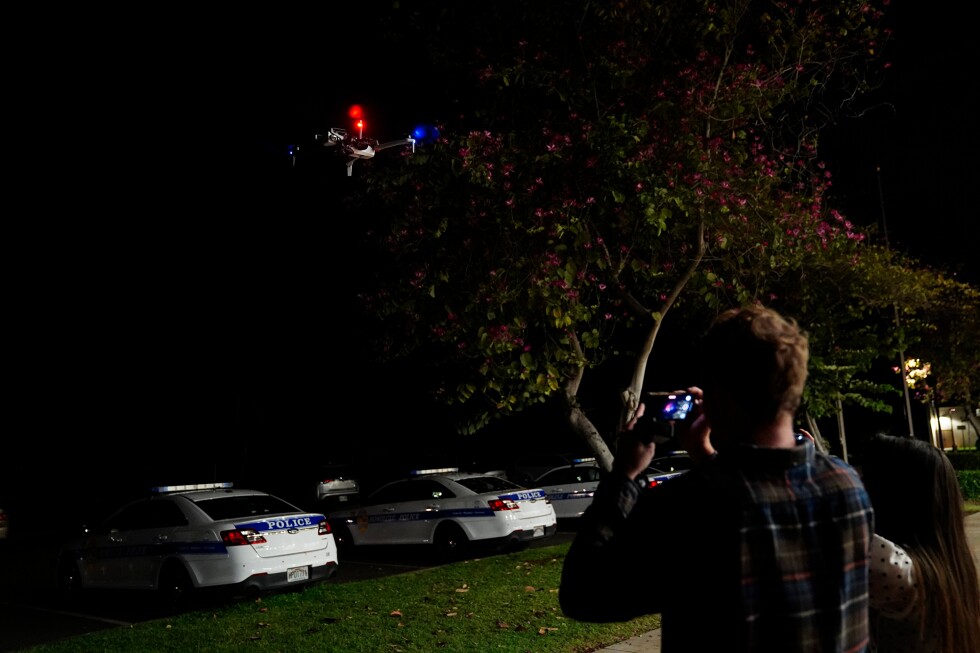
State officials in Hawaii are set to launch a major drone surveillance program in Waikiki as early as March, marking a significant expansion of law enforcement technology in the popular tourist district. The initiative, led by the state Department of Law Enforcement, aims to deploy drones as first responders during peak hours, festivals, and large events.
According to Mike Lambert, director of the Department of Law Enforcement, these aerial devices will be able to reach crime scenes and emergencies within approximately 30 seconds, providing crucial real-time information to responding officers. While both Honolulu police and state law enforcement already utilize drones for special operations, including recent fireworks enforcement, this would mark the first time they would serve as first responders in Hawaii.
The program represents part of a broader trend of technological adoption by Hawaii’s public agencies. The Honolulu Police Department recently began testing AI software to assist with report writing, while the Hawaii Department of Transportation launched a campaign to equip drivers with dashcams to monitor road conditions and identify dangerous driving.
Law enforcement officials cite chronic understaffing as a primary motivation for the drone initiative. The Honolulu Police Department currently faces a vacancy rate of approximately 20%, while the Department of Law Enforcement’s shortage is even more severe at around 25%. “We have a shortage of officers,” Lambert explained. “We’re trying to stem the gap through these technologies.”
The Waikiki Neighborhood Board approved the drone program at its October meeting. The Department of Law Enforcement plans to install four launch pads throughout Waikiki, with one potentially located atop the Waikiki Grand Hotel. The department currently leases 12 drones from California-based security company Skydio at an annual cost of approximately $30,000.
Lambert estimates the total cost for implementing drones and other technologies like automated license plate readers and gunshot detection devices in Waikiki will be around $500,000 annually—roughly equivalent to the cost of employing four full-time police officers.
Despite declining crime rates in Waikiki—with significant reductions in aggravated assaults, robberies, and thefts compared to 2019 levels—state officials view the area as an ideal pilot site to determine if enhanced security measures might boost tourism.
The drones will be equipped with two-way speakers enabling pilots to communicate with people at the scene, potentially deterring criminal activity. Lambert emphasized how the drone video feeds can better prepare responding officers by providing situational awareness about the number of individuals present, visible weapons, and potential aggressors.
However, the expansion of drone surveillance has raised significant privacy and civil liberties concerns. Jacob Wiencek, a citizen member of the Waikiki Neighborhood Board’s public safety committee, expressed worry about governmental surveillance in a densely populated area with numerous high-rise buildings. “Americans have an expectation of privacy as part of our constitutional rights,” he noted. “I might not be doing anything wrong, but that doesn’t mean I want the government to, quote unquote, accidentally or purposely be looking into my condo unit.”
Chris Magnus, a Honolulu Police Commission member, stressed the importance of public education about drone deployment protocols. “There is no right to privacy in public space, that’s true,” he said. “But I still think it’s always something that people in a community like to know a little bit about before it happens.”
Privacy concerns regarding police drones aren’t new to Hawaii. In 2016, state lawmakers introduced legislation that would have required police to obtain warrants before using drones to gather evidence, with exceptions for emergencies. The Honolulu Police Department partially supported the measure but opposed the warrant requirement. The bill ultimately failed to advance.
Hawaii’s program draws inspiration from Chula Vista, California, which pioneered police drones as first responders in 2018. Over six years, Chula Vista’s drones conducted more than 20,000 missions, helping officers respond more effectively to calls. Following legal challenges, Chula Vista now publishes comprehensive information about its drone operations on a public dashboard.
Civil liberties organizations like the ACLU have warned about the potential for drone proliferation without proper oversight. In a 2023 paper, the organization expressed concern that drones could usher in “an era of pervasive, suspicionless, mass aerial surveillance” and recommended they only be used for serious emergencies with complete transparency.
Lambert acknowledged that the department’s Skydio drones come equipped with facial recognition capability, though he stated this feature hasn’t been activated due to its controversial nature.
As Hawaii moves forward with its drone program, experts like Jesse Woo of NYU’s Policing Project advocate for a balanced approach. “We are aware of the risks and we think there ought to be safeguards,” he said. “But there are good use cases for these technologies. It’s all about finding the right balance.”
Fact Checker
Verify the accuracy of this article using The Disinformation Commission analysis and real-time sources.

16 Comments
The use of dashcams and AI-assisted report writing by other Hawaii agencies is an interesting development. These technologies could improve efficiency but also raise concerns.
Exactly, the public will need assurances that their privacy and civil liberties are being protected as these new tools are deployed.
The use of AI-assisted report writing and dashcams by other Hawaii agencies is also an interesting development. Technology is certainly transforming public services in the state.
Yes, it will be important to monitor how these new technologies impact both efficiency and civil liberties.
Drone surveillance in tourist hubs like Waikīkī raises some complex privacy issues that will need to be carefully considered. I hope the public has a voice in shaping this program.
It’s good to see Hawaii exploring innovative ways to improve public safety. The drone program could be a useful tool if implemented responsibly.
Agreed. Proper oversight and public input will be crucial as this technology is rolled out.
This seems like a significant expansion of drone usage by law enforcement in Hawaii. I’d be curious to learn more about the specific policies and protocols governing their use.
The ability to respond quickly to emergencies with drone assistance could be very valuable. I hope the program is implemented thoughtfully and with robust safeguards.
Agreed. Transparency and community engagement will be key to building trust in this new law enforcement tool.
While the speed and responsiveness of drone-assisted emergency response is appealing, I hope safeguards are in place to prevent misuse or overreach by law enforcement.
Rapid emergency response is crucial, but drone surveillance also has the potential for misuse. I hope the state takes a balanced approach that prioritizes both public safety and individual rights.
Hawaii seems to be on the leading edge of using new technologies to enhance public services. While innovative, these programs will need strong oversight to ensure they are not abused.
Well said. Transparency and community engagement will be key to building trust in these new initiatives.
Interesting use of drone technology for public safety in Waikīkī. I wonder if there are any privacy concerns the public should be aware of regarding this surveillance program.
You raise a good point. Balancing public safety and individual privacy is always a challenge with new technologies like this.