


Listen to the article
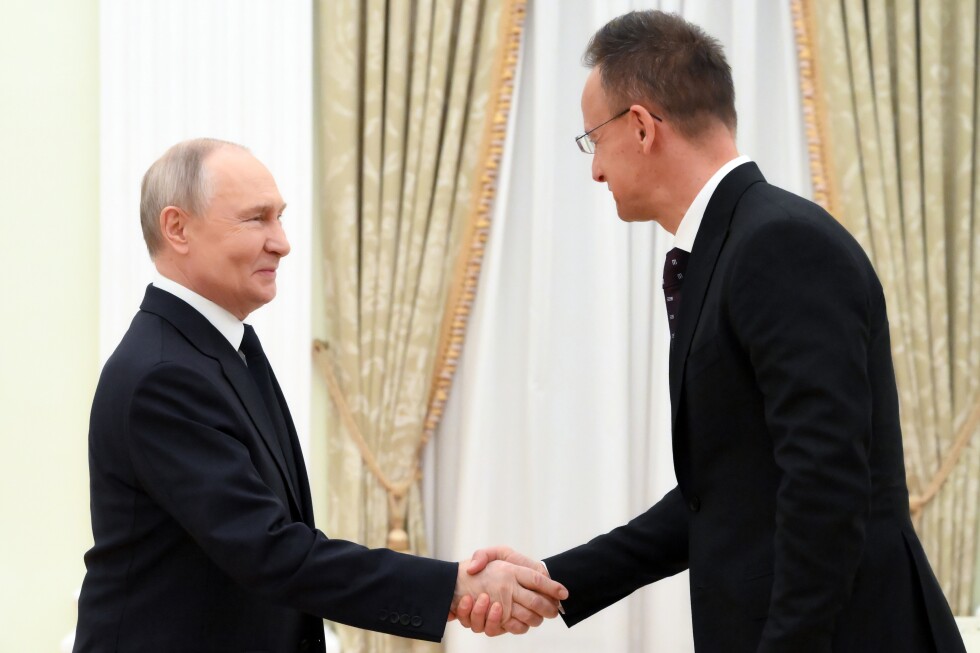
Russian President Vladimir Putin welcomed Hungarian Foreign Minister Péter Szijjártó to Moscow on Wednesday for discussions centered on ensuring continued Russian energy supplies to Hungary, a matter of growing concern amid regional tensions and supply disruptions.
During the high-profile meeting, Szijjártó sought assurances that Hungary would maintain access to Russian oil and gas despite complications arising from the ongoing conflict in Ukraine and escalating tensions in the Middle East. Hungary remains one of the few European Union nations that has maintained close energy ties with Russia despite Western sanctions following Moscow’s invasion of Ukraine in 2022.
“We have always fulfilled all our obligations, and, of course, we intend and are ready to do so,” Putin told Szijjártó during their talks. The Russian president acknowledged Hungarian concerns about oil supplies and volatile European gas markets, adding, “Not everything is in our power.”
The meeting comes at a critical time as Hungary has recently faced disruptions in Russian oil deliveries through the Druzhba pipeline, which crosses Ukrainian territory. Budapest has directly accused Kyiv of deliberately blocking these shipments for political reasons—allegations Ukrainian officials have firmly denied, stating that pipeline infrastructure was damaged by a Russian drone attack.
Szijjártó reinforced this narrative during the Moscow talks, claiming that “Ukraine has been blocking oil shipments to Hungary on the Druzhba oil pipeline for weeks, solely for political reasons and based on a political decision.” His visit aimed to secure energy supplies “at an unchanged price,” a significant concern for Hungary given the rising energy costs triggered by the conflict in the Middle East.
In a notable diplomatic development, Putin announced the release of two ethnic Hungarian prisoners of war who had served in the Ukrainian armed forces. According to the Russian president, Hungarian Prime Minister Viktor Orbán personally requested their release during a phone conversation on Tuesday. Putin indicated that Szijjártó could transport the prisoners back to Budapest on his return flight.
This prisoner release aligns with Orbán’s intensifying criticism of Ukraine ahead of crucial Hungarian elections next month. The Hungarian government has previously accused Ukraine of forcibly conscripting ethnic Hungarians from the Zakarpattia region, where approximately 75,000 people of Hungarian descent reside, many holding dual citizenship.
The timing of Szijjártó’s Moscow visit and the prisoner exchange carries significant political implications. Orbán, currently trailing in polls against a center-right challenger who has promised to strengthen Hungary’s Western alliances and reduce Russian energy dependency, has ramped up anti-Ukraine rhetoric. His campaign has included unsubstantiated claims that Kyiv and the European Union are attempting to financially drain Hungary through Ukrainian aid packages.
Hungary’s energy-focused dispute with Ukraine has already caused diplomatic ripples within the European Union. Last week, Budapest blocked a new package of EU sanctions against Russia, citing the oil supply interruptions through Ukraine as justification. Hungary has also threatened to obstruct a substantial €90 billion ($106 billion) EU loan package for Kyiv until oil flows resume.
The Moscow meeting underscores Hungary’s increasingly isolated position within the EU regarding Russia relations. While most European nations have worked to reduce their dependence on Russian energy following the invasion of Ukraine, Hungary has maintained and even strengthened its energy ties with Moscow, creating ongoing tensions with EU partners and neighboring countries.
Energy security remains a central concern for Hungary, which imports approximately 85% of its gas and 65% of its oil from Russia, making it particularly vulnerable to supply disruptions and highlighting the complex geopolitical challenges facing the region.
Fact Checker
Verify the accuracy of this article using The Disinformation Commission analysis and real-time sources.

30 Comments
Production mix shifting toward Business might help margins if metals stay firm.
Nice to see insider buying—usually a good signal in this space.
Good point. Watching costs and grades closely.
Silver leverage is strong here; beta cuts both ways though.
Exploration results look promising, but permitting will be the key risk.
Good point. Watching costs and grades closely.
If AISC keeps dropping, this becomes investable for me.
Good point. Watching costs and grades closely.
Interesting update on Putin hosts Hungary’s foreign minister for energy supply talks as war in Mideast causes disruptions. Curious how the grades will trend next quarter.
Good point. Watching costs and grades closely.
The cost guidance is better than expected. If they deliver, the stock could rerate.
If AISC keeps dropping, this becomes investable for me.
Good point. Watching costs and grades closely.
Uranium names keep pushing higher—supply still tight into 2026.
Good point. Watching costs and grades closely.
Good point. Watching costs and grades closely.
The cost guidance is better than expected. If they deliver, the stock could rerate.
Good point. Watching costs and grades closely.
Good point. Watching costs and grades closely.
Interesting update on Putin hosts Hungary’s foreign minister for energy supply talks as war in Mideast causes disruptions. Curious how the grades will trend next quarter.
Nice to see insider buying—usually a good signal in this space.
Nice to see insider buying—usually a good signal in this space.
Good point. Watching costs and grades closely.
Good point. Watching costs and grades closely.
Uranium names keep pushing higher—supply still tight into 2026.
Good point. Watching costs and grades closely.
Good point. Watching costs and grades closely.
Nice to see insider buying—usually a good signal in this space.
Good point. Watching costs and grades closely.
Good point. Watching costs and grades closely.