


Listen to the article
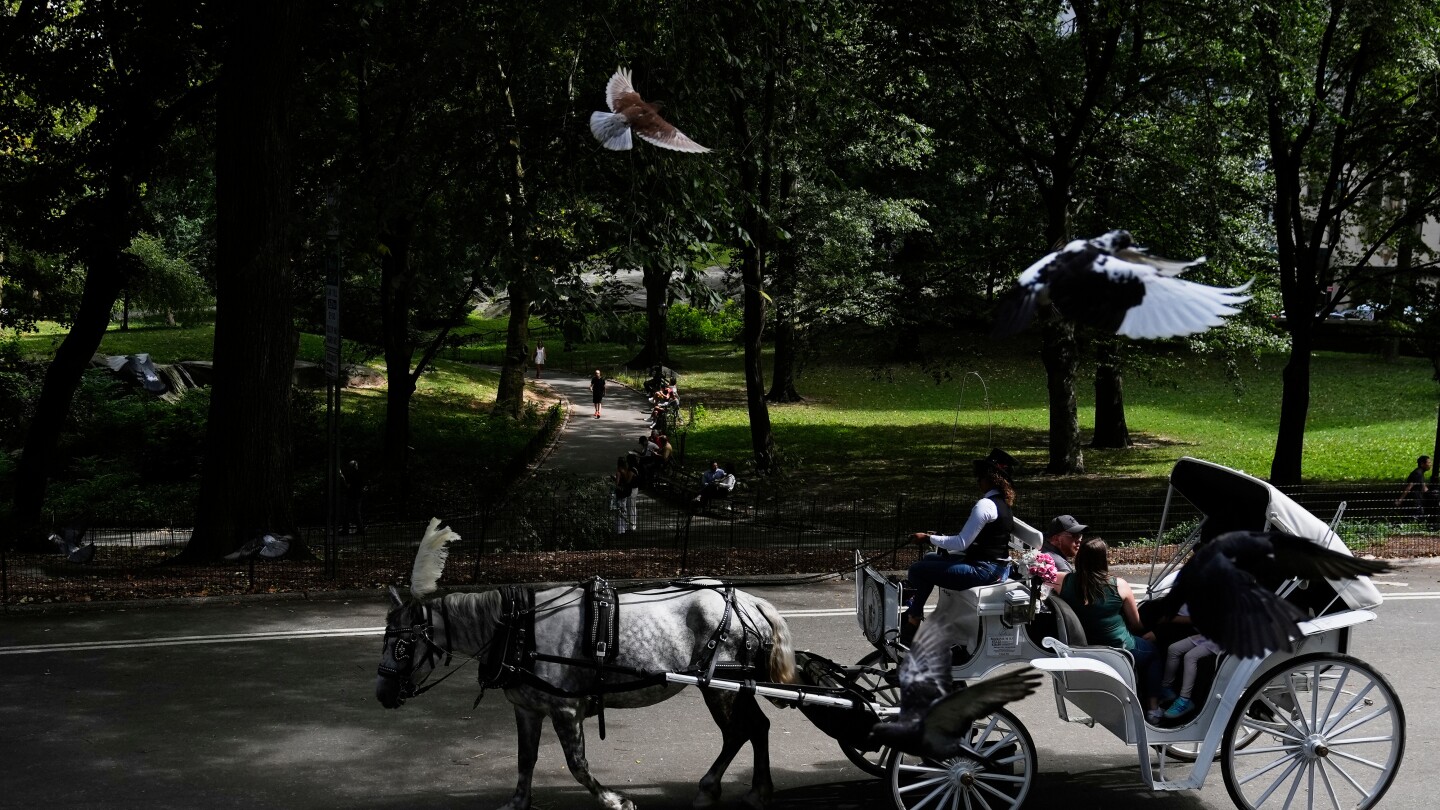
Central Park’s historic horse-drawn carriages have survived another challenge to their existence after a proposal to ban the 150-year-old tradition failed to advance through a key New York City Council committee.
On Friday, the council’s Committee on Health voted against sending the proposed ban to the full council for consideration, delivering a victory to carriage operators and a setback to animal rights activists who have long campaigned against the practice.
The Transport Workers Union of America, which represents carriage drivers, celebrated the committee’s decision. “They are hardworking immigrants who take good care of their horses, and have consistently been attacked and slandered by monied interests who care nothing about animal welfare,” said union president John Samuelsen in a statement.
Animal rights advocates, however, denounced the vote as a “sham” and pledged to continue their fight against what they view as an inhumane industry.
The debate over Central Park’s carriage horses intensified over the summer when a horse collapsed and died near its stables. Videos and photographs of the animal’s body lying in a city street circulated widely on social media, reigniting public concern about the welfare of these working animals.
New Yorkers for Clean, Livable, and Safe Streets (NYCLASS), a leading advocacy group pushing for the ban, cited multiple incidents of concern. “Horses have collapsed, even dropped dead on the streets recently. Multiple horses have had violent runaway spooking incidents, crashing into vehicles, sending New Yorkers to the hospital, and nearly trampling others,” the organization stated on Friday.
Critics argue that urban environments are fundamentally unsuitable for these animals. They point to the potential for horses to become frightened in traffic, resulting in accidents and injuries. They also raise concerns about working conditions, stable accommodations, and violations of city regulations, including improper waste management.
The ban received prominent support from outgoing Mayor Eric Adams, who expressed disappointment with the committee’s decision. “It’s a shame that the City Council has once again refused to follow the will of our citizens, while simultaneously endangering pedestrians, drivers, and animals alike,” Adams said in a statement. In recent months, the mayor had issued an executive order to strengthen enforcement of regulations governing the industry.
Despite growing pressure, the Democratic leadership of the City Council has consistently resisted calls to advance the legislation. Friday’s vote occurred only because the bill’s sponsor, Council Member Robert Holden, invoked a procedural mechanism to force committee action.
Holden, an outgoing Queens Democrat, criticized the process as “one of the most undemocratic displays I have ever witnessed in the New York City Council.” He added, “The Council could not care less what New Yorkers think.”
A spokesperson for City Council Speaker Adrienne Adams defended the outcome, suggesting that Holden had failed to build necessary support among colleagues. “The Council recognizes that this is a difficult and emotional issue, and any path forward requires a sponsor bringing all parties together in a constructive way,” the spokesperson stated.
The proposed legislation would have phased out horse-drawn carriages as early as summer 2025, ending a tradition that has been part of Central Park’s identity since the 19th century.
Adding significance to the debate, the Central Park Conservancy—the influential nonprofit organization that manages the 843-acre park—recently endorsed the ban. The Conservancy cited concerns about public safety and infrastructure damage in the increasingly crowded park environment.
The carriage industry has survived multiple attempts at regulation and prohibition over the past decade. Previous mayors, including Bill de Blasio, campaigned on promises to end the practice but faced significant political obstacles.
For now, the iconic sight of horse-drawn carriages will continue along Central Park’s winding paths, representing both a cherished tradition for tourists and a flashpoint in ongoing debates about animal welfare in urban settings.
Fact Checker
Verify the accuracy of this article using The Disinformation Commission analysis and real-time sources.

18 Comments
If AISC keeps dropping, this becomes investable for me.
Good point. Watching costs and grades closely.
Interesting update on Proposal to ban Central Park horse carriages voted down by key NYC council committee. Curious how the grades will trend next quarter.
Nice to see insider buying—usually a good signal in this space.
Good point. Watching costs and grades closely.
Exploration results look promising, but permitting will be the key risk.
Nice to see insider buying—usually a good signal in this space.
I like the balance sheet here—less leverage than peers.
If AISC keeps dropping, this becomes investable for me.
Nice to see insider buying—usually a good signal in this space.
Good point. Watching costs and grades closely.
Good point. Watching costs and grades closely.
Uranium names keep pushing higher—supply still tight into 2026.
Good point. Watching costs and grades closely.
Silver leverage is strong here; beta cuts both ways though.
Good point. Watching costs and grades closely.
Good point. Watching costs and grades closely.
I like the balance sheet here—less leverage than peers.